Her Story
About Nataliya
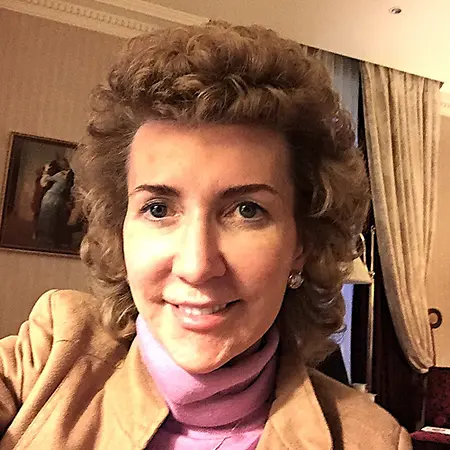
Nataliya Kulichenko has built her career at the intersection of international development, economic policy, and infrastructure investment, helping governments and institutions make consequential decisions in complex environments. As a Program Leader and Lead Energy Specialist at the World Bank Group, she guided programs across Asia and Africa, including resident leadership assignments in India, Afghanistan, Nigeria, and Tanzania. Her work connected country strategy and institutional reform with public-private infrastructure investment, translating policy priorities into practical programs and investments.
Her international perspective grew through close work with governments, development institutions, businesses, and communities. Earlier, Nataliya served on the staff of USAID, held roles with the Asian Development Bank and PA Consulting, and consulted for the U.S. Environmental Protection Agency and the U.S. Department of Energy. Across these roles, she worked on economic development, regulatory reform, energy security, climate resilience, and private capital mobilization. She is skilled at finding common ground, explaining complex choices, and building lasting relationships across institutional and cultural boundaries.
Nataliya’s present focus is the policy, financing, and international cooperation required to expand nuclear energy responsibly and affordably, including advanced reactors and small modular reactors (SMRs). It draws on her engineering and policy foundation in nuclear safety, operations, economics, and international nuclear law, and her commitment to reliable, affordable energy. She holds a PhD in Chemical Engineering, an MBA in International Finance and Trade, and a Master of International Management from the University of Maryland. Competitively selected as a Mid-Career Fellow in Public Policy at Princeton University, she focused on environmental and energy economics and policy. Multilingual and comfortable working across cultures, Nataliya continues to bring together governments, multilateral institutions, and private investors around practical responses to global challenges.
Her Interview
Ten minutes with Nataliya
01What do you attribute your success to?
I attribute much of my success to curiosity, continuous learning, and a willingness to listen. Even after reaching senior roles, I have never been afraid to become a student again. Working across countries and institutions taught me that complex problems look different to engineers, regulators, government officials, investors, diplomats, political leaders, and local communities. Before trying to bring those perspectives together, I first had to understand them.
That same curiosity has now brought me back to nuclear energy as countries reconsider its role in energy security and climate policy. I have refreshed my knowledge through advanced training in nuclear safety, plant operations, licensing and regulation, and international nuclear law. I see this not simply as returning to my technical roots, but as bringing together two important dimensions of my career: a foundation in science and engineering, together with extensive experience in policy, finance, and international cooperation.
Continuous learning keeps me receptive to new ideas, people, and responsibilities. I never want experience to become a reason to stop asking questions.
02What’s the best career advice you’ve ever received?
The best career advice I have received was never to let my starting point define the limits of my future. A career is not always a straight line, and changing direction does not mean abandoning what came before. It can mean finding a new and more valuable way to use it.
I began as an engineer and researcher, but my technical education did not confine me to a technical career. Instead, it became the foundation for my work in economic policy, environmental safeguards, infrastructure finance, and international development. Each transition required the courage to enter unfamiliar territory, learn from others, and trust that experience gained in one field could create value in another.
This advice has been especially meaningful while building a career across countries, languages, and institutional cultures. Some barriers are not immediately visible, and some doors take longer to open. But they should not determine the scale of one’s ambitions.
Real confidence is not believing that you already know everything. It is knowing that you can learn, adapt, and contribute wherever your abilities and judgment are needed. A path that appears unconventional can ultimately become your greatest strength.
03What advice would you give to young women entering your industry?
My first advice is simple: know your subject. In energy, infrastructure, and public policy, knowledge gives you something stronger than confidence: credibility. Learn enough to ask difficult questions, recognize when an easy answer is wrong, and explain complex issues clearly. But never bluff. One of the strongest things you can say is, “I don’t know yet, but I know how to find out—and I will.” Intellectual honesty earns trust.
Do not wait until you feel completely qualified before stepping forward. Women can be too quick to catalogue what they have not yet done and too slow to recognize what they are capable of learning. Volunteer for demanding assignments. Enter rooms where important decisions are made. Speak when you have something useful to contribute, and do not allow anyone’s narrow idea of what a leader should look or sound like to define your limits.
Finally, allow your career to evolve. Technical expertise can lead to finance, policy, diplomacy, entrepreneurship, or public leadership. Crossing fields, countries, and cultures may sometimes feel like starting again, but it also gives you a perspective few people possess. Build real knowledge, protect your integrity, help other women as you advance, and remain open to unexpected directions. Your career does not have to resemble anyone else’s to be important.
04What are the biggest challenges or opportunities in your field right now?
The greatest challenge in energy and infrastructure today is not the absence of technology or ambition. It is turning ambitious promises into projects that consumers can afford, investors will finance, governments can sustain, and communities will trust. Engineers, economists, regulators, financiers, political leaders, and citizens often look at the same project and see different risks. When they cannot understand one another, even excellent ideas can stall.
The greatest opportunity, therefore, is not one particular technology. It is bringing these perspectives together to make choices that strengthen energy security, economic competitiveness, and climate resilience. Nuclear power, renewables, modern grids, hydrogen, and carbon management can all contribute. But no technology succeeds on technical merit alone; each depends on credible economics, workable policies, responsible institutions, and public confidence. People who can connect these elements can make a lasting difference.
For women, there is another challenge: visibility. Many of us were taught that good work would speak for itself. It often does not. I have had to learn that describing what you have accomplished is not boasting, and speaking with confidence is not arrogance. Women should be encouraged from an early age to explain their ideas, speak openly about their achievements, and enter important discussions before someone formally invites them.
Modesty is a virtue, but it should never become invisibility. A strong idea cannot influence a decision if it remains unspoken.
05What values are most important to you in your work and personal life?
The values I return to are simple: tell the truth, treat people with dignity, and take responsibility for the consequences of your decisions.
In international work, respect is much more than politeness. It means listening before arriving with answers, understanding the history and culture behind a position, and never confusing seniority, status, or fluency with wisdom. I have worked with ministers, engineers, investors, community leaders, and junior colleagues across many cultures. Every person deserves to be heard, and everyone should be held to the same ethical standard.
Honesty means telling decision-makers what they need to hear, even when it is inconvenient; acknowledging what I do not know; and never promising what cannot be delivered. When public resources, safety, and people’s livelihoods are involved, technical skill without integrity is not enough. Competence is a responsibility, not an ornament: if your decisions affect others, you owe them your best work and judgment.
The same principles guide my personal life. I try to listen carefully, keep my word, continue learning, and never measure people by their status or usefulness to me. I believe character is most visible in small choices: how we treat people who cannot advance our careers and what we do when the ethical choice is not the easiest one.
Titles may describe what we do; our choices reveal who we are.
Join Influential Women and start making an impact. Register now.