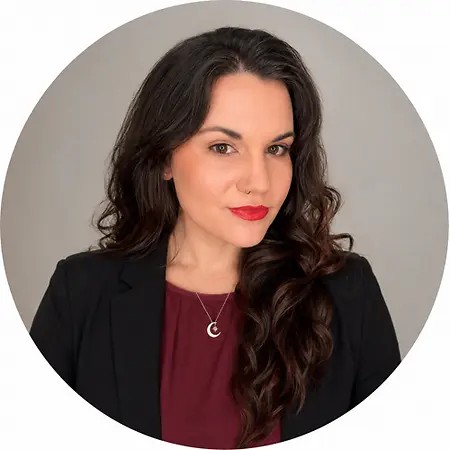
Her Story
About Natasha
I’ve been working in public sector finance since 2014, so for about 12 years now. I started my career as an Accounting Technician at Western Oregon University and worked my way through several different divisions, including athletics, campus recreation, and financial aid.
I then spent five years at Oregon State University, where I began as an Accountant 2 and eventually became the Financial Strategic Partner for the College of Agricultural Sciences. In that role, I led a team of 16 and spent nearly two years in leadership before deciding to transition into state government finance.
I joined the Oregon Employment Department as a Fiscal Analyst 3 and was promoted to Budget Manager. I’ve served in that role since December 2025. Today, I oversee the agency’s budget operations and manage a team of seven.
The Oregon Employment Department plays a critical role in supporting Oregonians through unemployment insurance, paid leave benefits, and employment services that help people return to work. Managing a budget of this scale requires balancing complex funding streams, maintaining compliance at both the state and federal level, and ensuring resources are aligned with the agency’s mission: “Support Business. Promote Employment.”
Looking back, I would say my most notable professional achievement has been becoming the Budget Manager for a large state agency and having the opportunity to lead work that directly impacts communities across Oregon.
Her Interview
Ten minutes with Natasha
01What do you attribute your success to?
I would attribute my success to a combination of hard work and a little bit of luck. I’ve always given everything I have to the positions I’ve held, and I’ve never been satisfied with simply maintaining the status quo. I’m constantly looking for ways to improve processes, increase efficiency, and exceed expectations.
It’s important to me to do meaningful work, and working in the public sector gives me the opportunity to contribute to my community in a tangible way, even if that impact feels small at times. Knowing that the work I do supports Oregonians is something I take a lot of pride in.
At the same time, I think it’s important to acknowledge that career growth also involves timing and opportunity. Upward mobility often depends on the right position becoming available at the right moment, when your experience and qualifications align with what’s needed. The hard work I’ve put in has helped prepare me for those opportunities, but there’s definitely an element of luck involved as well.
02What’s the best career advice you’ve ever received?
Take pride in your work, no matter what position you hold. My father instilled in me from a young age that working hard and doing your job well is essential. It doesn’t matter whether you’re an Accounting Technician or a CFO — you should approach your work with respect, integrity, and professionalism.
That mindset has played a huge role in my growth and success. I believe real development happens when you are fully present in your current role, rather than halfheartedly completing tasks while waiting for the next opportunity to come along.
People notice dedication. When you consistently show up, work hard, and take ownership of what you do, it builds trust and opens doors over time.
03What advice would you give to young women entering your industry?
One of the best things you can do to set yourself apart is, instead of just letting your leader know there’s a problem, letting them know there’s a problem and offering three or four possible solutions to fix it.
This sets you apart as someone who doesn’t just identify issues, but also solves problems. That’s a rare quality, and leadership always appreciates having someone bring possible solutions to the table.
It doesn’t take someone exceptional to find an issue. It takes someone exceptional to identify an issue and also think through possible ways to solve it.
04What are the biggest challenges or opportunities in your field right now?
One of the biggest challenges facing the public sector right now is funding. The cost of running essential public services continues to rise, especially with inflation, while revenue growth often struggles to keep pace.
As a result, opportunities within government can become more limited, and agencies are often unable to fill vacancies due to financial constraints. When positions remain unfilled, it becomes much harder to provide services to the public in a timely and effective manner.
Ultimately, everyone feels the impact in one way or another — whether it’s employees carrying heavier workloads or community members experiencing longer wait times for the services they rely on.
05What values are most important to you in your work and personal life?
The values that are most important to me are integrity and respect. In both my professional and personal life, I try to lead with kindness. It costs nothing to treat people with compassion and respect, but it can make all the difference in someone’s day and in the relationships you build over time.
I also try to view my decisions through what I call the “newspaper lens.” I don’t do anything that I wouldn’t want to see on the front page of a newspaper. That mindset helps keep me grounded and accountable, and I’ve found that doing the right thing is not only important professionally, but also the choice that feels right personally.
Integrity is especially important in my career because I manage state and federal funding that directly impacts Oregonians during some of the most sensitive and challenging times in their lives. That responsibility requires transparency, accountability, and a genuine commitment to serving the public well.
Join Influential Women and start making an impact. Register now.