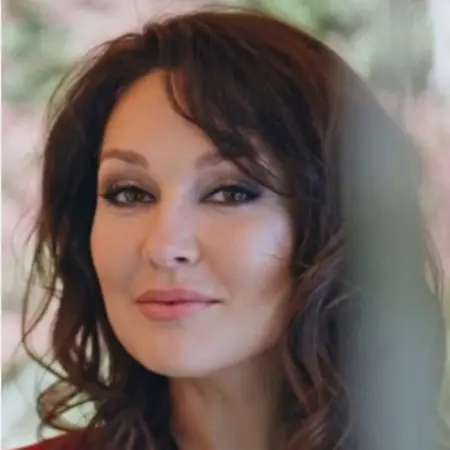
Her Story
About Natasha
I graduated from Moscow State University with a degree in economics and international business law, and worked for the first American petroleum company that came to Siberia in 1993. That's when I saw my first computer and fell in love with technology. I later got my computer science degree, though back then we had computers that filled entire rooms. When I moved to the United States in 1997, I had to start from the beginning despite my degrees and management skills - I couldn't even find a job as a cleaner because of the language barrier. I took Microsoft certification classes and worked my way up from programmer to database analyst to data governance roles. Working at Mercy Hospital was a turning point for me - my son was sick at the same time, and I saw how nurses and doctors struggled with data entry and reporting systems when they should be focused on patient care. That inspired me to get my master's degree in healthcare and business administration from Lake Forest Graduate School of Management. I spent years at Takeda and then Horizon Pharmaceutical as Senior Manager of Data Governance, working with patient data, FDA and HIPAA regulations, and creating frameworks for data standards. When Horizon was acquired by Amgen in the biggest pharma acquisition ever, I had my exit and decided to start my own AI consulting business. Now I focus on helping small businesses, especially in healthcare, understand AI technology and data governance. I build voice agents, create workflows, and teach people how to use tools like ChatGPT effectively. My mission is AI education, particularly for women, because I believe educated women create better futures for their children and communities.
Her Interview
Ten minutes with Natasha
01What do you attribute your success to?
I attribute my success to my ability to adapt and learn continuously, and to my resilience in the face of challenges. When I came to this country 30 years ago, I had to start from nothing despite my degrees and experience. I couldn't even get a job as a cleaner because of the language barrier, but I kept pushing forward. I've always been fascinated with computers and technology, and I never stopped learning - from my early days seeing the first laptops in Siberia in 1993 to now teaching others about AI. My biggest strength is finding problems and creating solutions, building workflows that help people work more efficiently. I also believe that every person on Earth has infinite potential - God made us the same - and that positive attitude has helped me see opportunities where others see obstacles. Even the managers who didn't appreciate me or treat me well, like my last manager Sanjeev, ended up doing me a favor because their treatment pushed me to start my own business. I've learned that you have to be a fighter, surround yourself with positive people, and never stop growing. The moment you stop learning and progressing, you're done.
02What’s the best career advice you’ve ever received?
The best career advice I received came from one of my managers, Bob, who saw my interest in working with data and encouraged me to pursue that path. He introduced me to working with databases from the beginning - Oracle, SQL - and that changed my career trajectory. Another manager told me I had to think about my future and my 401K because I wouldn't always be young, and he suggested I move from data management into the data governance field. That advice was crucial because it led me to work with patient data and eventually to where I am today. These managers were native English speakers, Americans, and they were the best ones I had - they saw past my accent and recognized my potential when others didn't.
03What advice would you give to young women entering your industry?
My advice to young women is to reason yourself, be resilient, and never give up. Soft times make soft people, and you have to be a fighter. Don't let anyone diminish you or make you feel less than - take no bullshit about people talking about you or putting you down. This is your life, and God made you for some purpose, maybe even just to say a good word to another human being. Surround yourself with people who lift you up, because you magnetize the same kind of people you are. If you're disappointed and negative, that's what you'll attract, but if you change your attitude and be more positive, you'll find yourself in a different society and on a different team. Never stop learning and growing - the moment you stop progressing, you're done. And remember, we're not here to suffer, we're here to be happy. Each soul came here to be happy. Believe in yourself, and the universe will help you grow. If you think your life is horrible, ask the person sitting next to you - maybe she has it even worse. Keep perspective, stay positive, and keep fighting for your dreams.
04What are the biggest challenges or opportunities in your field right now?
The biggest opportunity right now is that we're at an industrial-level change, similar to when machines replaced agricultural work. AI is going to transform everything, and if you don't start using it now, you'll be behind next year. The challenge is that most people don't understand how to use these tools properly - they use ChatGPT like Google when it's capable of so much more. People are scared of AI, but it will make us more effective if we learn it, not replace us. The real challenge is education and data governance. People don't realize how exposed they are - they put information on Facebook, TikTok, LinkedIn without understanding that AI systems can read and analyze everything about them. This is especially dangerous for vulnerable populations like elderly people and children. In healthcare, there's still no ecosystem connecting different systems, and there's a huge opportunity to streamline processes and reduce the burden on doctors and nurses. The key is teaching people, especially women and small business owners, how to prompt correctly and use AI as an expert tool in their field. Right now, only a small amount of people understand that we're going to the next level, and that's both the challenge and the opportunity.
05What values are most important to you in your work and personal life?
Integrity is my favorite word and the value I work on every day. It's the foundation of everything I do. I also deeply value education, especially for women, because I believe that countries with educated women have educated children and don't want wars, while countries that suppress women always have problems. Patient safety and data governance are crucial to me - I've dedicated my career to making sure patient data is clean, secure, and consistent because people's lives depend on it. When someone doesn't take care of good data, patients are exposed and at risk. I value helping others and seeing the infinite potential in every person - I believe God made us all the same, and everyone deserves to be treated with respect regardless of their accent or background. Family is also central to my life, and I believe we're here to be happy, not to suffer. I want to use my knowledge and experience to help people succeed, protect vulnerable populations like the elderly and children, and make sure this country continues to thrive. Every day is a blessing, and I try to appreciate the opportunities I have here in the United States, where women are valued in a way they aren't anywhere else in the world.
Join Influential Women and start making an impact. Register now.