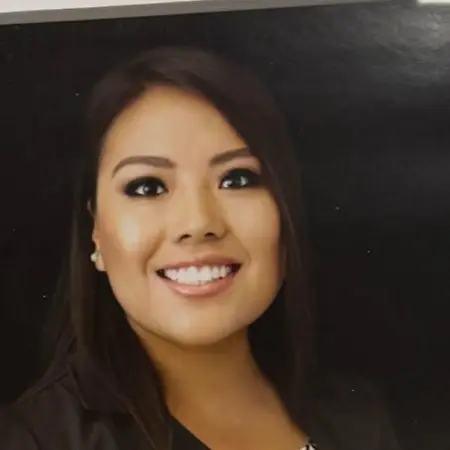
Her Story
About Dr. Nayeli
I'm in my 8th year going on my 9th in education. Prior to working in education, I worked in intensive mental health services in various roles based on the degrees I had acquired. Here in the state of Washington, you need a bachelor's, and then I ended up getting a master's in clinical social work, and then I ended up becoming a mental health therapist. I have a daughter, and so I'm a single mom, and so I found a job at the school district, and I've been there since. I work at a middle school where I coordinate support services for students, whether it's inside the district or outside the community. We work with the family to ensure their basic needs are taken care of. We do a little bit of mental health, though we don't provide consistent care at the school. There are some cases where we work with students there. It's almost like case management. I work with other staff members to ensure that students' individualized educational plans are met. We work with other agencies, other third-party agencies to bring in services for the family. I do work with a migrant program, so it's only a specific caseload, and so that's why I'm able to provide specialized care plans. I also own a small concession stand business called Smoothies (S-M-O-O-V-I-E-S), and we have various concession stands around where we live, and we provide concession stand goodies to the community and tournaments. I also own real estate properties that I rent out.
Her Interview
Ten minutes with Dr. Nayeli
01What do you attribute your success to?
I attribute my success to discipline and my faith. There's a Bible verse that has been very vital in my journey - it's Jeremiah 29:11. My daughter was definitely someone I was not planning for at a young age, but she definitely provided me with strength and hope that I didn't know I had. My family, my friends, my mentors have all been important, but primarily my discipline. I feel like people can be there for you, but at the end of the day, one has the decision to decide what they want to do. People can set everything on a gold platter, but if you don't take the initiative to do it, because things are never easy, they have never been, and we have to discipline ourselves especially in times that are not easy. If it was easy, we would all do it. I've been praised by the community, but I didn't really have the support of my biological family. Along the way, I've met people, and I always say that God has provided me with individuals in my life as reminders of His love for me.
02What’s the best career advice you’ve ever received?
The best career advice I received was to ensure that whatever profession or whatever place I decide to work, to ensure that I do it with the heart. Because then I will never need to work again.
03What advice would you give to young women entering your industry?
I would tell them that we unfortunately still live in a world where it's dominated by men, and that it's never easy, but if that is what their heart truly wants and desires, to not let go. Eventually, they will persevere, and if they don't do it, who else is gonna do it for them? Who else is gonna do it for their loved ones, for their generations? Within us, we have the power to create that ripple effect for the people we love. We have the power to break cycles and chains. If I wouldn't have changed my pathway, I would have essentially been like my biological mom, and then provided that to my daughter. But now when she marks on applications what's your parents' highest degree, she can now mark doctorate, and she has a high expectation, a high standard that is the least that we will settle for. It's never gonna be easy, but it's totally worth it. And to rely on other women, to seek out mentorship. We definitely need a lot of mentorship, and to seek out other women who are on the same journey, or want to persevere, because you need each other. It can be a lonely path, but it doesn't have to be that way.
04What are the biggest challenges or opportunities in your field right now?
The biggest challenges are men in leadership, a lot of politics, democracy, and the constant power struggle that toxic masculinity can bring. It's across organizations where men are dominant in fields for several reasons. Then it's white women in leadership, and after that, men of color, and then finally women of color. It takes a lot. Lack of funding is also an issue. We still are in situations where women are still getting paid less than men. Sometimes I've been offered positions in leadership, like at the universities and other organizations, and I won't take it because I still have to pay my bills, and I would need to take a pay cut. Right now with the district, I feel safe that I have an equitable pay based on the fact that I speak both languages, that I'm a female, that I'm young, and what I've obtained. We're on a teacher's salary scale, so that doesn't matter. It's the only job I've been able to find that they pay me based on what I truly am, what I am valued for.
05What values are most important to you in your work and personal life?
The values most important to me are compassion, humility, trust, transparency, education, community, partnership, family, collaboration, and kindness.
Join Influential Women and start making an impact. Register now.