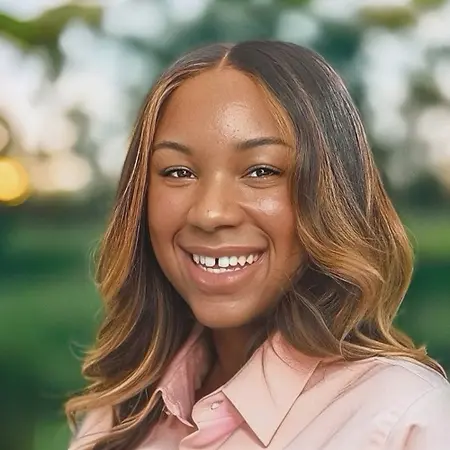
Influential Woman · Creative Operations | Video Production | Marketing |Brand Storytelling
Neriah Kharece
CEO and Founder, Kharece Productions LLC | StoryOps AI
Mcdonough, GA 30252
Her Story
About Neriah
I launched my own production company back in 2013. I've worked every role on a set, from production assistant to creative director, and I've watched great ideas die because the process around them was broken.
That's why I built StoryOps AI. Most creative teams don't have a talent problem. They have an operations problem: unclear ownership, bottlenecked approvals, the wrong vendors, and no way to prove what's working. I help teams find where the friction is and build systems that let their best work actually get made.
My approach comes from doing this at scale. At Toast, I built the Customer Stories Program from the ground up and ran production across three countries and multiple agency partners. Before that, I made content for brands like BET, PepsiCo, and HGTV, and I directed films that went on to festival wins and streaming distribution.
Today I partner with brands on creative operations, video production strategy, and finding and vetting the right agency and creative talent. If your team is making great work the hard way, that's the conversation I want to have. You can start with my free 2-minute Creative Ops Friction Index at storyopsai.com.
Her Interview
Ten minutes with Neriah
01What do you attribute your success to?
I attribute my success to my child, who is my biggest motivator, but also to the fact that sometimes you just don't have a choice - it's sink or swim. When I was laid off, it was a big revelation that I didn't want to be in that situation again, so I was super motivated to never go back to the bottom of having literally nothing. I wanted my child to be comfortable and not have to go through that. Another motivator is that there's not a lot of Black women leaders in my industry. You don't see a lot of people that look like me in C-suites, as studio owners, or as executive producers winning awards. I wanted to be one other person that can say, hey, I did it, and you can too, even in my circumstances. That's why I'm super proud of even the small film festival wins I've been able to get. It feels good to just be like, yeah, I'm just like a nobody over here, but I was able to do something. These things play in the back of my head as I think about purpose and why I don't give up and keep going.
02What’s the best career advice you’ve ever received?
The best advice I got was from a fellow cinematographer friend when I was getting really caught up on reputation and worrying about what people were saying. I was very stressed out and had a lot of anxiety about how I looked, how I seemed, or how I came off. The advice was basically that at the end of the day, people are going to perceive you how they perceive you, but you know what your truth is. As long as you know that you're being professional, you're always moving in a well-intended way, you're moving honestly, and you're staying booked, you're doing something right. You can't get caught up in not taking gigs because you're worried about how you'll look, or telling everybody yes because you don't want to come off a certain way. That really just diminishes your work and what you want to do, because you're taking work that doesn't align with your purpose and your goals and what you know your best work to be. You're getting caught up in what other people are thinking, but at the end of the day, you're still getting booked, people still want to work with you. Focus on the people that when you walk into the room, they understand you, they get you, they know who you are, they see the vision. You kind of have to let the rest roll off, because people that are not going to get it, they're just not going to get it anyway. The work that's meant to find me is gonna find me.
03What advice would you give to young women entering your industry?
My biggest advice is to bet on yourself and be a little delusional. A lot of people get caught up in not having enough experience, thinking maybe they need to go to school, or they don't have any connections. What I learned from my experience was literally just be delusional and show up in these rooms like you're supposed to be there, and introduce yourself. I'm actually very introverted, but I kind of taught myself and pretended long enough to make it work. You really do have to get out of your shell and just show up and make yourself visible. Visibility is huge. I was so introverted and didn't want to go to networking events, or I would go but hang back, and that's not really gonna get you seen. When you show up, you can't show up in the room like you're not supposed to be there, or like you're a fraud, or with imposter syndrome. You're in the room, you're there for a reason, because you're supposed to be, and you kind of have to take ownership of the fact that you know what you're talking about, you went to school, you've done things, you know what you're doing. Give yourself the praise that you deserve, because no one's gonna see the value in you until you do it first. Once I started doing that, people started to advocate for me when I wasn't even in the room. That's how you become memorable. Don't feel like you're not supposed to be in a room. Show up, make yourself visible, and own your worth.
04What are the biggest challenges or opportunities in your field right now?
The biggest challenge in my field right now is AI — and more specifically, the misunderstanding of what AI should actually be for creatives. It should function as an enablement tool, not a replacement strategy. Across the industry, the conversation has almost entirely shifted to AI integration — how to use it thoughtfully, how to preserve creative quality, and how to protect the humans doing the work. The fear isn’t irrational either. Creatives are genuinely asking: am I building something that eventually phases me out? That’s a real and valid tension that leadership needs to take seriously.
My personal belief is that AI cannot replace what a human brings — the lived experience, the cultural context, the taste. You can’t teach a machine subjectivity. You can’t replicate soul. I’d hope companies lean into that truth and use AI to amplify their creative teams rather than shrink them.
On the film side, the opportunity is enormous but underutilized. Audiences are hungry for original, authentic stories from communities that rarely get the spotlight. We’re in a cycle of reboots and nostalgia — and I think the market is ready for something different.
05What values are most important to you in your work and personal life?
The values most important to me are empowerment, systems thinking, hard work, being seen, and genuinely enjoying the life you’re building.
I carry the same philosophy across everything I touch. In professional environments, I’m always pushing back on the idea that dysfunction is just the cost of doing business. We are in the weeds every single day — we understand the work at a level that senior leadership often can’t — and that expertise should translate into real influence. Feeling empowered to say ‘this isn’t working, and here’s a better way’ is something I fight for wherever I am.
I’m also deeply committed to systems and structure because I believe they’re what allow creative people to actually do their best work. Creative work shouldn’t be stressful by default. The goal of building good processes is to protect the creative energy — to make space for the work to be expressive, collaborative, and meaningful, while still meeting real business objectives. Those two things aren’t in conflict if the infrastructure is right.
And beyond work — I genuinely believe life should be enjoyed. It’s both short enough to take seriously and long enough to be intentional about. I don’t want to just survive my career. I want to build something that sustains me, excites me, and leaves something behind
Join Influential Women and start making an impact. Register now.