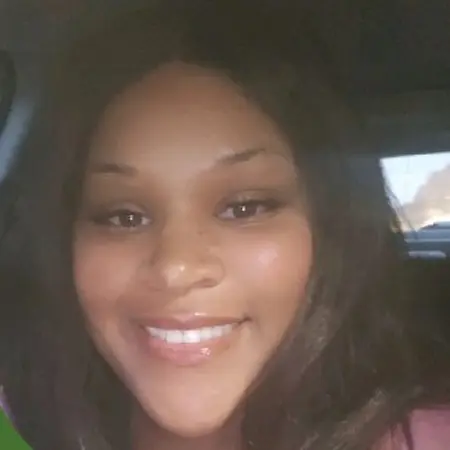
Her Story
About Nialah
My journey into tech consulting and customer success has been unconventional. I graduated from Norfolk State University in 2011 with a degree in music education, but by the time I got to student teaching, I realized I didn't want to be a music teacher. After five years of school, I worked in the service industry and nightlife industry doing management, promotion, and hosting different types of venues and scaling businesses. Then I got into tech, and I kept telling them, I'm a musician, I have absolutely no idea what I'm doing. Everyone kept saying don't worry, you'll be fine. I positioned myself knowing that everyone else knew much more than I did because they went to school for this and I didn't. So I began to take hold of every single training, every single talk, every lunch and learn, everything. My team would ask what event or learning or vendor demonstration I was going to today because I went to that many. I was just trying to be on a level with everyone else, and I began to surpass many people because when you already think you know something, you're no longer searching and growing intellectually in your niche. I was so hungry because I had no idea what was going on. After two and a half years, I was like, this is absolutely amazing, this is what I want to do. My project management foundation evolved into account management, then customer success management, where I discovered the power of relationship building through empathy and connecting not just through sales and data, but through understanding the growth process and nuances with the customer. I took all of those pieces with me into consulting and client growth and strategic management.
Her Interview
Ten minutes with Nialah
01What do you attribute your success to?
I attribute my success to never stopping being a learner of my niche or craft, and always having the mindset that there is someone that is better than me. It's not as a downer, but so that I always keep going and adding to myself. When I first got into tech, I had absolutely no idea what I was doing - I was a musician, not a technical person. But I positioned myself knowing that everyone else knew much more than I did because they went to school for this and I didn't. So I began to take hold of every single training, every single talk, every lunch and learn, every vendor demonstration. My team would ask what event I was going to today because I went to that many. I was so hungry to learn because I had no idea what was going on. I began to surpass many people because oftentimes when people think they already know something or already have that background information, they get to a point where they're no longer searching and growing intellectually in their niche. But I was hungry and taking in everything, and I found myself immersed in this world.
02What’s the best career advice you’ve ever received?
The best career advice I've ever received is to never stop being a learner of your niche or your craft, and always have the mindset that there is someone that is better than you. It's not meant as a downer, but so that you always keep going and adding to yourself. This advice has shaped my entire approach to my career. When I started in tech without any technical background, I could have been intimidated and given up, but instead I embraced being a learner. I went to every training, every lunch and learn, every vendor demonstration my company offered. While others who already had technical degrees thought they knew everything, I stayed hungry and kept growing, which allowed me to surpass many of them.
03What advice would you give to young women entering your industry?
I would say learning how to grow and learning how to secure a position is great, and learning the position is great, but you must also add to yourself learning how to lose. That does not mean you want to lose, but that does mean that when your plan doesn't take place, you know how to pivot, and you don't allow that history or that data to dictate what your future is. Just like the data of our life and our history doesn't dictate what our future is, when you pivot, you have an opportunity to use that data to change what the future holds, whether it's for a person or for a company. You can eliminate the factor of going back to it or repeating the same things that have already been done.
04What are the biggest challenges or opportunities in your field right now?
I believe the biggest challenge is the differentiation between customer success and consulting. Consulting is high level but short-term - a consultant is like a doctor. They're gonna go in, we're gonna see what your problem is, and then we're gonna tell you what to do to fix it. And then we leave. That's it. Customer success management is creating the relationship. It's applying the empathy, it's listening to what's not being said, it's analyzing the data, and it's creating a path for scalability, and then staying with the team for that path, and being able to pivot when parts of the plan are not working. So often people look at customer success and they're like, oh, it's just a consultant. But actually, your customer success manager is going to go through with you through the project - they're more long-term, whereas a consultant is just short-term. We're gonna tell you what to do, and we'll leave you to it.
05What values are most important to you in your work and personal life?
My values are aligned with the customer. First is empathy and listening - that's the top. Without knowing and really listening to the customer, and unfortunately this is also a part of listening, you have to hear the things that are unsaid. There's a whole world of speech that is not said through body language and through how things are positioned, so sometimes you gotta read between the lines. Another value I focus on is data. Just like anything else, a company has a history, and that history is the data. Now, the data does not dictate what the future of the company is, just like the data of our life and our history doesn't dictate what our future is. When you pivot, you have an opportunity to use that data to change what the future holds, whether it's for a person or for a company. And then I look at scalability or growth. Now that we know the data, we're assessing the data, we are now using the data to figure out what our next path is, so that scalability is inevitable and that growth is inevitable. What is for sure is that you can eliminate the factor of digression or going back to it or repeating the same things that have already been done.
Join Influential Women and start making an impact. Register now.