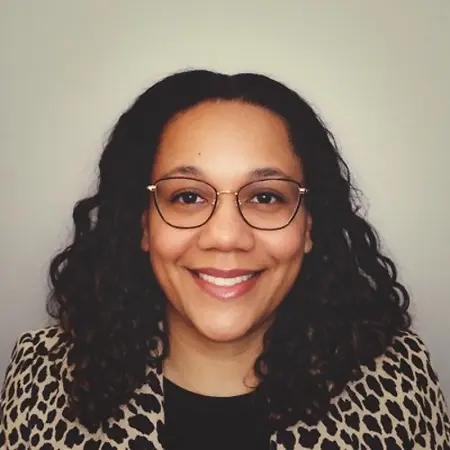
Her Story
About Nicole
I started my career in risk and control fresh out of college, working in banking operations where I was thrown into the fire and had to learn everything from scratch. I moved through regulatory reporting and financial reporting, which strengthened my knowledge of what we report to regulators and the importance of meeting those timelines. Then I evolved into regulatory build-out around Sarbanes-Oxley requirements before transitioning into consulting and contracting - a pivot that exposed me to fast-paced, result-oriented environments focused on meeting regulatory findings and developing solutions. Relationship building became key as I worked with new teams and had to build trust quickly, sometimes within just a couple of months. When I became full-time staff at major banks, I could finally see the impact of my work from end to end, watching how my contributions were enveloped into BAU processes. I was able to provide training to junior staff and new hires, passing along techniques and know-how from one organization to the next. Citi has been the most profound impact on my life - I started there straight out of college, had my kids there, bought my first house and car, and then moved to another country, all while growing exponentially within the organization. Now I'm no longer just doing a job - I'm influencing processes and decision-making, strategically aligning our functional priorities with what the businesses require to increase revenues, enhance presence, and reduce reputational risk. I was recently nominated as an AI influencer and have been involved in driving AI implementation from beginning to end, ensuring that AI models used in new products and services meet resilience requirements. My current focus is operational resilience, which goes beyond business continuity to ask how we prevent and minimize disruptions. On a day-to-day basis, I'm doing horizon scanning across the board - looking at incidents, vulnerabilities, dependencies, third-party risks, and concentration risks to provide feedback to management, business stakeholders, and the board about our resilience posture.
Her Interview
Ten minutes with Nicole
01What do you attribute your success to?
I attribute my success to my ability to share knowledge in a way that people can truly understand. It's not just about talking or using industry jargons - it's about making sure people can connect the dots. The feedback I've gotten consistently, if you look at my performance reports, is that when I communicate what is expected and what the end result we're looking for, stakeholders are able to understand and meet us halfway. That has always been my concern - how are we communicating to our environment around us in such a way that they can understand? I'm known for connecting the dots across the board, and I think that's my hallmark. Beyond communication, I'm a great collaborator who can pull people together and work amicably even in the midst of issues and challenges. I'm able to help people see the win, even in the midst of disaster and troubles. I'm very resilient - I'm able to say to them, okay, this is the win for what we're doing, and let's just try to navigate the storm and get to it.
02What are the biggest challenges or opportunities in your field right now?
The biggest challenges in operational resilience right now are the external geopolitical factors that have made our work more intense over the past year. We're looking at the war in the Middle East, the war in Ukraine, and limited resources - all of these geopolitical threats exist and we have to consider how they're impacting the businesses. My focus is on how we can be proactive to ensure that these threats don't become a significant factor in disrupting our services to our clients. We need to speak to the business about these external factors and work on strategic approaches to minimize their impact. The opportunity here is in operational resilience itself, which is a fairly new topic that's coming out of business continuity. Instead of just asking how we continue the business after a disruption, we're now asking how we prevent and minimize the possibility of a disruption in the first place. We're focused on prioritizing critical processes and services, tracking vulnerabilities, monitoring concentration risks, and providing clear visibility to regulators, the board, and stakeholders about our resilience posture. It's about being able to readily identify risky areas and understand what the impact would look like on customers and our reputation.
03What values are most important to you in your work and personal life?
The importance of giving back is always there with me - it's fundamental, it has to be done, and I feel like giving back embodies who I am. It's what I like doing. Even though I have small children and haven't had as much time as I'd like, my ultimate goal is really to build that out because it's something that's core to who I am. In my work, the most important facet of who I am is the ability to work amicably with people in general and pull people together. I do that very well - I'm a great collaborator, and even in the midst of issues and challenges, I try to push past that. I'm able to help people see the win, and I think that's my greatest gift. In the midst of disaster, troubles, and issues, I'm able to say to them, okay, this is the win for what we're doing, and let's just try to navigate the storm and get to it. I'm very resilient.
Join Influential Women and start making an impact. Register now.