A personal essay about reconnecting with one's roots in the Great Plains through the creation of a public history podcast, exploring themes of identity, belonging, and self-discovery rooted in the landscape.
Her Story
About Nicole
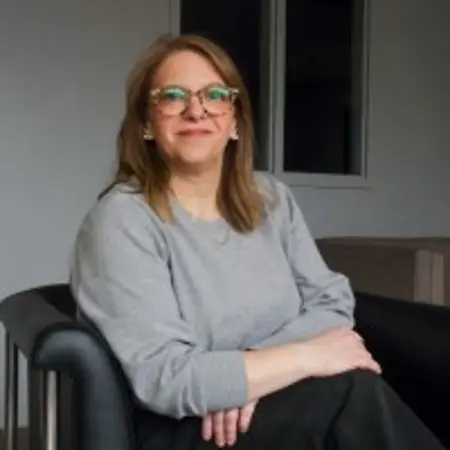
Nicole Blackstock is a dedicated higher-education professional and public historian based in Lincoln, Nebraska. She currently serves as Assistant to the Dean in the College of Journalism at the University of Nebraska–Lincoln, where she manages a wide range of college operations, including scheduling, student travel, promotion and tenure processes, and committee leadership. Nicole has spent over 13 years at the university, advancing from clerical assistant roles to her current position while developing a reputation for her problem-solving skills, institutional knowledge, and commitment to student advocacy. Alongside her administrative work, Nicole is a passionate public historian. She created and produces Rooted in the Plains, a narrative podcast exploring the history of the Great Plains before 1920, which began as her undergraduate thesis and capstone project. The podcast showcases her research and storytelling abilities, drawing on archival sources, oral histories, and collaborations to provide culturally informed and accessible historical content. Through her work, she has reached listeners across multiple U.S. states and countries, demonstrating how public history can engage broad audiences while maintaining scholarly rigor. Nicole’s career journey also includes 11.5 years in the insurance sector, where she gained experience in data entry, customer service, quality assurance, and SOP development while collaborating with offshore teams. She holds an Associate’s degree in Business Administration and a Bachelor's degree in History. In addition to her professional work, she serves as a member of the First-Generation Nebraska Advisory Board and as an advisor to the College of Journalism’s Student Advisory Board, underscoring her dedication to mentorship, education, and community engagement.
Her Interview
Ten minutes with Nicole
01What do you attribute your success to?
I attribute my success to the independence and hands-on work ethic I developed growing up in a small town. There wasn't anyone else in my class in my town, so all my friends were different age groups, and I had to do things on my own from an early age. My family - my dad, mom, and grandparents - always taught me how to do things hands-on. They showed me how to garden and bake from scratch; it was always very hands-on learning. That hard work ethic of just going in and getting it done from the basics is what I've carried with me and taught my kids. I tell them, " You want to go do it? Let's get in, figure it out," I'm a very hands-on learner - if you're going to tell me I need to do something, I'm going to dive in and literally figure out how it works. I'll ask questions, start looking things up, and figure out how it all works. I want to learn it all, learn how to do the things, and you need to keep learning. That persistence and curiosity, that willingness to just keep learning and never stop, is what drives everything I do.
02What advice would you give to young women entering your industry?
You need to find your comfort spot, where you feel the most confident (and you can put the imposter syndrome behind you - which I get, it's hard) But find that place where you're comfortable, where you feel like you've got the knowledge base that are confident in, you've got an ounce of confidence in it, take that step, do it. If others try keep trying to push you down, when you can visible see the progress, then they're not your people. They don't have your back. You take the step forward, go for it, try it, and see what happens. That could be your path. You're not gonna know until you try, so take the leap.
03What are the biggest challenges or opportunities in your field right now?
The biggest challenge in higher education right now is artificial intelligence - it's truly a double-edged sword. One of my coworkers was on the fence at the beginning and showed it to us, saying there are so many good things it will do, but you have to be very careful with it. There's good functionality, but then there's bad. You kind of have to use it to your advantages in the way that you need to monitor what you're doing, but yet use it ethically in ways that it will help you do what you needed to do. In the field of higher education, for what students are using it for and the ways that it's not helping them, it's not good. But in the ways that some of us use it in the administrative way for productivity, I can see how it can help. There are times where I need to send an email out and I think, what would be the best way to word this to get my point across in the simplest way so that it's effective? My coworker uses it to run a whole bunch of data and metrics in the background while she's doing other things to make her time more efficient. Our coworker who does a lot of coding has been able to help set that up so she can run stuff in the background that can help her do her job more efficiently, versus the way that other things are happening in other industries and other professions. That's the piece that's making things so difficult - it just depends on how it's being used in different ways and how it's being taught to students right now. The opportunity for growth is definitely there in the way it can be used for productivity and ease, depending on your field. As an executive assistant, if you're able to get things done in a more effective, efficient way, that's fantastic. If you can create a template for an email that you send on a regular basis, great. But if you are doing something that's unethical, then that's a downside. If people don't see which side of the sword they're using, then that's going to create an issue.
04What values are most important to you in your work and personal life?
I believe in just diving in, figuring things out, asking questions, and learning how it all works. I'm driven by an insatiable curiosity - I just want to learn it all, learn how to do the things. Most importantly, I believe you just need to keep learning. Education and lifelong learning aren't just professional values for me, they're personal ones. Even while working full-time and raising two kids, I'm finishing my bachelor's degree and building a podcast to make public history accessible to people, because I want everyone to have those few minutes to listen to something short and digestible that might make them curious to go learn more.
Her Content Hub
Articles by Nicole
What Brings You Comfort Can Also Be Your Path
Finding my way back to the Plains—and to myself.
As golden hour slips into dusk, you can hear the sound of wind sweeping across fields and the call of the red-winged blackbird. Summer evenings are spent preserving fireflies in jars as the tall grass sways at the edges of everything in the breeze. There is that familiar crunch of gravel underfoot as you step out of the grass, taking one last sweep of your outstretched hands, brushing your fingertips along the blades.
The Plains have a way of getting into your soul quietly, without announcement. You can take the girl out of the Plains, but you can’t take the Plains out of the girl.
I’ve lived about an hour from my hometown my whole adult life. The Great Plains have never left my view; there’s even a lake less than half a mile from my house that brings me back to the feeling of home. And yet, somewhere in the busyness of building a career, pursuing a degree, and showing up for everyone else, I lost the thread back to myself.
I was exhausted. Invisible in the way that women who hold everything together often are—present everywhere, seen nowhere. There was an expectation of who I was supposed to be, and I filled it the best I could. What I wanted, if I even knew, felt like a luxury I hadn’t earned.
So I went through the motions. The feeling of the Plains was half a mile away, and I was too tired to look up.
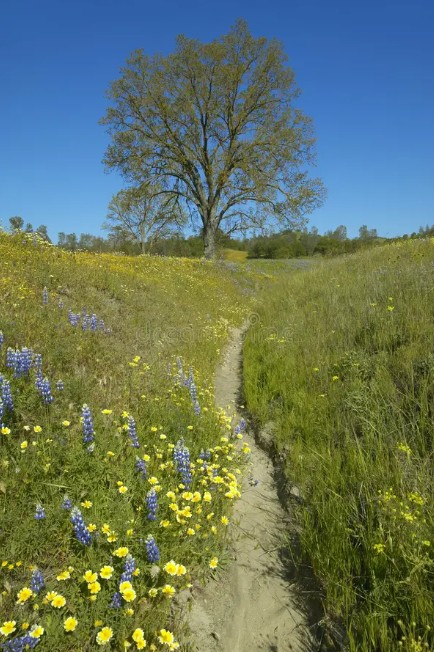
When I’ve needed to find my center, I picture a tallgrass meadow filled with wildflowers, with a slightly flattened path winding up a gentle hill. There is a tall tree at the end of the path. That is my comfort spot: the beginning of the path, through the tall grass, leading to the tree. I can hear the quiet, the breeze, the grass moving, the openness.
It’s been that image for at least six years now; if it’s been longer, I don’t remember.
But something about those long walks by the lake started planting something—an idea. Quiet at first, easy to dismiss. I didn’t know if I had the skills. I didn’t know if I had the confidence. So the idea just sat in the notes on my phone for a couple of years.
Then I pitched the idea to a professor, someone I hadn’t even met in person—just a face on a Zoom screen. A stranger, really. And he saw something I couldn’t see in myself. He didn’t just say yes. He pushed further, expanded the scope, and gently shoved me off the roof in exactly the way I needed.
I’m not naturally someone who self-promotes. That’s still a skill I’m working on. But at that moment, something cracked open.
It happened in the process of putting together my undergraduate thesis presentation—finding the words, reflecting on the work, articulating out loud why this project mattered to me in the first place. The thoughts had always been there. I just hadn’t expected what would surface when I finally had to say them.
A year of significant change and growth has a way of bringing things to a point. Everything converged—the work, the reflection, the life—and somewhere in all of it, I looked up and realized I was more rooted than I had given myself credit for.
I produce a public history podcast called Rooted in the Plains, where I tell stories of the people and places that shaped this region. The name felt right from the beginning, because rootedness is what this landscape is about. Not drama. Not spectacle. Just depth. Staying power. The kind of identity that doesn’t announce itself but holds firm under pressure.
And now? I’m just getting started.
The Plains are not a backdrop to my story; they are the story. The research, the history, the land itself. There are places to explore, stories buried in the soil that haven’t been told yet, people who have lost that thread back to this landscape and don’t even know it. I want to travel the Great Plains, dig into their history, and bring those stories forward—to connect people back to the land, to the past, to their roots.
To my roots.
When I close my eyes and picture my tallgrass meadow, with the tall tree waiting for me, that path seems a bit straighter. And as I look around, I realize I’m not at the beginning anymore.
Join Influential Women and start making an impact. Register now.