Her Story
About Nicole
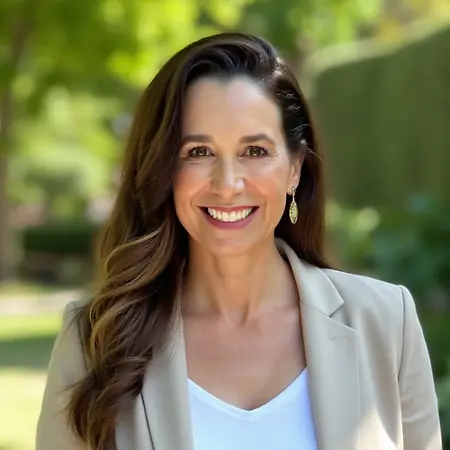
Nicole L. Holland is Senior Director of Clinical Education & Training for the Urology Division at Boston Scientific, where she leads clinical education teams supporting the Endourology, Urologic Cancer, Prosthetic Urology, and Pelvic Health franchises. With more than two decades of experience in the medical device industry, she has built a diverse career spanning quality assurance engineering, clinical and technical field support, physician and nurse education, clinical research, sales support, and organizational leadership. She currently leads a team of approximately 45 people, including seven direct reports, and is focused on ensuring healthcare professionals have the knowledge and skills necessary to use advanced medical technologies safely and effectively.
Nicole began her career as an engineer after earning a B.S. in Chemical Engineering from New Mexico State University. She later transitioned into medical devices, taking on increasingly broad responsibilities that brought her into operating rooms alongside physicians and patients, into clinical and technical education, and into leadership roles. Over the course of her career, she has developed and delivered educational programs for clinicians in the United States and internationally, supported clinical research initiatives, led field engineering and clinical teams, and contributed to leadership and emotional-intelligence development. Mentorship is a particularly important part of her leadership philosophy. During COVID-19, she helped pioneer a mentoring program with other female leaders to support women working in field-based roles who lacked the same opportunities for connection available in office environments. Beyond her corporate responsibilities, Nicole is committed to mentoring, STEM education, and community involvement. Through Project Scientist at Caltech, she has supported efforts to engage and empower girls interested in science, technology, engineering, and mathematics, while she also coaches and mentors employees at Boston Scientific. She supports organizations and initiatives including Rady Children’s Hospital, the San Diego Humane Society, local farmers, and fundraising efforts benefiting first-generation college students. Looking toward her next chapter, Holland is exploring the possibility of using her experience in healthcare, leadership, communication, and public speaking to develop a consulting practice focused on helping physicians and other professionals communicate more effectively, lead teams, navigate difficult conversations, and strengthen their relationships with patients and colleagues.
Her Interview
Ten minutes with Nicole
01What do you attribute your success to?
I attribute much of my drive and success to my parents, who were consistently supportive of both me and my older sister. My father always emphasized that it does not matter what we choose to do, as long as we try to be the best at it. That mindset has stayed with me throughout my career. When I face something new or experience fear or imposter syndrome, I remind myself of challenges I have successfully navigated in the past. I then tell myself to try, and trust in my past history that I can handle whatever comes next. One of my mentors once told me, "When you want something, you don't stop."
02What’s the best career advice you’ve ever received?
You need to find people that are at your same level or above that you can talk with, vent to and share experiences with because, you are all going to be going through the same things and need a safe space with someone who can relate.
03What advice would you give to young women entering your industry?
My advice to younger women is to recognize that every experience has value, including difficult experiences and encounters with leaders you would not want to emulate. I did not receive much mentorship from women early in my own career, and some of those challenging experiences taught me the type of leader I did—and did not—want to become. I believe women should share information, collaborate, support one another, and help each other advance rather than viewing one another as competition. There is room for everyone to succeed. I also encourage women to learn from every experience, use difficult situations as opportunities to understand the kind of leader they want to become, and recognize their own potential. With the rise of AI, it's important to still become skilled at interpersonal communication. AI might be able to prep your opening bullet points, but you need to be able to handle it from there...and in a skillful way. Word choices and body language matter.
04What are the biggest challenges or opportunities in your field right now?
One of the opportunities I see is helping people develop stronger communication and leadership skills, particularly in situations where prepared talking points are not enough. AI can be extremely useful for efficiency and preparation, but it cannot replace the human side of communication. There is a significant opportunity to help healthcare professionals communicate effectively with their patients, set appropriate expectations, lead teams, navigate difficult or productive conversations, and respond thoughtfully when discussions do not go as planned. I am particularly interested in the potential to use my experience working with professionals, clinicians, and leadership teams to help people become more effective communicators. Public speaking and career coaching are also areas I see as meaningful opportunities and skills that I have polished over the years. As healthcare and technology continue to evolve, I believe maintaining the human connection, possessing foundational skills (not soft skills) of Emotional Intelligence, understanding other's preferred communication styles, and developing the ability to have productive conversations will remain essential.
05What values are most important to you in your work and personal life?
I value mentorship, collaboration, communication, leadership development, continuous learning, and supporting others. I believe strongly in helping people recognize their potential and creating environments where individuals can learn, grow, and succeed together.
I also value resilience and perspective. Some of the most difficult experiences in my career ultimately led me toward new opportunities, greater leadership responsibilities, and increased influence. Those experiences reinforced for me that a setback does not necessarily mean the end of a path; sometimes a door closes and creates an opportunity to move toward something new.
Join Influential Women and start making an impact. Register now.