Her Story
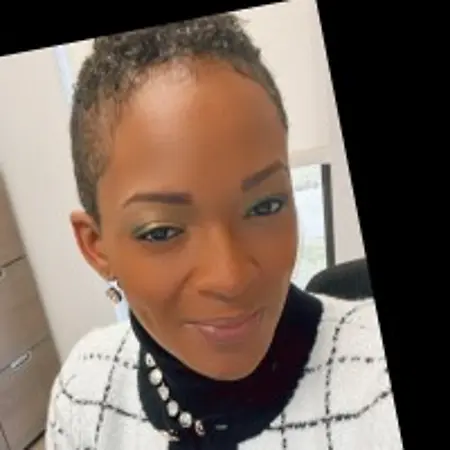
About Nicole
Nicole Hudson is a strategic business connector based in Pittsburgh, Pennsylvania, with over a decade of experience in economic development, supplier readiness, and small business growth. She currently serves as the Director of the Center of Excellence in Supply Chain under the Small Business Development Center at the University of Pittsburgh, where she designs and implements programs that prepare businesses to compete for institutional contracts with major organizations such as UPMC.
Nicole’s work emphasizes a full-cycle approach that integrates business education, capacity-building, and direct alignment with procurement opportunities—ensuring that businesses are not only prepared, but positioned to successfully access and perform on contracts.
Under her leadership, supplier readiness programming has experienced significant growth. She led the transition to a more scalable and cost-efficient hybrid program model, expanding reach from local and statewide audiences to multi-state participation while significantly increasing engagement and program impact.
Through her work within the University of Pittsburgh’s Institute for Entrepreneurial Excellence, Nicole contributes to programs that collectively support thousands of small businesses annually, delivering significant consulting hours and driving measurable regional economic impact.
Nicole began her career at the University of Pittsburgh’s Katz Graduate School of Business, where she supported executive leadership and institutional initiatives, building a strong foundation in strategic operations and stakeholder engagement. She later transitioned into economic development and supplier inclusion, where she has built a reputation for connecting small businesses to real, scalable opportunities.
Over the years, she has cultivated long-term relationships with entrepreneurs, mentoring them through strategic growth, capacity-building, and entry into large-scale procurement opportunities. Her work focuses on bridging the gap between access and execution—ensuring that businesses are not only introduced to opportunities, but equipped to succeed within them.
Nicole holds a Bachelor of Science in Management and is currently pursuing a Master’s in Public Policy and Management. She also serves on the Pittsburgh Steelers 2026 NFL Draft Source Council, supporting efforts to connect small businesses to high-profile contracting opportunities.
Her professional philosophy centers on intentional access, relationship-driven leadership, and creating pathways that translate readiness into real outcomes. Through her work, Nicole continues to advance inclusive economic development by aligning education, strategy, and opportunity to help small businesses grow and compete.
Her Interview
Ten minutes with Nicole
01What do you attribute your success to?
I attribute my success to building strong relationships, fostering collaboration, and strategically aligning education with real-world contracting opportunities to drive measurable results.
02What advice would you give to young women entering your industry?
Life is a journey—you don’t have to have all the answers right now. Give yourself permission to grow into who you’re becoming.
Be intentional about the spaces you’re in and the people you surround yourself with. As women, we carry a lot, and it’s important to be in environments that pour into you, challenge you, and help you grow—not ones that drain you.
Never stop learning. Even in my 40s, working in business education and engaging with leaders across industries, I’m constantly evolving. We’re operating in an ever-changing environment, and staying curious, adaptable, and open to learning is essential.
At the same time, don’t just learn—apply what you learn. Seek out real experiences, get in the room, ask questions, and position yourself close to opportunities. Growth happens through both knowledge and action.
Give yourself grace along the way. Pace yourself. There will be hard days—and that’s okay—but tomorrow is always a new opportunity. As life shifts through different seasons, the ability to adapt is what will keep you moving forward.
Also, understand what is within your control. You can’t control everything around you, but you can control how you show up, how you prepare, and how you respond. Focus your energy there.
Build your network intentionally. Create an ecosystem of people—especially other women—who support, uplift, and challenge you. Relationships matter in this work, and the right network can open doors, provide perspective, and sustain you through transitions.
And most importantly, don’t shrink yourself. Take up space, trust your voice, and recognize that you belong in the rooms you step into.
You don’t have to rush your journey—you just have to stay committed to it.
03What are the biggest challenges or opportunities in your field right now?
One of the biggest challenges—and opportunities—is access to meaningful opportunity.
That’s what truly grounds me in this work. I’m actively engaged in conversations with both small businesses and large institutions, and what I consistently see is that access alone isn’t enough. The real opportunity lies in ensuring that people are not only exposed to opportunities, but are fully prepared to seize them and sustain success over the long term.
For me, it’s about taking what I’m learning in real time—through partnerships, programming, and direct engagement—and translating that back into the community. Whether that’s through designing programs, building connections, or creating pathways, the goal is to make opportunity more accessible, more intentional, and more actionable for the next person.
It always comes back to education and opportunity working together. When people are equipped with the right knowledge, resources, and support, they are in a much stronger position to recognize and act on opportunity when it presents itself.
04What values are most important to you in your work and personal life?
At the core, I value people—across all backgrounds, perspectives, and experiences.
Everything I do is rooted in what I would describe as care-based leadership. I genuinely care about people and recognize that everyone is navigating something, whether at home or at work. That awareness shapes how I lead, how I engage, and how I show up.
I believe you can’t accomplish meaningful work alone. Leadership requires trust, collaboration, and a commitment to serving others. For me, it’s about creating an environment where people feel supported, valued, and positioned to grow.
If there’s something within my power to do—whether it’s helping someone become better, connecting them to an opportunity, or guiding them toward success—I take that seriously. I see my work as service, and I’m fortunate to be in a position where I can help others move forward.
At the end of the day, success isn’t just about individual achievement—it’s about how many people you bring along with you. That’s the value I carry with me in both my work and my life.
Join Influential Women and start making an impact. Register now.