Her Story
About Nicole
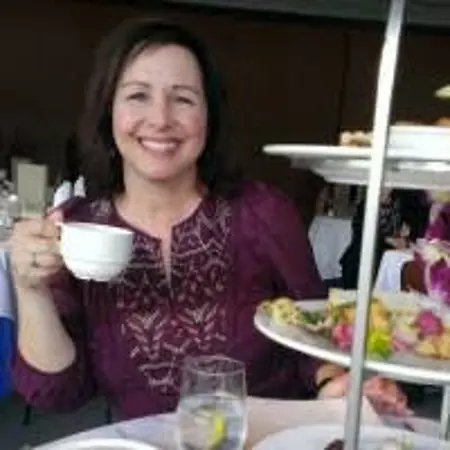
Nicole Rostoker, OTR/L, SW, CLE is an Occupational Therapist, Lactation Educator, and pediatric feeding specialist based in Santa Monica, California. She earned her Bachelor of Science in Occupational Therapy from San José State University, graduating in 1990. She began her career in adult rehabilitation, where she built a strong foundation in functional recovery and patient-centered care, but she always held a deep interest in pediatrics and neonatology. In the mid-1990s, she transitioned into pediatric practice in Santa Barbara, California, marking the beginning of her long-standing focus on infant and child development and feeding therapy. In 1998, Nicole accepted a full-time outpatient pediatrics position at Cedars-Sinai Medical Center and relocated to Los Angeles, where she expanded her clinical work into neonatal intensive care and acute pediatric settings. She later joined UCLA Health in Westwood in a 32-hour role that allowed her to broaden her practice into home health, while also maintaining a per diem position at Cedars-Sinai in NICU and infant follow-up care through the first years of life. During her 12.5 years at UCLA, she balanced hospital-based acute care, neonatal follow-up, and an expanding in-home pediatric practice. She left UCLA in 2014 to further develop her private practice, and that same year joined Children's Hospital Los Angeles (CHLA), where she has now worked for more than a decade in neonatal intensive care and acute pediatrics, with a specialty focus in dysphagia and feeding development. She also continues as an occupational therapy vendor for Westside Regional Center and maintains an active home health practice, following many infants through their earliest years of development. Alongside her clinical work, Nicole has made significant contributions to research, education, and professional leadership in pediatric feeding. She has participated in a IRB-approved study on oral-motor interventions and feeding outcomes in infants with Congenital Heart Disease and is an active member of CHLA’s dysphagia and feeding teams. She was recruited by Feeding Matters, where she served as Chair for the California Council during its pilot phase and continues to remain actively involved as a volunteer. Most recently, she co-presented in Texas at the National Neonatal Therapy Conference on identifying Pediatric Feeding Disorder in the neonatal period, reflecting her continued commitment to advancing clinical knowledge and improving outcomes for vulnerable infant populations.
Her Interview
Ten minutes with Nicole
01What do you attribute your success to?
I attribute my success to a strong and consistent support system that has grounded me throughout every stage of my personal and professional journey. Having the encouragement of family, colleagues, mentors, and interdisciplinary teams has allowed me to grow with confidence, take on new challenges, and remain committed to both clinical excellence and lifelong learning. Their support has given me the stability to balance a demanding career in pediatrics and neonatology with ongoing research, private practice, and leadership roles, while continually expanding my expertise in pediatric feeding and developmental care.
02What’s the best career advice you’ve ever received?
Right before my OT program at San Jose State University kicked off, one of the mental health professors told us, 'You will know 10% of what you need to know when you leave here. And everything that you are going to learn for this career and this specialty, you will learn hands-on out in the world.' I literally sat in the classroom and cried. I will never forget her saying that to me. When you think of all the studying and all the different things you learn in these classes in a university program, for a professor to tell you that you're going to leave there knowing 10% of what you need to know, it really opened up my mind to know that there's going to be a lot of learning ahead, like school of hard knocks kind of learning. Even with all of the amazing information that I took away from that program, and what I learned, and all the finals I sat through, it was a very reality-based advisement.
03What advice would you give to young women entering your industry?
Don't give up. If you feel like you're getting knocked down a little bit and you get discouraged, there's always a silver lining. Keep trying, because the repetition can really make a difference. Just be open to opportunity to learn and be exposed to volunteering. I always recommend people volunteer when they're trying to get into the field, because you may even be in a different practice setting and you can learn so much more insight and so many more ways of hands-on practice. I feel like it takes a lot of experience to build a solid foundation. I would tell a new grad to not ever go into home health practice or private practice right out of school, because you really need to be in a hospital-based setting or a group where you can interact with multiple types of medical professionals. It really gives you a solid foundation to learn about the multidisciplinary approach to practice. I feel like there's so many more people in a hospital setting that can be supportive of a new grad for learning. Always go into a setting where you're going to be meeting a lot of people and seeing a lot of different types of cases. Even if you know that you want to go into pediatrics at some point, try and get an adult rehabilitation or adult physical disabilities exposure background first. Or even if you want to start working at a school, at least you can learn what normal development is, so that when you do start seeing babies and children that are not having a typical, normal developmental trajectory, you have a foundation of what normal is so that you can better help someone.
04What are the biggest challenges or opportunities in your field right now?
Reimbursement for service, along with continuing community awareness about the roles of Occupational Therapy.
05What values are most important to you in your work and personal life?
The value most important to me in both my work and personal life is integrity. I strive to practice with honesty, accountability, and respect in every clinical decision, professional collaboration, and patient interaction. Integrity guides how I advocate for infants and families, how I contribute to interdisciplinary teams, and how I approach research and evidence-based practice. Personally, it means staying true to my principles, maintaining trust in my relationships, and consistently showing up with authenticity and compassion in all aspects of my life.
Join Influential Women and start making an impact. Register now.