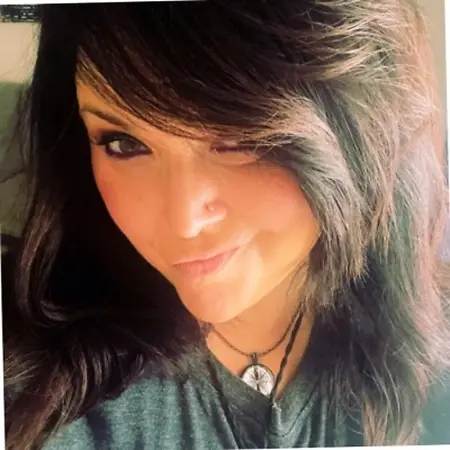
Her Story
About Nicole
I've been working in mental health for over 17 years, serving every population from ages 5 to 100, including hospice, law enforcement, trauma-informed care, CBT, and homelessness. I work at UF Health's Behavioral Health Resource Center as a Behavioral Health Care Coordinator, where I work four 10-hour days doing everything from intakes, biopsychosocials, master treatment plans, and treatment reviews to navigating community resources, referrals, and networking. I also speak to the state LSF to review high-utilizing patients every other Friday. What drew me to this field was partly my experience with my family and their own mental health throughout my life and childhood. I always wanted to understand what people do, why they do it, and how the brain works. I have a really empathetic, compassionate soul, and I love to help people. Even if I don't get anything back in return, it's not about that. If I had the ability to, I probably would house every homeless person available. I'm currently in the process of getting my licensed mental health counselor license in Florida. I was previously in New York and had taken the exam and everything, but when I moved down here about 10 years ago, I have to reinstate everything. I'm giving myself the next 3 months to do that. I believe it's important to have genuine care for other people and care for humanity, regardless of what that person has done or not done. We all deserve basic human rights, regardless of what our past looks like, so keeping it all congruent and treating people with respect and dignity. They deserve to have a future, a good future.
Her Interview
Ten minutes with Nicole
01What’s the best career advice you’ve ever received?
The best career advice I've received is to set proper boundaries. It's important to build rapport with people who have had extenuating circumstances happen in their life, whether it be medical or mental health, or both, substance use too. All that kind of plays a role, so I would say building that boundary and creating those guidelines right up front is very important so that no one gets, the counselor or whoever, the care coordinator, doesn't get burnt out in that process. And then also to always try and think outside the box, because especially in what I'm doing now, sometimes you do. You have to look for those loopholes that are fine, but they're loopholes. And you just gotta know how to navigate everything. And always ask questions, because asking a question's never wrong, and I like to know what I'm talking about.
02What advice would you give to young women entering your industry?
I would tell young women entering this field to find a team-oriented environment that will allow them to succeed, and leadership is able to provide that direction for them. A lot of it is empathy, a lot of it is just validating a person, so it becomes more of a just practice and doing it over time. But don't burn out, because a lot of people that I see come in, they're young, and they're out of school, and they don't realize how intense it could get. So a lot of times, I see them coming in and working and doing a good job but they're just feeling so overwhelmed. I would definitely tell people that they need to practice self-care, get that under control. Do something for yourself. And then also, I would suggest, and this is really my opinion, but you want to always meet the patient where they're at. You don't want to, it's not the counselor's or therapist's goal to tell you what to do. It's there to process all your feelings and emotions and perspectives.
03What are the biggest challenges or opportunities in your field right now?
The biggest challenges in my field right now are funding, housing, food stability, and transportation. St. Augustine, unfortunately, has very little services here. We only have one adult homeless shelter here in town, and then we also have one youth shelter, or young adult shelter in town as well. And there are specific guidelines to getting into those places. For me, working with the hospital, it would be beneficial if we were granted state funding to give this back to the community and give them the things that they need to succeed. I think as long as you have a balance with everything, that's kind of checks and balances, and you have a good team environment, that open-door policy with good leadership relationships and things like that.
04What values are most important to you in your work and personal life?
For both work life and home life, I think it has to be inside of a person to really have genuine care for other people and care for humanity, regardless of what that person has done, or not done. We all deserve basic human rights, regardless of what our past looks like, so keeping it all congruent and treating people with respect and dignity. And they deserve to have a future, a good future.
Join Influential Women and start making an impact. Register now.