A raw, honest recovery story exploring how unrecognized trauma and addiction become intertwined, and how healing compounds when you finally learn to name the pain you've been numbing all along.
Verified Member
Influential Woman · Mental health, Creative and Media
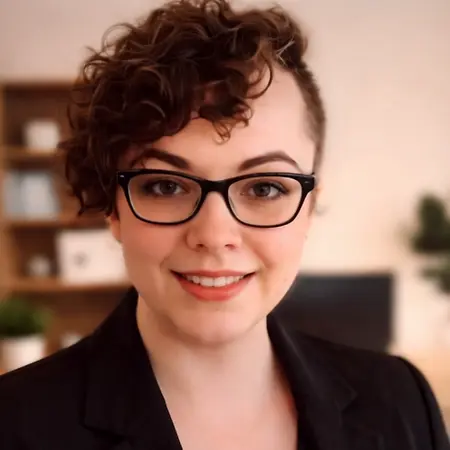
Bex MacArthur
Screenwriter | Mental Health & Childhood Trauma Advocate, Bexplains | WOUNDED.SYS
Fremont, NE 68025
1Article published
Her Story
About Bex
Nikayla “Bex MacArthur” Carrillo (she/her/they/them) is a trauma advocate, writer, game developer, filmmaker, photographer, early childhood development professional, and founder based in the Omaha Metropolitan Area. Her work exists at the intersection of lived experience and intentional craft — using every medium available to make people who have survived trauma, abuse, and complex mental illness feel seen, understood, and less alone.
Her advocacy centers on trauma-induced mental illness and abuse survival, including domestic violence, sexual assault, and childhood neglect. Rather than approaching these subjects from a clinical distance, Nikayla brings the full weight of her own experience to her work — grounding it in authenticity while maintaining the research-intensive rigor that makes it credible and responsible. She also advocates for the Type 1 Diabetes community, integrating chronic illness awareness into her broader platform.
Nikayla holds a BFA in Creative Writing from Full Sail University, where she also studied Digital Cinematography — building a technical and narrative foundation that now informs everything she creates. She is a published game developer whose text-based branching narrative game, centered on the lived experience of OSDD and DID, is currently live on Itch.io. A companion visual novel exploring the same subject matter is in active development. In a space where these conditions are frequently misrepresented or ignored entirely, her games offer something rare: narrative experiences built from the inside out.
Her filmmaking work is in active development, with a clear and purposeful direction — documentary projects aimed at reducing mental health stigma, and an additional documentary series exploring the intersection of paranormal experience and psychological interpretation. She also brings her narrative and storytelling expertise to ceremony work as an ordained officiant, offering bespoke wedding and memorial experiences that go far beyond script-reading.
As founder of Bexplains, her mental health content platform, Nikayla has spent over a year producing research-intensive, trauma-informed content that bridges clinical language and lived reality. She is also the founder of WOUNDED.SYS, a mental health streetwear brand currently in development, where design itself functions as advocacy — wearable, visible, and intentional.
Her professional work in early childhood development is equally informed by depth and intention. In addition to her direct care experience, she has pursued coursework through Harvard Online and maintains a self-taught working knowledge of childhood development that reflects the same research-driven approach she brings to everything she does.
Nikayla is a mother first and foremost — and she makes no apology for that being central to her identity and her drive. Her children are the reason she does this work, and the reason she does it as well as she does.
Her Interview
Ten minutes with Bex
01What do you attribute your success to?
I attribute my success to being willing to look at myself honestly — my faults, my failures, the pain I carried from others and the pain I caused myself by ignoring it. That kind of openness doesn’t come easy. It required letting go of my ego, releasing the expectations other people had for my life, and sitting with the hard questions instead of outrunning them. I learned to look my pain directly in the eyes and ask why — and that practice is the foundation of everything I create. It’s also what makes me the mother I am. When you do that work on yourself, it doesn’t stay contained to your career. It changes how you show up for the people who need you most.
02What’s the best career advice you’ve ever received?
The best career advice I ever got came from someone who watched me running in multiple directions at once — writing, film, advocacy, development, all of it — and burning out trying to justify all of it. I kept trying to pick a lane. They stopped me and said: stop trying to be a specialist in a silo. Start being a specialist in a perspective.
That cracked something open for me. I’d been treating my skills like they were competing for the same space when they were actually built for each other. The “Jack of All Trades” thing had gotten in my head — like breadth was a weakness I needed to apologize for. But that’s not what I am. I’m someone who can walk into a complex human problem and look at it from multiple angles at once without losing the thread.
That’s when I stopped hiding my range and started using it. Being a writer who understands cinematography doesn’t just make me a better creator — it makes me a better advocate.
03What advice would you give to young women entering your industry?
My advice is this: don’t run from what you find when you look inward. Most of us spend years trying to outpace our past — the things that were done to us, the things we did, the versions of ourselves we’re not proud of. But what I’ve learned, and what I wish someone had said to me directly, is that what you find in yourself and in your history is usually exactly what propels you forward. Your pain isn’t a liability. It’s data. It’s material. It’s the thing that makes your perspective irreplaceable.
You don’t have to choose between your ambitions and your values. But I’m not going to tell you it’s easy or that intention alone gets you there — because that’s not honest. It takes doing the harder work first. Knowing who you are before the industry tells you. Sitting with the uncomfortable things instead of scheduling around them. When you do that, the integration isn’t a juggling act anymore. It becomes something more like a foundation.
04What are the biggest challenges or opportunities in your field right now?
The challenges in this field are real and they stack. Gatekeeping and credentialism hit different when your primary qualification is surviving something — it has a way of feeding imposter syndrome in a very specific and insidious way, like the thing that made you an expert is exactly the thing they’ll use to discount you. Learning to hold the weight of emotionally intense subject matter responsibly, without losing the rawness that makes it useful, is its own ongoing work. And doing all of that while building consistency in an environment that doesn’t come with a roadmap — that’s the daily reality.
But the opportunity I see is exactly as big as the problem. Trauma content right now exists in two modes: clinical and detached, or raw and uncontained. Sanitized or sensationalized. There is almost no middle ground — the place where someone who has actually lived it can speak with both honesty and intention, where the information is rigorous and the humanity is intact. That’s the gap. That’s what I’m building toward. Not because it’s a market opportunity, but because I needed that voice when I was drowning and it didn’t exist. I’m motivated by that absence as much as anything else.
05What values are most important to you in your work and personal life?
You can’t break a cycle you haven’t looked at. That’s the value that sits underneath everything else for me — the willingness to recognize what was handed to you before you decide what to pass on. That work isn’t comfortable. But it’s the most important thing I’ve ever done, personally or professionally, because my kids are on the other side of it.
Everything I do — the advocacy, the writing, the platform — exists because I wanted to be someone my children could point to. Not perfect. Not without history. But honest about it, and actively building something different. Making sure they feel loved, seen, and mentally prepared isn’t a parenting goal I work toward on weekends. It’s the reason the work matters at all. It’s what makes me take it seriously.
When you do the work of recognizing your cycles, you stop just surviving your story. You get to decide what it means for the people who come after you.
Her Content Hub
Articles by Bex
A Thousand Small Moments: What Addiction and Trauma Recovery Actually Looks Like
A personal journey through addiction, trauma, and the slow, messy path to real healing.
“She Was Numbing a Pain She Didn’t Even Know She Was Feeling.”
There is a specific kind of pain that doesn’t announce itself.
It doesn’t arrive with a name, a diagnosis, or a reason. It simply lives within you — quiet and constant, like broken bones you’ve somehow convinced yourself are not broken. You walk around in that body. You smile in that body. You build a life in that body and call it peace.
That’s what trauma does. It makes prison feel like home.
And when you don’t have the language for what you’re surviving — when wrong diagnoses and missing memories shape your entire reality — you find other ways to cope. Substances. Escapes. Anything to turn down the volume on a pain you cannot even identify yet.
This is my recovery story.
Not the clean, cinematic version.
The real one — made up of a thousand small moments and still unfolding.
When You Don’t Have the Words for What You’re Living
She didn’t have the words.
That’s the thing people don’t talk about enough in conversations about addiction and trauma recovery.
You cannot heal what you cannot name.
She was living with incorrect diagnoses, missing memories, and a version of herself that had been shaped — slowly and deliberately — by people and experiences she could not yet see clearly. She was controlled, groomed, and hurt in ways that do not leave visible marks but hollow you out all the same.
And she didn’t know it because the rose-colored glasses were so thick that what she called home was actually a kind of prison. What she called peace was actually performance.
So she escaped in the only ways she knew how.
A cigarette break here.
A little THC to soften the edges of the day.
Getting high at night so the volume of everything would finally quiet down enough to sleep.
Not because she was reckless.
Not because she didn’t care.
Because she was numbing a pain she didn’t even know she was feeling.
This is what addiction looks like when it is tangled up with lifelong trauma.
It is not always dramatic.
It is often quiet, functional, and invisible — even to yourself.
What I Expected Recovery to Look Like (And Why I Was Wrong)
When healing finally came, it did not arrive the way I expected.
I expected it to look like trying and failing without making real progress. I thought I would spend my life performing okayness instead of actually experiencing it. I believed healing meant mind over matter — pushing emotions down, smiling through the pain, and burying everything deeply enough that it could no longer reach me.
That was the model I had:
Survive by not feeling.
What actually happened was messier, slower, and eventually more real than anything I had been taught to expect.
The world had to crack open first.
Rock bottom came — not as one dramatic cinematic moment, but as a point where I had betrayed myself so completely, my morals, my family, and the core of who I believed I was, that I could no longer keep pretending.
Then came the questions.
Then came the searching.
And slowly, painfully, the answers began to emerge.
The correct diagnosis was an important step.
But the words — the actual language for what I had lived through — arrived slowly over months and years.
In many ways, the words are still finding me.
What Healing From Trauma and Addiction Actually Looks Like
Here is what recovery actually looked like for me — not the highlight reel, but the real version.
It looked like the rose-colored glasses shattering.
Not all at once.
Sometimes the truth arrived like a flood — sudden, overwhelming, and impossible to process all at once.
Other times, it arrived quietly:
That hurt me.
That wasn’t okay.
That wasn’t who I am.
And sometimes I would forget those realizations and have to learn them all over again until they finally stayed.
We began to understand that the harmful things said and done to us were not our identity.
Those experiences shaped us — that much is true, and pretending otherwise would be dishonest — but we still had the power to decide how they would shape us moving forward.
That realization changed everything.
Recovery from substance use looked like this:
We stopped smoking because we were pregnant.
We stayed stopped because our oldest son asked us to.
Every single moment of weakness, we thought about him — and suddenly it stopped feeling like a battle. It simply became a choice we no longer questioned.
The THC and alcohol came next.
Not because of a program or a rule, but because our children mattered more than the escape.
And something else began happening that I never expected:
The safer our environment became, and the safer the people around us became, the less we needed to escape in the first place.
That is the part nobody tells you about healing from addiction and trauma:
Healing compounds.
Every small moment of choosing yourself, every person who treats you like you matter, every boundary you maintain, and every truth you finally name — it all builds on itself.
The need to escape becomes quieter.
You begin living inside your body instead of constantly trying to flee from it.
What I Want You to Know If You’re Still In It
I want to speak directly to the person reading this who is still in it.
Take an honest look at your life.
Not the version you have curated or convinced yourself is acceptable — the real one.
Look at how the people around you treat you.
Pay attention to how it makes you feel.
Understand that good moments do not erase harmful ones.
Substances do not erase them either.
Pain has a way of quietly eating away at who you are and who you were meant to become, even when you cannot yet see it happening.
Sometimes we cannot imagine a way through because we have never been shown what better actually looks like.
That makes change terrifying.
The unknown can feel worse than familiar pain, even when that familiar pain is slowly destroying you.
That is not weakness.
That is what happens when survival has been your only mode for so long that you no longer remember anything else.
But you are worth stepping into the unknown.
Take the steps anyway.
Even when it feels like things are getting worse before they get better, because sometimes they do — and that does not mean you are failing.
Unfamiliar discomfort is not the same as old pain.
It means something is shifting.
Desensitized pain is still pain.
And you deserve to be free.
Join Influential Women and start making an impact. Register now.