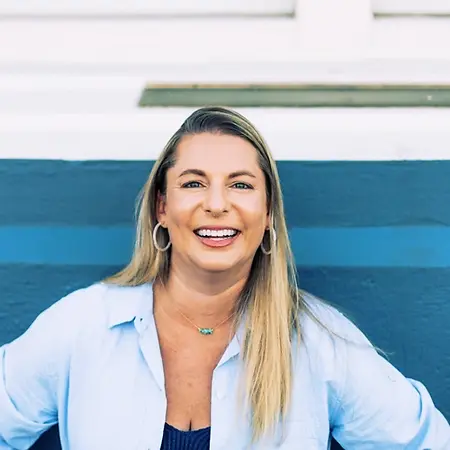
Influential Woman · Business Advisory
Nikki Belt
Founder, Anchor & Keel Small Business Advisors
Seattle, WA
Her Story
About Nikki
I started my career in philanthropy doing process improvement and program management, then moved abroad to work internationally for an NGO. I spent three years living in Bangkok running a global grantmaking program. When I came back to the States, I got into management consulting and spent eight and a half years doing all sorts of different projects including large-scale strategy implementation, technology rollouts, process improvement, change management, program management, you name it, I did it. One of my most notable engagements during that time was at Microsoft, where I was hired to run the PMO and improve the process for annual planning across their multi-billion dollar commercial business managing all operational components of that process. From there, I moved to Google for a couple of years working on global change management.
Twenty years in, I'd seen a lot - the playbooks, the frameworks, the tools Fortune 500s spend millions building. I'd also seen which pieces actually drove results and which were just expensive overhead. I wanted to take the best of what I'd learned, strip out the stuff that doesn't translate, and right-size it for small business owners so they could get the operational know-how of a big company without the bloat. That's why I started Anchor & Keel.
Now I work one-on-one with small business owners, and I specialize in folks who've purchased existing businesses and need help getting up and running in their role as owner. On any given day, we could be digging into financial reporting, fixing broken processes, structuring the team for future growth, or implementing new technology to get them modernized. I focus on the areas where my clients need help the most, so they can build profitable businesses and the life they actually want.
Her Interview
Ten minutes with Nikki
01What do you attribute your success to?
Curiosity and a willingness to take a squiggly path. I've never been someone who mapped out a five-year plan and stuck to it. My career has zigzagged from philanthropy to international development to management consulting to tech to running my own business, and every move was driven by the same question: what can I learn next? I think a lot of people get nervous about non-linear careers, but mine is the reason I can do what I do now. Each chapter taught me something the next one needed.
The other piece is that I've always been willing to put my hand up. I backfilled for people when roles opened up, asked questions in rooms where I probably wasn't supposed to be asking them, and sat in on meetings I didn't technically belong in just to learn how the work got done. Most of the best opportunities in my career didn't come from a job posting, they came from being curious enough to show up and confident enough to risk looking like I didn't know something.
02What’s the best career advice you’ve ever received?
Early in my career at The Gates Foundation, I had a manager pull me aside and tell me I needed to leave the job I was in if I wanted to get where I said I wanted to go. At the time, that job was kind of a dream, and actually, I have friends who stayed in those same roles and are still there 15+ years later, doing great. The job wasn't the problem. She just saw what I actually wanted out of my career and knew I wouldn't get there by staying comfortable. That conversation gave me the courage to leave, and it kicked off everything that came next - moving abroad, switching industries, building new skill sets, meeting people who'd go on to shape my career, and taking risks I never would've taken otherwise. I'd probably be just fine if I'd stayed. But "fine" isn't the same as fulfilled, and my career has been so much richer because someone was willing to tell me the truth before I figured it out the hard way.
03What advice would you give to young women entering your industry?
The women I most want to talk to are the ones thinking about leaving corporate and buying a business for the first time. I know it's scary. But there's no better time than right now to start.
My biggest piece of advice: spend real time thinking about the life you actually want. Not the next promotion, not the next title - the life. What do you want your days to look like? Your years? Then take an honest look at where you're sitting now and ask whether that path actually gets you there, or whether you need something drastically different. And if the answer is drastically different - don't be afraid of that. Go look for it. Because the future you want might require a path that looks nothing like your present. Take the risk. Just go.
04What are the biggest challenges or opportunities in your field right now?
I think we're in a pretty remarkable moment. Corporate jobs that we all assumed were rock-solid suddenly aren't, and a lot of people, especially women in mid- to late-career, are looking around and asking, what do I actually want the next chapter to look like? That's a real challenge, but it's also a huge opportunity to think outside the box. One of the most exciting paths I see right now is small business ownership. We've got a massive wave of Baby Boomers retiring and selling the businesses they spent decades building, which means there's never been a better time to seriously look into becoming an owner. And SBA loans have opened the door for a lot of people who assumed they'd never have access to the capital required to buy a business. The barrier to entry isn't what people think it is. The shift I'd encourage is a small but powerful one: instead of thinking "that couldn't be me," start asking "how could this be me?" Go find the information. Talk to brokers, lenders, current owners. Take the next small step. If business ownership is something you're genuinely drawn to, the path is more accessible than it's ever been, you just have to be willing to walk it.
05What values are most important to you in your work and personal life?
Two values guide pretty much everything I do: joy and learning.
Joy sounds simple, but it's something I take seriously. I think we underestimate how much our daily experience shapes the rest of our lives so I try to build in things that bring me real joy every day. Sometimes that's my work, sometimes it's time outside, family, a good book, a workout, music. It's not about chasing big peak moments, it's about noticing the small ones. I bring this into my client work too. We spend real time making sure they're designing their days, their businesses, and their teams in a way that actually feels good to spend time in. Owning a business shouldn't drain the life out of you.
Learning is the other one. I'm endlessly curious, and I genuinely believe the more we know, the better the decisions we get to make at work, at home, everywhere. I read constantly, research a lot, and stay close to what's changing in operations, technology, and how businesses run. That's especially important right now because everything is shifting quickly, and what worked five years ago doesn't always work today. I bring that learning straight to my clients, so they're not just getting my experience they're getting whatever's most useful and most current for the problem in front of them.
Join Influential Women and start making an impact. Register now.