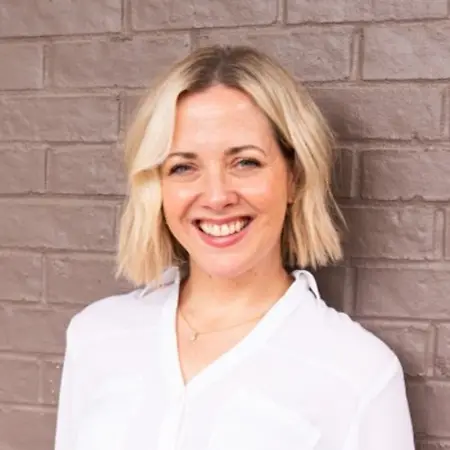
Her Story
About Nikki
I've spent about 20 years in the tech space, starting in sales and transitioning to enablement and coaching over the last 5 to 10 years. My sales career included an incredible experience at Groupon in the early days, where someone walked into a room and said 'Nikki, you're gonna launch Groupon in Birmingham, Alabama.' I had to Google to find my own leads, put them in Salesforce, and cold call 50 to 100 people a day. There was no technology to help sellers back then, but I'm so grateful for that experience because it taught me about relationship building and both the hunter versus farmer roles. I noticed throughout my sales career that enablement really wasn't a thing, and when companies saw the need to get sellers up to speed as products launched faster, I thought I could do this. At Dropbox, where I sold for about a year and a half, I partnered with the enablement team, and when that entire team left within a month, I asked to move into the role. I was told 'salespeople don't work out in these roles,' but the VP of Sales said 'Take Nikki. If she sucks, I'll take her back into sales.' I learned a ton and got to be at the forefront of what enablement is today. I worked my way up to lead a team that supported North America, built a function and team from scratch at Hopin, and while at Dropbox, I got my life coaching certification because I wanted to be a great coach for my team. Now these worlds have come together in my current role at LinkedIn, where I've been for about three and a half years. I'm part of the enablement team and I build coaching programs for sales leaders globally. What I'm really passionate about is this idea that leaders are brilliant but invisible, and many times they can't sell themselves. I teach positioning and self-advocacy as a learnable skill, not a confidence problem, especially for women. I hold space for people because I believe they have the answers - they just don't know the questions to ask themselves. One of the biggest programs I just worked on was teaching leaders how to maximize time with their team by zooming out of the day-to-day for longer-term discussions. I teach people how to hold space as coaches themselves, because in a fast-paced world, we want to give people answers to everything, but if you're just telling everyone what to do, it doesn't mean they're gonna do it that way.
Her Interview
Ten minutes with Nikki
01What do you attribute your success to?
I attribute my success to proving to myself over and over again that I can do hard things and that I will figure it out. I got to watch 3 of my siblings live life, do really good things, and make a ton of mistakes, so I got to observe that and go, 'well, don't want to go down that route. Okay, this is the route I want to go down.' There's an observational aspect that served me well, and I've gotten more fine-tuned about that over the years. I think it's served me well to identify what other people are doing that I want to latch onto, and what are the things I want to walk away from. My mom and dad were wiser by then as well, and they said, 'here's the way your siblings handled it, or here's something we did, and we want to do differently with you.' It was like this learning with 3, and then I came along 12 years later, and it's like, okay, there's a different way. I feel very lucky for that.
02What’s the best career advice you’ve ever received?
The best career advice, which I learned from my mom, is that you are in charge of your own future. The path isn't easy - it never is - but you have ownership of it. What I want to instill in my boys, and what I feel like I have in myself, is that if you have the confidence to know that no matter what is put in front of you, no matter what you're handed, you can figure it out - if you have this figure-it-outness, that ability, and you can prove that to yourself even in small ways, you will go further than you ever thought possible. Because it's just this inherent trust that, okay, it's life, but if you have some authority over that, which you do, you can be unstoppable. Nothing comes easy - that's not what it means - it just means you will figure it out, and you'll do what you have to do to get to the other day.
03What advice would you give to young women entering your industry?
I would say observe, but meet as many people as you can, constantly inside your organization and outside of it. Build your network. There is not one opportunity I've ever been given where I haven't known someone first. I call them informational interviews - always have informational interviews, even if it's one new person a month. It will serve you well, and always keep your relationships internally strong. Your brand and how you are perceived is incredibly important, and it's fragile. You have to determine who you want to be, and how you want to be perceived, and work towards that, because right or wrong, it will follow you.
04What are the biggest challenges or opportunities in your field right now?
I think the biggest challenge is that the world is changing so rapidly - we're at turbo speed. When it comes to leadership, a company will never reward a sales leader for being a coach. They're going to reward them for the revenue. I think in my field, there's a world where, especially with AI, sales leaders have the opportunity to start to amplify the human side that will make them great leaders and make them people that teams want to work for. But I think it's really challenging because the number becomes the target, not being a great leader. I'm constantly trying to find a way to mesh the two things, because it's not an easy thing in sales - it's always about metrics first. And it needs to be about people first, in my mind. There's no clear way to measure that, and that's why people get stuck. The tangible thing is the number, or the revenue that you drive into the business. It's not how well did you coach somebody through something. The amount of personal things that sales leaders are dealing with because of the way the world is, is taking them further away from the metric stuff, and making them have to work longer hours and be involved in everything. People are really struggling, and these sales leaders are kind of the crux of all of it. They don't have all the answers right now, because it's a new world we're living in. They're this bottleneck for so much. If they just took off the 'I can answer every question, or I know every answer,' and focused on how do you coach so that other people get empowered to do things themselves and realize they have the answers - that is what I'm trying to unlock with sales leaders right now. Because the revenue will come.
05What values are most important to you in your work and personal life?
My number one value is fairness. I very much know that about myself. Fairness is sort of how I operate, and I think that, combined with major empathy, serves me well on the people side. It's interesting - I did a values test in a workshop, and my number one is actually humor. So everything I do, there is humor involved. I think that's how I connect with people. I used to view that as something that I had to scale back when I had a seat at particular tables, because it felt like you shouldn't come with humor, and it has served me well in every scenario. That is something that I lead with first and foremost, and I've had to learn how to navigate that, because it's felt like a detractor in my mind, and it actually hasn't been. I've really figured out how to fine-tune that in the right room. Humor doesn't mean being silly - for me, it's a way to connect with other people. So humor, fairness, and empathy are my top 3.
Join Influential Women and start making an impact. Register now.