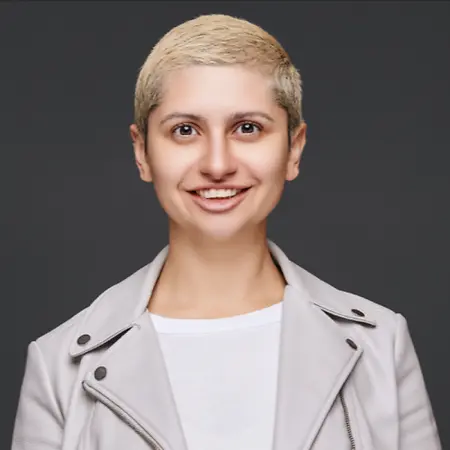
Her Story
About Nikole
Nikole Vetter is a health and wellness coach and educator based in Asheville, North Carolina, who specializes in helping individuals reclaim their lives from the effects of chronic stress-related conditions. Through her work with Reclaiming Life, she focuses on issues such as anxiety, insomnia, TMJ, vertigo, migraines, and related nervous system dysregulation. Her approach is rooted in both research and personal experimentation, allowing her to translate complex wellness concepts into simple, practical routines that clients can integrate into daily life.
Drawing from years of experience in education, facilitation, and organizational development, Nikole brings a systems-oriented and highly personalized approach to coaching. She works primarily with overworked individuals—especially women balancing multiple roles—who are seeking sustainable alternatives to symptom-focused or medication-only approaches. Her methods emphasize nervous system regulation, habit-building, and restoring a sense of joy and balance through small, consistent daily practices.
At the core of her philosophy is the belief that healing does not require overwhelming change, but rather accessible, intentional steps repeated over time. Nikole encourages clients to shift from self-criticism to curiosity, particularly when addressing stress responses and emotional overload. Through her coaching, she aims to create structured yet compassionate pathways that help people better understand their bodies, reduce symptoms, and rebuild a more grounded and fulfilling way of living.
Her Interview
Ten minutes with Nikole
01What do you attribute your success to?
I attribute my success to being naturally a very empathetic person and having so much passion for what I discovered that I just could not keep it to myself. Being able to create my own healing was lovely, but then discovering how through simple steps I could create a whole world of joy for myself, and then hearing close friends of mine dealing with the same things but constantly just being offered pills without a long-term solution, really hurt. I couldn't imagine not sharing everything I've discovered and how really simple and unique to each person we could make it. The people who have shared their feedback with me, whose lives have changed, the people that have gotten sober, the people that have finally recovered and healed their sleep cycle and are passing it on to their kids so they'll have a healthy sleep cycle growing up - those are the things that make me go, okay, let's keep going. For every one person that shares their feedback, there's three more that we never hear about, so when I do get to see it, it's a gift. Even the small things, like the sessions and classes where I can see people walking away with a smile on their face and a little more oomph to their step - that can change their week, then their month, then their year.
02What’s the best career advice you’ve ever received?
Do everything with the confidence of the average white male. I heard that on an interview from some celebrity, maybe Zendaya, and there's studies that show these things. There's a Harvard study where students tell the professor what they think their grade is, and the men always gave themselves a higher grade than the women. Just because of how our society is structured, I think sometimes we have more imposter syndrome, and the messages we get are just not helpful. In regards to creating a level of success for yourself, you have to be a little bit delusional and be like, no, I have everything that I need to make this happen, and I don't need to think about the naysayers, and there's parts of me that I need to work with in regards to whatever that buildup of imposter syndrome is.
03What advice would you give to young women entering your industry?
I would definitely say do your research. Go read a bunch of scientific journals. There's a lot of really amazing people sharing things through their memoirs, and there's a lot of amazing books that are coming out in a lot of different topics, but a lot of it really is intertwined because the body is a system that has interconnections. I think sometimes we don't realize that breathwork connects to the other functions of our body. I see a lot of amazing people having really amazing conversations on multiple platforms, but sometimes you can kind of tell that there's a little bit of a lack of research, and so they're sharing good things, but there's not enough in regards to where they're getting their information that's providing the full value. There definitely needs to be time taken out to do a little bit of research to kind of back yourself up and then have just a stronger, more solid message.
04What are the biggest challenges or opportunities in your field right now?
I don't think that I see enough people acknowledging the reality of the world and that as a woman, there's not a lot of space for me to exist as a woman. I think we're starting to have conversations about how the medical world is not doing enough studies in differentiating different ethnic groups by sex and gender, and so I think we need to be talking more about that, about how slight differences can support different groups. We're just kind of still stuck on this one train thing, and I think it's a little bit more complicated. In regards to my coaching, I always consider who the person in front of me is, what works for them, what doesn't work for them, what their gender is, what their background is - it's so much more complicated. One size fits all is just no longer going to work. Even in regards to my classes that are self-paced, there's always encouragement to be true to yourself, to play around with your menu of tools, and figure out what really works for you and continuing discovering yourself.
05What values are most important to you in your work and personal life?
I would say inclusivity. In regards to coaching, I think it's incredibly important to have a shame-free space, because that's how the person in front of you is going to get their most amount of work done. But in addition to that, I think my other value is challenging each other, and I don't think we do that enough. We don't look at our friends who we love and value and say, hey, you're better than this, you're not serving yourself right now, you're messy, and let's get you the support that you need so that you can experience what you're looking to experience. I think those things go hand in hand because we need to have space for each other, but we also need to be like, hey, I see you, you have more potential, what do you need from me to be able to move in a better way?
Join Influential Women and start making an impact. Register now.