Her Story
About Nina
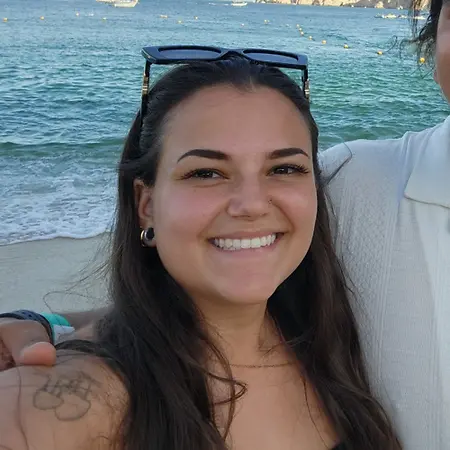
Nina Chiodo serves as the Department Administrator for the Department of Chemistry and Biochemistry at San Diego State University, a role she assumed in May. Since stepping into the position, she has focused on redefining what departmental administration can look like by creating systems that enhance the student experience, strengthen academic support, and foster meaningful connections within the department.
One of her most significant initiatives is the development of the department's first mentor-mentee program, which will pair Ph.D. students with master's students beginning with a pilot launch this fall. The program is designed to build community, encourage collaboration, and provide graduate students with guidance from peers who have already navigated many of the academic and professional challenges they are beginning to face. By creating opportunities for mentorship, Nina hopes to cultivate a culture where students feel supported both academically and personally.
Nina's commitment to student success is deeply rooted in her own educational journey. She earned her associate's degree (AA) before pursuing her bachelor's degree (BA) in Cultural Anthropology while balancing the demands of full-time employment and a full-time course load. That experience taught her resilience, time management, and the importance of seeking support when needed. It also shaped her perspective as an administrator, giving her firsthand understanding of the challenges many students face while pursuing higher education.
Her passion for lifelong learning continues today. In 2024, she began pursuing a master's degree in Criminology and Criminal Justice at California State University, Long Beach, with the long-term goal of entering the legal profession. Although her career has flourished in higher education administration, her academic interests reflect her desire to advocate for others, analyze complex issues, and pursue opportunities that create meaningful social impact.
Throughout her career, Nina has embraced opportunities that pushed her beyond her comfort zone. She believes that personal and professional growth comes from trusting one's abilities, asking questions, and recognizing that resources and support are always available for those willing to seek them. Rather than allowing uncertainty to become a barrier, she views new challenges as opportunities to learn, innovate, and make a lasting contribution.
As a woman working in STEM and someone who has balanced work with rigorous academic pursuits, Nina understands the unique pressures many students experience. She is passionate about creating environments where students feel seen, encouraged, and empowered to reach their goals. For her, some of the most rewarding moments come from watching students succeed—whether that means overcoming obstacles during their academic journey or celebrating the milestone of walking across the graduation stage.
Looking ahead, Nina hopes to continue developing programs that improve the graduate student experience, expand mentorship opportunities, and strengthen the sense of community within the Department of Chemistry and Biochemistry. Through thoughtful leadership, innovation, and a student-centered approach, she is helping shape an environment where students can thrive both academically and personally while building a legacy of support that will benefit future generations.
Her Interview
Ten minutes with Nina
01What do you attribute your success to?
I attribute my success to being willing to step outside of my comfort zone. I've never been someone who wants to stay where things feel easy or familiar. Instead, I intentionally put myself in situations that challenge me because I know that's where the greatest growth happens. Whether it's taking on a new role, pursuing another degree while working full time, or leading initiatives I've never done before, I've learned that discomfort is often a sign that I'm pushing myself toward something meaningful.
The most rewarding moments in my career and education have come from overcoming challenges that initially felt intimidating. Every obstacle I've faced has reinforced my confidence and reminded me that I'm capable of figuring things out, even when I don't have all the answers from the beginning.
A big part of that mindset is trusting my own intellectual capacity. I've learned to believe in my ability to learn, adapt, and solve problems rather than doubting whether I'm qualified to take on something new. I also recognize that success doesn't mean knowing everything—it means being resourceful, asking questions, seeking guidance when needed, and being willing to put in the work to find solutions.
I've found that growth comes from embracing uncertainty instead of avoiding it. Every challenge has strengthened my confidence, expanded my skill set, and prepared me for the next opportunity. That willingness to continuously learn, trust myself, and remain resilient has been the foundation of both my personal and professional success.
02What’s the best career advice you’ve ever received?
The best career advice I've ever received is to never let fear of the unknown keep me from pursuing an opportunity. Early in my career, I realized that no one starts a new role or challenge knowing everything. The people who grow the most are the ones who are willing to ask questions, stay curious, and learn along the way.
That advice reinforced something I've always believed: confidence doesn't come from having all the answers—it comes from trusting yourself to find them. I've carried that mindset into every stage of my career, whether it was balancing full-time work while earning my degrees, stepping into leadership opportunities, or taking on a role where I had the chance to redefine processes and create new initiatives.
I've learned that growth happens when you're willing to be uncomfortable, remain open to feedback, and trust your ability to adapt. Every new challenge is an opportunity to learn something new, and I've found that the willingness to embrace those moments has been one of the greatest contributors to my personal and professional development.
03What advice would you give to young women entering your industry?
My biggest piece of advice is to trust yourself. There will be moments when you question whether you're capable or whether you belong, especially in environments that challenge you. I've had those moments myself. What helped me push through was learning to trust my own intellectual capacity and believing in my ability to figure things out.
You don't have to have all the answers on day one. Success isn't about knowing everything—it's about being resourceful, asking questions, finding the right support, and trusting that you can learn along the way. Whether I was balancing work and school, taking on new responsibilities, or facing a difficult class or assignment, I reminded myself that I had overcome challenges before and that I could reach the finish line again.
Learning to trust myself was one of the most important personal lessons I've experienced. It wasn't something that happened overnight—it was built through every challenge I faced and every goal I accomplished. Each success, no matter how small, reinforced the belief that I was capable of achieving more than I initially thought.
I also encourage young women to set ambitious goals for themselves. Don't let self-doubt limit what you believe is possible. Growth comes from stepping outside your comfort zone, embracing challenges, and giving yourself permission to learn through the process. Believe in your abilities, celebrate your progress, and remember that you are far more capable than you often give yourself credit for.
04What are the biggest challenges or opportunities in your field right now?
One of the biggest opportunities in higher education is creating stronger support systems that help students feel connected and set them up for success. Students today are balancing more than ever—many are working full time, managing financial pressures, caring for family members, and navigating the demands of graduate school. Because of this, institutions have an opportunity to think beyond academics and create environments where students feel supported both personally and professionally.
I believe mentorship is one of the most impactful ways to do that. Connecting students with peers who have already navigated similar challenges helps build confidence, encourages collaboration, and creates a sense of belonging. That's one of the reasons I'm passionate about launching our department's first mentor-mentee program between Ph.D. and master's students. My hope is that it becomes a resource that empowers students, strengthens our community, and helps them achieve their academic and career goals.
Another opportunity is rethinking traditional administrative roles. Higher education administrators can do much more than manage day-to-day operations—we can be advocates, problem-solvers, and partners in student success. By listening to students, identifying gaps, and developing new initiatives, we have the ability to make a lasting impact on their educational experience.
Ultimately, I think the future of higher education lies in creating communities where students feel supported, challenged, and empowered to succeed. When students know they have people who believe in them and resources they can rely on, they're better positioned to thrive both inside and outside the classroom.
05What values are most important to you in your work and personal life?
The values that guide me most are integrity, compassion, perseverance, and continuous growth. I believe in showing up authentically, following through on my commitments, and treating others with kindness and respect. Whether I'm working with students, colleagues, or friends and family, I want people to know they can rely on me and trust that I'll always do my best to support them.
Compassion is especially important to me because I understand that everyone is navigating challenges that may not always be visible. Having balanced full-time work while pursuing my education, I know how meaningful it is when someone takes the time to listen, encourage, or offer support. That's the kind of leader and colleague I strive to be.
Perseverance has also shaped both my personal and professional journey. I've learned that success isn't about avoiding challenges—it's about facing them with resilience and trusting yourself to work through them. Some of my greatest accomplishments have come from stepping outside my comfort zone, embracing uncertainty, and believing in my ability to learn and adapt.
Finally, I value lifelong learning. I'm always looking for opportunities to grow, whether that's through continuing my education, taking on new challenges, or learning from the people around me. I believe there's always room to improve, and that mindset has helped me become a better professional, mentor, and person.
At the end of the day, what matters most to me is making a positive impact. If I can help someone feel supported, achieve a goal they didn't think was possible, or leave a situation better than I found it, then I consider that a success.
Join Influential Women and start making an impact. Register now.