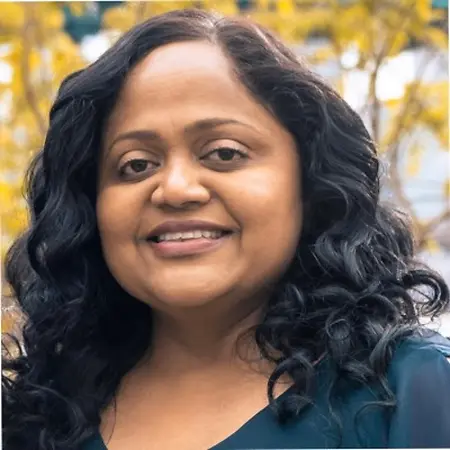
Her Story
About Nissi
I'm an educator and academic at heart who has spent my career in educational leadership, focusing on student development and adult coaching. I've done extensive strength finder work and trained many people in leadership development. I believe that the most powerful lessons students learn aren't from what we teach at the board, but from how we show up as educators - the unintentional lessons we teach through our actions and presence. I work with both students and adults, coaching them to develop their skills and helping them understand that their struggles don't define them. I'm passionate about getting the right people on the bus, following Jim Collins' principle, and building teams of educators who are not just well-meaning but are true learners themselves. I believe you can't nurture learners if you're not a learner yourself, and that's inherent to our work, not just based on certifications or licenses. I also work with students on understanding their mental health challenges and helping them see that they haven't even met their future selves yet.
Her Interview
Ten minutes with Nissi
01What’s the best career advice you’ve ever received?
Never quit. I used to carry this little card as a child - I went through some struggles, being sad and depressed, phases I didn't even know were those phases of my life till much later. I used to carry this little card in my Bible that gave me a lot of strength, saying don't quit. I still use this advice today when coaching students, telling them that your struggle doesn't define you. Your struggle is just part of what informs who you're going to be, and you haven't even met your future self. You've only met your present self, but you haven't met your future self. So you gotta be excited about your future self.
02What advice would you give to young women entering your industry?
I think financial freedom is a big part of women's empowerment, but that alone does not help you. You need to also become better. How do you become a better person in the world that you live in, so you can be not just living this life for yourself, but you're living this also as a great contributor to the world around you, to your local community, to your block, to how you've influenced the grocery shop person that bags your groceries every day. As women, I think you have a huge power. That's what kids learn - your own kids see and learn those things. The big lessons they will remember are not the lessons you have taught at the board. The big lessons they've learned are the lessons that you unintentionally taught them by just the way you showed up. I think women, more than men, have such an influence in that space because you just know how to be the mom, and be a collaborator, and be a partner, and be the sister, and be the caretaker, and all of these things that you sometimes fluidly do.
03What are the biggest challenges or opportunities in your field right now?
I think the challenge in our industry is definitely the changing landscape of how education is working. The landscape is informed now by the changes that are happening within AI, within state standards, and federal standards, and all the other things that are happening. And also getting the right people on the bus - I'm a big believer in the Jim Collins principle of getting the right people on the bus. Finding well-meaning people on the bus is hard when education generally is not the most remunerative profession in the market. You tend to get people that are well-meaning and want to do things, but it's hard for them to stick around because they have to do other things. They go to EdTech, or they do all these other things. They don't want to be in teaching for more than 3 or 4 years. Finding longevity in teaching, and finding the right people to find that longevity in teaching, so kids have the opportunity to have the best adults in front of them, is definitely the largest challenge. Not just people who are good at heart, but also people who are actually learners. I don't think you can nurture learners if you're not learners yourself. And then the plethora of mental health challenges, not having very clear social support systems around how to support families and their support structures and their students around mental health challenges - there's definitely a big gap there as well.
04What values are most important to you in your work and personal life?
Two things: faith and integrity. I operate in both of those zones when I do everything. Over the years, I think it's become those two. I'm an academic at heart, so I've done a lot of strength finder work and trained a lot of people in that kind of leadership work. And over the years, I think my values have just kind of settled into those two zones. When I hire people, when I work in teams, when I create teams, when I nurture them to become better at their skills, when I coach them, when I do adult development, all of that, I think, for me, it anchors from faith - whether that's faith in God, faith in people, faith in yourself. How do you operate with trust? Do you trust them that they would execute the work as well? And then, integrity to yourself, but also integrity to others, integrity in the work that you do. How do you operate within those domains? So for me, those are the two big things.
Join Influential Women and start making an impact. Register now.