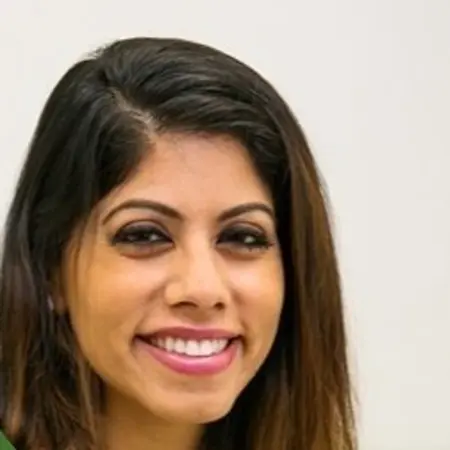
Her Story
About Niti
I've been working as a pediatric allergist for about 15 years at a children's hospital. My typical day begins with parenting my almost school-age daughter, helping her get ready for school, and then I go off to work where I see patients throughout the day with varying issues including eczema, food allergy, hives, and asthma. After work, I come back, do some education with my daughter, take her to her activities, have a family meal together, and talk about the day. On weekends, I try to socialize and meet with friends and families, and also help with some of my daughter's school activities as well as her dance and sports. One of my most defining professional moments was diagnosing a child with cystic fibrosis last year. The child had been sick for over 2 years of their life, and usually it's a disease that gets picked up earlier, but this child did not come up on genetic testing. I really pushed for further testing and was able to make this diagnosis. I saw the mom yesterday, and she was so thankful that I was the first physician to listen to her after the child had been hospitalized countless times in the first two years of life. That was probably one of my most defining moments in my career, because even if you make a difference in one person's life, all that training really matters. I would do it all over again just for that one case. What I love most about my career is that I can continue to be intellectually stimulated. I love learning, and science and medicine are constantly evolving. We can be learning each day something new, with new medications coming out and new treatment options. I also get to make a meaningful difference in someone's life, have great conversations, develop a rapport with a family, and see children from being a baby to going off to college. Seeing them grow and develop is very heartwarming, valuable, and makes it all worth it.
Her Interview
Ten minutes with Niti
01What do you attribute your success to?
I believe my foundation in childhood, from a family that really put education at the forefront of everything, along with values and morals. My mother was a trailblazer. She was one of the few women in her field of science. She was a PhD in science, and watching her be a girl boss really helped me shape my destiny. I also had really good mentors along the way, who I watched balance both a life in medicine and a family life, because sometimes finding that balance can be tough. I think it's really who you surround yourself with, and who's kind of helped imbibe those values as you're growing older.
02What’s the best career advice you’ve ever received?
I have received a lot of good career advice from amazing mentors, so it's hard to say just one piece. One important piece is to take care of yourself and not get burned out, because we work in a profession where you see a very high rate of burnout, especially after COVID. A lot of physicians, over 20% of our workforce, has left the career of medicine. It's kind of the idea of putting your oxygen mask before putting your child's on. I think it's really important in the field of medicine to take time to do things outside of our field to de-stress, whether it's meditation, social interactions with friends, traveling, hiking, getting a dog, whatever it is. The other thing that we follow as doctors is the Hippocratic Oath, which is to do no harm. I think sometimes in medicine there's been a lot of mistrust in the field, and I think if you constantly have your moral compass on, and ethically you know what you're doing is the right thing, then you know you're gonna do well. But if money or profit or something else is in your mindset, then it's not the right field. I take both those pieces of advice very seriously.
03What advice would you give to young women entering your industry?
I would say to be very mindful about why you're going into the field. The purpose is really important. The question of what medicine or science will provide for you, because the field is constantly evolving, and a lot of people are burned out, and a lot of people feel that it's difficult to maintain a life in science or doctoring along with having a family. But everything is possible if it's something they truly are passionate about and enjoy, and are picking the field for the right reason, whether it's a curiosity in science, whether it's trying to solve a problem in medicine that hasn't been solved before, whether it's a personal story. I know a lot of people who suffer from illness, and then they had a great experience with a doctor, and they want to provide that same care for someone else. Whatever that internal motivation is, it really needs to be driven not only by the mind, but the heart.
04What are the biggest challenges or opportunities in your field right now?
I think the biggest challenge is not just one issue, which is why this is not an easy problem to fix. One is insurance reimbursements. We really do have to fight with insurance companies sometimes to get what patients really need, and that takes time, and a lot of times it doesn't end to the patient's satisfaction or the doctor's satisfaction. Also, there's a lot more pressure to see more patients in a given day, and this is in every field. I think when you try to overburden or overload someone's schedule, you inevitably can miss things or have less time with the patient, and that causes difficulties in long-term care. And obviously artificial intelligence, you can't be in 2026 not talking about AI. I think it's important to use AI in a smart way in medicine, and not to be in lieu of seeing a physician and getting a physical exam. The biggest problem in medicine is that we're all paying a lot of money for insurance, and things cost a lot of money. Reimbursements have gone down for physicians, so hospitals are trying to figure out ways to cut costs. They still need to pay their CEO $8 million, so somewhere has to go. The people at the very top, the CEOs, the vice presidents, whether it's a hospital or an insurance company, are making millions of dollars in bonuses and pay structure, and yet they are cutting costs when it comes to patient care and simple things that could make a physician's life much easier. Medicine has turned into a very profit-demanding field. We pay so much money for healthcare, and yet we are so far below the list in the healthiest countries in the world. If people want doctors to not burn out, they should be putting that money towards making patient care better, whether it's doctors having a scribe so that they have somebody typing as they talk.
Join Influential Women and start making an impact. Register now.