Noelle Michaud
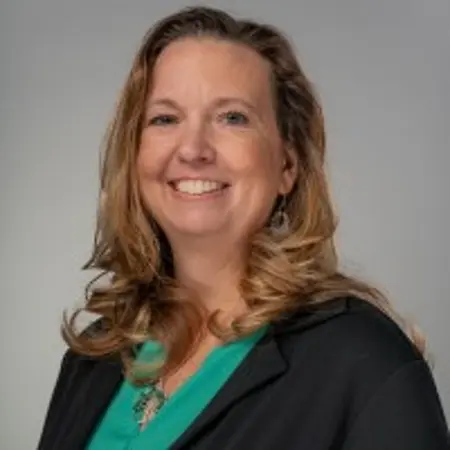
Noelle Michaud is a dedicated Health Educator and Mental Health First Aid Instructor based in Newington, Connecticut, with a strong commitment to diversity, equity, inclusion, and community wellness. She currently serves as a Mental Health First Aid Instructor with Community Health Resources (CHR), the largest nonprofit behavioral health organization in Connecticut. In this role, she coordinates statewide outreach with community organizations to provide Mental Health First Aid training and facilitates sessions in a variety of community settings. Her work extends beyond instruction to include marketing training opportunities, scheduling and coordinating sessions, managing administrative processes such as course creation in the Mental Health First Aid Connect system, supporting participant pre-work modules, and collecting data for SAMHSA grant reporting. She also actively represents CHR at health fairs and community events, including college campuses and town gatherings, to promote behavioral health resources and training opportunities.
Previously, Noelle served as a Health Educator within the Hartford Public School System, where she developed and implemented health education strategies to support student wellness, academic success, and community engagement. She also worked as an adjunct professor at Eastern Connecticut State University, teaching undergraduate and graduate courses in personal health, developing curriculum, and supporting student growth in areas of wellness, stress management, and health literacy. Across these academic and school-based roles, she built strong partnerships with families and community organizations while fostering inclusive, supportive learning environments for diverse student populations.
In addition to her work in education, Noelle has maintained a long-standing career with the City of Hartford Department of Sports and Recreation since 1993, beginning as a lifeguard at age 16 and advancing to senior and head lifeguard. In this leadership role, she oversees facility operations, manages staff, and ensures safety and training standards across programs. She also created and continues to lead an infant-toddler swim program at a facility in Hartford’s north end, addressing disparities in drowning rates among children of color through early water safety education. Complementing her professional work, she also holds a contract position with Active City, a Hartford-based nonprofit, where she facilitates wellness workshops for middle school girls focused on healthy relationships, recognizing toxic behaviors, and overall emotional and physical wellness.
• Mental Health First Aid Instructor Certification (National Council for Mental Wellbeing)
• QPR Instructor Certification (QPR Institute)
• Lifeguard Certification (American Red Cross)
• Swim Instructor Certification (American Red Cross)
• CPR Certification (American Red Cross)
• First Aid Certification (American Red Cross)
• Certified Health Educator pre-K through Grade 12
• Boston College - BA, Sociology and Education
• Southern Connecticut State University - MS, School Health
• Magna Cum Laude (Boston College)
• Dean's List (Boston College and Southern Connecticut State University)
• Longevity Award (City of Hartford)
• National Council for Mental Wellbeing
• American Red Cross
• Created Infant-Toddler Swim Program for Hartford Community
• Community Health Outreach in Hartford
• Wellness Workshops
What do you attribute your success to?
I think growing up where I grew up, and experiencing so much need, and the people around me having so much need - struggling for basic necessities, struggling just to get through the day - really shaped who I am. Working towards getting out of a very difficult environment, I was able to do that, and I know that not everyone can, or not everyone has. So I just feel very strongly about helping others and giving back in that sense. I was raised by my mom and my grandma in an impoverished area of Hartford, and my teachers and people in the community really helped us get through. I was able to go on to college, which is a huge accomplishment, especially being the first in my family to ever go to college and coming from such a poor area. That's why I do a lot of work in Hartford - because I feel like it's really important to give back, especially to the community that helped me to get to where I am. I personally have struggled with mental health, and that also has given me a desire to assist where I didn't get that assistance. I struggled for a very long time before I was able to get help, and I know that people don't have to struggle alone. There's help available.
What’s the best career advice you’ve ever received?
Boundaries. I loved my career as a teacher, and I was a teacher for decades, and I still call myself a teacher because I'm teaching still in different realms. But with that field, it can be really easy to get caught up in bringing a lot of work home, working on the weekends - the field doesn't lend itself easily for boundaries. When I came into this new role, I was talking to my supervisor about how different it feels to be able to go home and actually not bring work home, to actually have a divide between my personal life and my work life. She was emphasizing the importance of boundaries and balance - not just for overall wellness, but for work productivity, because if you're constantly grinding, you're going to burn out, and they don't want that in the workplace. You have to draw those lines of boundaries - being able to say no if you're at your capacity, being able to delegate and pass things on to people if your plate is overflowing, and just being able to take care of yourself. Taking little breaks here or there to do some deep breathing or take a brief walk. Having those boundaries and having that balance is really, really important.
What advice would you give to young women entering your industry?
Have an open mind. Have an open heart. Learn as much as you can from different people. This makes me think of a recent training where we were talking about what active listening looks like, and the participants brainstormed a list that included eye contact. I brought up a conversation and said, you know, I agree that for a lot of people, eye contact is really important for someone to feel like they're being heard. However, there are some cultures where eye contact is a sign of disrespect. It opened up a whole new dialogue about how, while there are some social norms, we have to be aware and respectful that not everyone follows the same social norms. Being aware of that can then bring about respect, because you're doing things because, okay, this feels right to me, but it might not feel right to someone else. Being able to have those conversations is so important.
What are the biggest challenges or opportunities in your field right now?
As a mental health first aid instructor, I'm able to provide this training through a grant from SAMHSA. Typically, if an individual were to take the course that I teach, it's about $170. So if an organization is looking to train 15 staff members, that's going to add up. We're going around trying to get as many people trained as possible, but when this grant runs out, which is the end of September, if the grant isn't renewed or we don't find another funding source, we won't be able to provide this training. I feel very strongly that this training truly is life-saving. Mental health first aid is similar to first aid - if you notice someone struggling or going through a mental health challenge or crisis, there's support and assistance you can provide until that person can be connected with a trained professional. In the course, we teach someone how to recognize the signs of suicide, what questions to ask, and how to get help for someone who's suicidal. That's huge, because we're not training people who are already clinically trained - we're training just average people on how they can play a part in preventing these tragedies and helping people connect to the resources that they desperately need.
What values are most important to you in your work and personal life?
I really value genuineness - people just showing up as who they really are, and us accepting people as who they really are. I'm very passionate about health in general, so all dimensions of health. When I was teaching health as a high school teacher, I dove into a lot of different topics with my students - things like stress management, nutrition, drug education, sex education, reproductive health, dating violence, how to recognize the signs of when you're in a toxic relationship. I think a lot of our society, when we think about health, we think about our bodies - nutrition and exercise, good sleep. But it's so much more than that. Our health has to do with our relationships, our emotions, and all of those things are interconnected. If one area of our health is lacking, it does carry over and damage the other areas. Diversity and equity is something that's really important to me. I grew up in Hartford, which is predominantly Hispanic and Black community, and I understand the disparities that exist in communities of color. Part of my work is to reduce or be part of the process and part of the solution. I can't create global change or societal change on my own, but the changes, the little changes that I make in organizations or individual interactions, I feel like I am part of the solution. Ultimately, we want to eliminate disparities. Everyone should have equal access to healthcare, everyone should have equal access to learn how to swim - all of those kinds of things are really important to me.