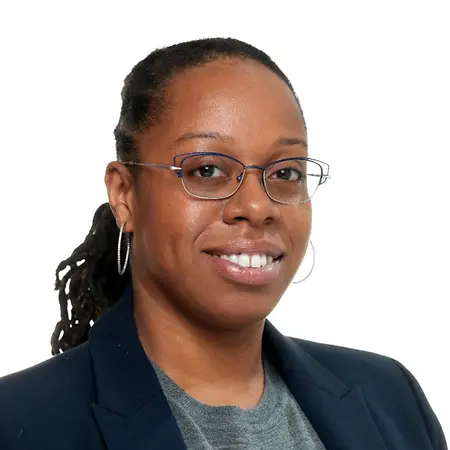
Her Story
About Noelle
Noelle is a Senior Account Manager in the public entity space at Acrisure, based in the New York/New Jersey metropolitan area. With nearly two decades of experience in employee benefits and insurance, she has built her career supporting both private employers and public sector organizations, including local governments and boards of education. She is responsible for guiding clients through the full benefits lifecycle, including renewal strategy, market analysis, vendor coordination, and ensuring that benefit programs align with organizational goals and financial constraints.
Her professional background includes progressive roles at leading firms such as Arthur J. Gallagher & Co., HUB International, Marsh McLennan Agency, and Willis Towers Watson. Across these positions, she advanced from small-group account management to senior leadership roles, developing deep expertise in carrier negotiations, compliance, financial analysis, and strategic benefits planning. Her experience working across multiple top-tier brokerages has shaped a well-rounded, practical approach grounded in hands-on problem solving and long-term client partnership.
Noelle holds a bachelor’s degree in Philosophy from William Paterson University of New Jersey and maintains active insurance licenses in multiple states. She is known for her client-first philosophy, emphasizing transparency, trust, and honest communication when advising organizations on complex benefits decisions. Her work focuses on helping clients navigate regulatory changes and evolving workforce needs while ensuring employees and their families have access to meaningful, sustainable benefits coverage.
Her Interview
Ten minutes with Noelle
01What do you attribute your success to?
I attribute my success to working hard, being accountable, approachable, and trying to think outside the box a little bit. But I think personality-wise has really led me to where I am, because you want to be the person that people want to talk to. You want to be the person that they feel is trustworthy, that what you're saying is actually true, and that you have some experience in the insurance industry. The insurance industry is about, in my opinion, time served. If you're a new kid on the block, not many people will listen to you. You need a certain number of years in this business before they take you seriously. And so beyond that part, it comes down to personality, because it is a relationship business. Yes, there's a lot of emails and phone calls, but it is really about the relationship. Can you establish the relationship with the C-suite and decision makers, or stakeholders, as they're called in certain instances, and have them reach out to you and ask you questions and actually take your advice? So, again, just to sum that up: being approachable, working hard, being accountable, as well as accessible, and just an all-around nice person.
02What’s the best career advice you’ve ever received?
The best career advice I've ever received is to take the challenge head-on and ask a lot of questions. Envision yourself in the position you want to reach, and do what you need to do to try to obtain that position. For example, when I first started, I knew nothing about self-funding. I was working in small group, but I knew I didn't want to do small group forever, and I knew my next step was to get into the large employer market. So I envisioned what I needed to do to obtain that. First would be asking questions, whether that be 'can I help with something I want to learn?' or 'how does this work?' And I've just carried that throughout my career. So if I didn't know something, besides me doing my own research, I'm also asking someone else to make sure I'm on the right page, but it also lets them know you're interested. And besides that, the next tip would be: you have to put yourself out there. No risk, no reward.
03What advice would you give to young women entering your industry?
Do not be afraid of it. Insurance will never go anywhere. We will always need some form of insurance, and I'm not just speaking on the employee benefits side, but also even on the property and casualty side. We will always have cars, we will always have houses, people always have boats, etc. This will be necessary. So when you're coming in with fresh eyes and an open mind, it will take some work. It is a lot to learn, but believe me, by year two or three, depending on who you are, you'll feel more comfortable. And it's worth it. We have fun when we're not working hard. We do work pretty hard - certain parts of the year are heavier than others. But in the overall grand scheme of things, it can be rewarding in that your assistance, whether indirect or direct, has an effect on real people's lives. Those are the end users of insurance.
04What are the biggest challenges or opportunities in your field right now?
The biggest challenge right now is the significant cost increases employers are facing in the health insurance market. And it's not strictly just insurance carriers passing off large increases because they want bigger margins. Utilization is high. The prescriptions people are taking are high. And that has to get passed along to the employer in a certain sense, so I think that is the biggest challenge. We are facing - last year was a tough year. Hopefully this one is not as bad, but it doesn't seem to be slowing down so far. And I think that's where we are for right now.
05What values are most important to you in your work and personal life?
Transparency and honesty are most important to me. Clients, as well as your family members, entrust you with certain things, and as a consultant, they're looking for you and your experience and your knowledge base to lead them through the annual life cycle. We all hear on the news how expensive benefits are, and 60-70% of Americans obtain their health insurance through an employer - that's a huge chunk. These employers are being squeezed in a certain way where it's a huge number on their bottom line, and it's even bigger now. So you have to be a trusted advisor to that employer, not only to retain them as a client, but for me, on the ethical side of things, to do the most ethical thing for not only the employers but the employees you will affect directly. While one employer may be saying 'let's do this,' it is your job as a consultant to say 'I hear what you're saying. However, this is the requirement, and this may be the adverse action to this step you are trying to take,' whether it be detrimental to your employees or to the company or to both as a whole. That's where you become that trusted advisor, telling them the good and the bad, and not making everything more rosy. Just be honest and transparent and work hard. Some people don't want to show everything because it's more work, but we've got to do the work to obtain the client, to obtain a new client, and to keep the cycle kind of going.
Join Influential Women and start making an impact. Register now.