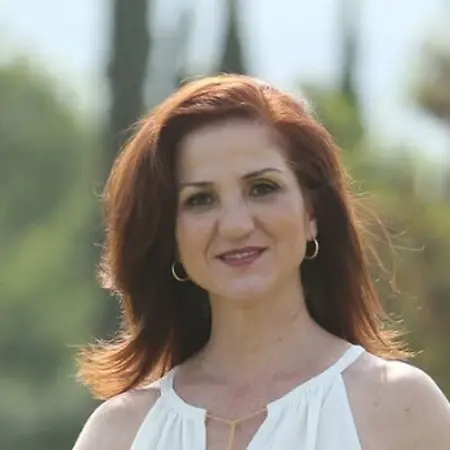
Her Story
About Nohemi
Nohemi Rangel is an experienced educator, cognitive coach, educational therapist, and dyslexia specialist based in Cypress, Texas, United States. With more than 25 years of classroom experience, she has built a career focused on supporting individuals with learning and thinking differences. She is a Professionally Certified Educational Therapist through the National Institute for Learning Development (NILD) and a certified Cognitive Coach through the Feuerstein Institute. Her work centers on strengthening cognitive skills, language development, and academic confidence across diverse learners. Her professional background spans multiple educational settings and leadership roles. She began her teaching career as an English as a foreign (EFL) language instructor at the Universidad Autónoma de Nuevo León, later serving in public school systems including Houston Independent School District and Spring Independent School District. She also spent over a decade as a 5th grade teacher at Cypress Christian School. Across these roles, she developed expertise in bilingual education, reading intervention, staff development, and classroom instruction for students with varied learning needs. Currently, she works as a cognitive specialist and self-employed practitioner, providing educational therapy, dyslexia intervention, reading support, and cognitive coaching services. She co-leads a practice focused on helping children and adults strengthen foundational thinking skills through structured cognitive intervention approaches. Her philosophy emphasizes that the brain can change through consistent, targeted support—an understanding shaped in part by her personal experience witnessing a family member’s cognitive decline due to Alzheimer’s disease. Through her work with JOAB Group, she is dedicated to expanding awareness and access to effective learning interventions, while also training others in evidence-based cognitive development methods.
Her Interview
Ten minutes with Nohemi
01What do you attribute your success to?
I attribute my success to my faith in God, the unwavering support of my husband and children, and a strong sense of purpose in serving others. I believe God places the right people in our path—those who are ready for support, healing, and transformation—and I strive to show up with compassion and do my best in every opportunity. I have also been inspired by other women who have demonstrated resilience, especially during challenging times. Ultimately, I’ve learned to take things one step at a time, seek wisdom from those with experience, and trust the process, knowing that steady effort and faith lead to meaningful progress.
02What’s the best career advice you’ve ever received?
The best career advice I’ve received is the importance of seeking guidance from experienced professionals and learning from those already established in the field. I’ve found that staying open to mentorship and actively learning from others with expertise in cognitive intervention and educational therapy has been invaluable in shaping my growth and practice.
03What advice would you give to young women entering your industry?
My advice to young women entering this field is to take things one step at a time, stay grounded in your purpose, and seek guidance from experienced professionals who can offer wisdom and support. I’ve learned that while the journey can feel overwhelming at times, especially during uncertain periods like the COVID-19 pandemic, steady persistence and a willingness to learn make a real difference. Progress doesn’t happen all at once, but through consistent effort, resilience, and trusting God, meaningful growth is absolutely possible.
04What are the biggest challenges or opportunities in your field right now?
One of the biggest challenges in my field is the lack of awareness that effective interventions exist for learning and cognitive struggles such as dyslexia, dysgraphia, communication difficulties, and even challenges following stroke or conditions like Alzheimer’s. Many families come to us feeling lost, unsure of what else can be done. At the same time, this is also a significant opportunity, because it highlights the need to educate more people on the brain’s capacity to change and improve with the right support. While progress takes time and is not always easy, I see every day that individuals can learn to better organize information and make sense of new learning, and I am committed to expanding access by training more interventionists so this work reaches more families.
05What values are most important to you in your work and personal life?
The values most important to me in my work and personal life are faith, service, compassion, and purpose. As a believer, I trust that God brings the right people into our lives—those who are seeking support, healing, and the opportunity for a changed life—and I strive to meet them with care and intention. I am deeply committed to raising awareness that cognitive and learning challenges can be addressed, shaped in part by my personal experience of witnessing my mother’s decline with Alzheimer’s, which reinforced for me the importance of early and effective support. Above all, I value service over recognition, focusing on ensuring that this work exists as an accessible option for families. I have also been inspired by other women, and I believe in steady growth—taking things one step at a time, seeking wisdom from others, and always giving my best.
Join Influential Women and start making an impact. Register now.