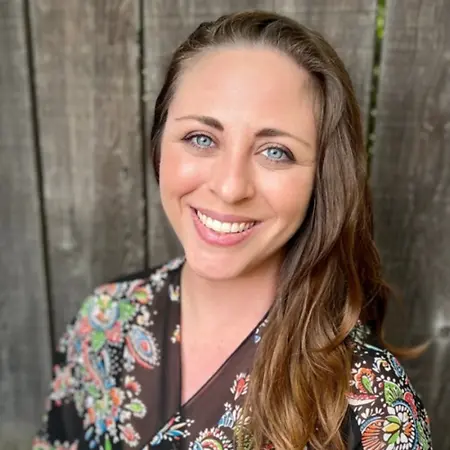
Her Story
About Paige
My path into animation has been non-linear. I went to school for live-action filmmaking and graduated in 2016, but while in college, I found my love for animation. I took a VFX course and asked my teacher if we'd be learning any modeling, mentioning I'd watched the bonus features of Finding Nemo and found it interesting. He said no, but offered to teach me, spending 8 to 10 hours with me before pretty much every class, teaching me everything he knew about animation. I was ready to jump into the industry but found out that live action and animation, even though they are both entertainment, are very separate industries. It was difficult trying to find that bridge when the education I had wasn't geared towards finding an internship in animation or building a portfolio. It had been really on my heart since college that there has to be a place for this, some kind of learning studio where people could just get internships to learn and bridge that gap. When COVID hit and the industry shut down, I lost pretty much all my work hours, so I put that effort into forming my own company and create the space that I needed when I was a student. Since forming in 2020 my company, Imhapie, has helped students transitioning into the industry get jobs and internships at companies like Disney, Pixar, Nickelodeon and Netflix to name a few. Our first project quickly grew from two collaborators to over 120 artists worldwide.
Her Interview
Ten minutes with Paige
01What do you attribute your success to?
I attribute my success to having mentors who were willing to invest their time in my education. If I didn't find the right mentors early on in my education, my career would look a lot different. I didn't know what direction to take to get on the right path for animation, so that direction and knowledge from professionals was not only inspiring, but pivotal to my successes.
02What’s the best career advice you’ve ever received?
The best career advice I've received is twofold. First, get to know everybody in the room - networking is how you get your next job and it's super important to find a crew. Second, never give up. The only reason why I'm still creating is because I haven't given up, and there are so many opportunities to just quit because it's too hard, too expensive, or doesn't seem worth it. But you can't build something bigger if you quit. An animation professional told me that you're at the top of the pyramid because you didn't quit, and that's a really important quality to have in such a competitive and difficult industry.
03What advice would you give to young women entering your industry?
In addition to "networking is key" and "never give up," some of the best advice I can give is to stay true to yourself and know your worth. People appreciate authenticity and they hire people that they like. So don't be fake, be kind and don't be afraid to be genuine. You should absolutely also know your worth and know what the industry standard is for payment. Don't let anyone take advantage of you. Artists work are often undervalued, so learn to stand up for yourself early, ask for raises and make sure you get paid on time.
04What are the biggest challenges or opportunities in your field right now?
Challenges ARE opportunities. The studio system has changed completely. Studios are not investing in original ideas, and creatives are losing work and/or being replaced by AI. However, we are also seeing a rise in the creator economy. AI is being used as a tool by people who have never animated, but still want to tell their own stories and audiences are turning to Youtube for fresh ideas in entertainment. Not to say all of the content, especially that made with AI, is quality entertainment. It's far from it, but it can be used as a tool by talented indie artists to speed up the process on a minimal crew and minimal budget. The rise of so many independent studios is really encouraging to see - people are doing their own thing and not letting the gatekeepers get in the way anymore.03
05What values are most important to you in your work and personal life?
I love creating stories that inspire people to have empathy for others. There's so much discourse in the world that I think sending messages about unity is really important, whether that be through having diverse characters and authentic cultural storytelling, or characters that educate you about mental health. It's all really important, especially for children's content and preteens, for those messages about unity to be put out there and learned at a younger age. It's so easy to judge people based on somebody else's opinion, so it's good for kids to see something positive and form that opinion for themselves.
Join Influential Women and start making an impact. Register now.