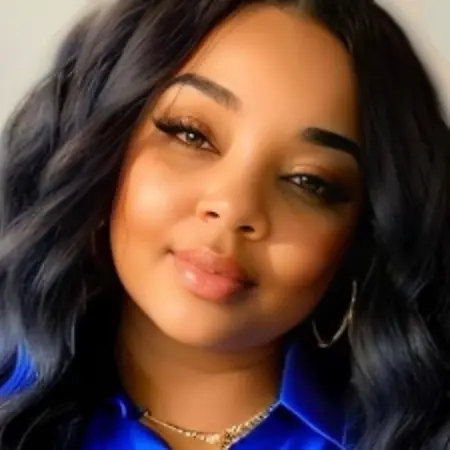
I was not choosing uncertainty over security. I was choosing purpose over comfort; Building a nonprofit, a fintech platform, and a legacy... one uncomfortable yes at a time.
Panya Martin · In Her Own Words
Her Story
About Panya
Panya Martin is a woman who builds things that last — not for recognition, but because she believes deeply that every person deserves access to education, opportunity, and the tools to change their own story.
As the President and Executive Director of Mildrie's Road Foundation Inc., she has spent over a decade serving Los Angeles County, the Antelope Valley, and communities across the United States and internationally — through literacy programs, reentry workforce development, disaster relief, and resource distribution that meets people exactly where they are. Every program she has built carries the spirit of her grandmother Mildrie Martin, whose legacy of compassion and service became the foundation for everything Panya does.
Through the House of Literacy, she created a space where children are not just taught — they are seen. Where a struggling reader sits with a tutor one on one until something clicks. Where a child who came in behind walks out confident, capable, and ready. Where culinary arts, music, gardening, and art are not afterthoughts — they are pathways to a child discovering who they are.
Through Operation 360, she created a second chance for people the world had written off — equipping formerly incarcerated men and women with vocational skills, job readiness, and the belief that their past does not determine their future.
And through C3 Credit 2 Millz — a fintech platform she designed and created from the ground up — she extended her mission into the financial world. Built on the belief that credit repair, business credit building, and access to funding should not be gatekept by expensive professionals or confusing systems, C3 Credit 2 Millz puts that power directly in the hands of the people who need it most.
Panya is also a published author whose books speak directly to the woman who is healing, rebuilding, and learning to walk in her purpose again. Her writing is personal because her journey is personal. And she shares it without apology.
What drives her is not complicated. She loves her community. She believes in people. And she wakes up every day committed to proving that one person with clarity, courage, and consistency can change the trajectory of an entire generation.
That is who Panya Martin is. And she is just getting started.
Her Interview
Ten minutes with Panya
01What do you attribute your success to?
My grandmother. My faith. And the refusal to quit when quitting would have been the easier choice.
Mildrie Martin was not a famous woman. She did not have a platform or a title. But she had a way of loving people that made them feel like they mattered — and that stayed with me long after she was gone. Everything I have built has been an attempt to honor that. When I named this foundation after her I was making a promise to myself that I would carry her spirit into every room I walked into and every life I touched.
Beyond that I attribute my success to staying close to purpose. Not money. Not recognition. Purpose. When the money was not there, when the doors were closed, when people did not believe in the vision — purpose kept me moving. And I genuinely believe that when you are doing what you were called to do the right people, the right resources, and the right opportunities find their way to you. Not always on your timeline. But they come.
What is the best career advice you have ever received?
Do not wait until you are ready. You will never feel ready. Start where you are with what you have and figure the rest out as you go.
I spent time early in my journey waiting — waiting for the perfect plan, the perfect funding, the perfect moment. And what I learned is that the people who actually build things are not the most prepared people in the room. They are the most committed. Commitment and consistency will outwork talent and preparation every single time. Show up. Keep showing up. And when it gets hard — and it will get hard — show up anyway.
What advice would you give to young women entering your industry?
Know your worth before you walk into any room. Not because you need to prove anything to anyone — but because if you do not know it, someone else will define it for you and they will define it low.
Get comfortable being the only one. There will be tables where you are the only woman, the only Black woman, the only person without a degree or a title or a connection. Sit down anyway. Speak anyway. Your presence at that table is not an accident — it is a necessity.
And build something that is yours. Not someone else's dream that you are helping to execute. Something that has your name, your vision, and your fingerprints on it. Because when it is truly yours no one can take it from you and nothing can stop it but you.
What are the biggest challenges or opportunities in your field right now?
In the nonprofit world the biggest challenge is sustainability. Most organizations are one grant cycle away from crisis and that is a dangerous place to operate from. The sector needs women leaders who understand both mission and business — who can build programs that serve people AND build revenue streams that keep the lights on. Those two things are not opposites. They are partners.
In fintech the biggest opportunity is access. There are millions of people in this country who have been locked out of the financial system — people with no credit, bad credit, or no understanding of how credit even works — and technology is finally making it possible to reach them directly without a middleman. I built C3 Credit 2 Millz because I saw that gap and I knew how to fill it. The opportunity right now for women in fintech is enormous — but you have to be willing to build it yourself because no one is going to hand it to you.
The intersection of those two worlds — nonprofit impact and financial technology — is where I live. And I genuinely believe that community empowerment and economic empowerment are the same conversation.
What values are most important to you in your work and personal life?
Faith comes first. Everything I do flows from my relationship with God and my belief that I was placed here with a specific purpose. That is not just language for me — it is the foundation I stand on when everything else feels uncertain.
After faith — integrity. I will not compromise who I am or what I believe to get to a place faster. The shortcuts that sacrifice your integrity are not shortcuts. They are detours that cost you everything.
Generosity. I grew up watching what it looks like when people share what they have — even when they do not have much. That shaped me. And I lead with generosity because I have seen firsthand how much it changes people when someone shows up for them without an agenda.
And finally — legacy. Every decision I make I ask myself whether it is building something that will outlast me. Not for vanity. But because I believe the work we do in our lifetime should make the next generation's path a little clearer and a little easier. That is what my grandmother did for me. And that is what I intend to do for everyone who comes behind me.
02What’s the best career advice you’ve ever received?
Do not wait until you are ready. You will never feel ready. Start where you are with what you have and figure the rest out as you go.
I spent time early in my journey waiting — waiting for the perfect plan, the perfect funding, the perfect moment. And what I learned is that the people who actually build things are not the most prepared people in the room. They are the most committed. Commitment and consistency will outwork talent and preparation every single time. Show up. Keep showing up. And when it gets hard — and it will get hard — show up anyway.
03What advice would you give to young women entering your industry?
Know your worth before you walk into any room. Not because you need to prove anything to anyone — but because if you do not know it, someone else will define it for you and they will define it low.
Get comfortable being the only one. There will be tables where you are the only woman, the only Black woman, the only person without a degree or a title or a connection. Sit down anyway. Speak anyway. Your presence at that table is not an accident — it is a necessity.
And build something that is yours. Not someone else's dream that you are helping to execute. Something that has your name, your vision, and your fingerprints on it. Because when it is truly yours no one can take it from you and nothing can stop it but you.
04What are the biggest challenges or opportunities in your field right now?
In the nonprofit world the biggest challenge is sustainability. Most organizations are one grant cycle away from crisis and that is a dangerous place to operate from. The sector needs women leaders who understand both mission and business — who can build programs that serve people AND build revenue streams that keep the lights on. Those two things are not opposites. They are partners.
In fintech the biggest opportunity is access. There are millions of people in this country who have been locked out of the financial system — people with no credit, bad credit, or no understanding of how credit even works — and technology is finally making it possible to reach them directly without a middleman. I built C3 Credit 2 Millz because I saw that gap and I knew how to fill it. The opportunity right now for women in fintech is enormous — but you have to be willing to build it yourself because no one is going to hand it to you.
The intersection of those two worlds — nonprofit impact and financial technology — is where I live. And I genuinely believe that community empowerment and economic empowerment are the same conversation.
05What values are most important to you in your work and personal life?
In the nonprofit world the biggest challenge is sustainability. Most organizations are one grant cycle away from crisis and that is a dangerous place to operate from. The sector needs women leaders who understand both mission and business — who can build programs that serve people AND build revenue streams that keep the lights on. Those two things are not opposites. They are partners.
In fintech the biggest opportunity is access. There are millions of people in this country who have been locked out of the financial system — people with no credit, bad credit, or no understanding of how credit even works — and technology is finally making it possible to reach them directly without a middleman. I built C3 Credit 2 Millz because I saw that gap and I knew how to fill it. The opportunity right now for women in fintech is enormous — but you have to be willing to build it yourself because no one is going to hand it to you.
The intersection of those two worlds — nonprofit impact and financial technology — is where I live. And I genuinely believe that community empowerment and economic empowerment are the same conversation.
Join Influential Women and start making an impact. Register now.