Influential Woman · Education | Social Impact & Social Enterprise | Research | Leadership Development
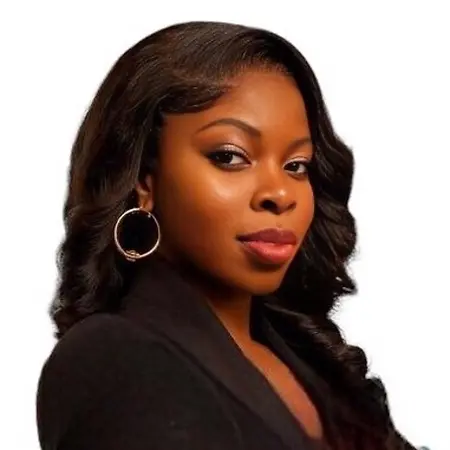
Patricia Quaye
Founder & Executive Director, SHE 4 Change
I stopped seeing my circumstances as limitations and began to see them as context. I didn't just survive my circumstances. I outgrew them and transformed them into impact.
Patricia Quaye · In Her Own Words
Her Story
About Patricia
Patricia Quaye is a research-driven leader, qualitative scholar, social impact strategist, and founder committed to advancing educational equity and empowering underserved communities globally.
She is currently pursuing a PhD in Educational Research at The University of Alabama, where her work centers on STEM education, rural access, equity, policy and place-based learning. As a qualitative researcher, her work explores lived experiences, contextual realities, and systemic barriers shaping educational opportunities, with a focus on generating insights that inform meaningful and sustainable change. She also serves as a Graduate Research Assistant, contributing to research on rural water education and community-based STEM learning.
Patricia is the founder of SHE 4 Change, a social impact organization dedicated to empowering women, girls, and youth through education, mentorship, and entrepreneurship. She also leads PEEL Global (Patricia’s Elegance and Empowerment Lounge), a platform that equips purpose-driven individuals to live with elegance, confidence, and impact.
Her professional experience spans organizations such as the Luminos Fund, New Sun Road, African Leadership for Education, The D-Lab at UC Berkeley, and the Blum Center, among others, where she has contributed to user-centered research, program development, and global education initiatives. Across all her work, Patricia is driven by a mission to translate research into real-world impact and create sustainable pathways for transformation.
Her Interview
Ten minutes with Patricia
01What do you attribute your success to?
I attribute my success to a combination of my faith in God, resilience, and a deep commitment to purpose and impact. Growing up in a rural community shaped my perspective and gave me a strong sense of responsibility to create opportunities for others. I have learned to stay focused on impact rather than limitations, and to keep building—even when the path is uncertain.
02What’s the best career advice you’ve ever received?
One of the best pieces of advice I’ve received is that you don’t need money to make an impact. You simply need to start where you are and commit to brightening the corner you find yourself in—and that has shaped how I approach both my work and my purpose
That advice reshaped how I approach my work and purpose. It reminded me that impact begins with initiative, vision, and a willingness to serve, not resources. While funding can scale impact, it is not a prerequisite for starting. Some of the most meaningful change begins with simply using what you have, where you are, to make a difference.
03What advice would you give to young women entering your industry?
Do not wait until you feel fully ready; start where you are, and grow as you go. Your voice, your perspective, and your lived experiences are valuable. Seek mentorship, stay curious, and build both competence and confidence intentionally.
04What are the biggest challenges or opportunities in your field right now?
One of the biggest challenges in my field is bridging the gap between research and real-world impact, especially in underserved communities. Too often, valuable insights remain within academic spaces without fully translating into meaningful change on the ground.
However, this is also the greatest opportunity. There is a growing recognition of the need for inclusive, community-informed solutions, creating space for research that is not only rigorous, but truly transformative.
At the same time, securing funding to scale impact remains a significant challenge. There is often a disconnect between what global platforms define as “innovation” and what communities actually need. This requires continuously advocating for context-driven solutions and challenging the status quo, ensuring that the voices, realities, and priorities of the communities we serve are not overlooked in the pursuit of funding or recognition.
05What values are most important to you in your work and personal life?
The values that guide both my work and personal life are integrity, purpose, service, community, collaboration, and excellence. I believe in doing work that is deeply aligned with who I am and the impact I am called to make not just what is convenient or expected.
I value service because my work is ultimately about people especially those in underserved communities and I am committed to creating solutions that are meaningful, respectful, and transformative. Community and collaboration are central to this, as I believe lasting impact is built collectively, by working with people rather than for them.
Excellence is also important to me, not as perfection, but as a commitment to growth, intentionality, and doing things well. And above all, my faith grounds everything I do, shaping how I lead, how I serve, and how I remain anchored in purpose even in uncertain seasons.
Join Influential Women and start making an impact. Register now.