Her Story
About Patricia
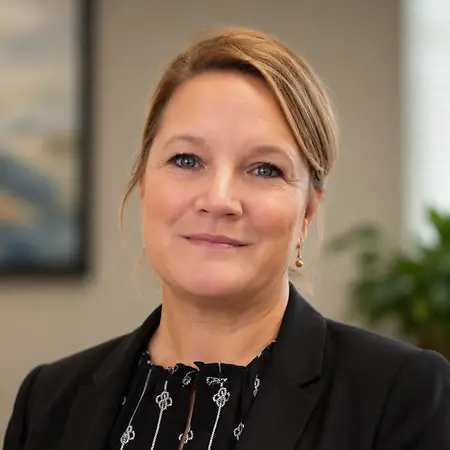
Patricia A. Spatz serves as Regional Manager – Risk for the Acute Division of UHS of Delaware, Inc., where she provides guidance, leadership and mentoring that oversees risk management teams across multiple hospitals. In this capacity, she supports facility-level risk managers through on-site visits, evidence-based education, and hands-on guidance aimed at reducing high-risk exposures and safeguarding patient welfare. Her approach centers on equipping hospital teams with practical tools to be proactive to provide a safe environment, while also mentoring risk professionals through the day-to-day and leadership challenges of the role. Spatz's path into healthcare risk management began unconventionally. In 1997, working as a respiratory therapist for a LTAC hospital, a hospital CEO recognized her potential and encouraged her shift into quality and patient safety work. Over the following decades, she steadily advanced through progressively senior roles, including, respiratory director, quality director, risk director, and eventually stepping into an interim CEO position at a behavioral health facility. That experience positioned her for her current regional role, which she assumed in September 2024. To support this growth, she pursued a Master of Health Administration from the University of Phoenix, building on an Associate of Science in Respiratory Care Therapy from Howard Community College, and she continues working toward her CPHRM certification alongside her existing Hospital Accreditation Certification. Beyond her operational responsibilities, Spatz remains active in the risk management community as a member of ASHRM and was previously involved with the Texas Healthcare Association. She has been selected for recognition as part of Influential Women for 2026, a reflection of her sustained contributions to patient safety and risk leadership. Grounded in mentorship, professionalism, and meticulous attention to detail, she continues to advocate for greater awareness of risk management as a rewarding career path, particularly for clinicians seeking meaningful alternatives to traditional bedside roles.
Her Interview
Ten minutes with Patricia
01What do you attribute your success to?
I attribute my success to the mentorship I received from previous CEOs, providers who I worked closely with and particularly to my current and past risk supervisors, who believed in my potential early on. I've also stayed open to new opportunities as they arose, and I made a point of continuing my education, which allowed me to move from clinical care into quality and risk leadership roles.
02What’s the best career advice you’ve ever received?
The best career advice I ever took was from myself - "never be afraid to take the door that is offer to you". Looking back, each experience that I was offered has helped me get where I am today.
03What advice would you give to young women entering your industry?
I would encourage someone to always be open to new opportunities that you may not have thought about. This profession offers a very unique opportunity to improve patient safety while supporting the patients and your fellow co-workers. Find mentors, ask questions and trusting your clinical experience can open the door to opportunities you may have never imagined. From there, pursue relevant certifications, build your network especially through other like profession and don't be afraid to start in an entry-level role to learn the fundamentals. Your clinical experience is valuable, take the open door, even if it's not the original path you planned, sometimes stepping out of your comfort zone allows you to embrace a new beginning.
04What are the biggest challenges or opportunities in your field right now?
Risk management is rewarding but often behind the scenes profession that plays a very important role to patient safety and quality. One of the biggest challenges we face is recruiting and retaining experience risk managers, who have a strong clinical knowledge, ability to navigate through regulatory, legal and patient safety issues. This profession doesn't get the exposure early on in a clinician's career path and therefore limits the pool of experience candidates. At the same time, I see real opportunity here, especially in attracting clinicians who are looking for alternatives to bedside shift work, and in raising overall awareness of risk management as a viable and meaningful career path.
05What values are most important to you in your work and personal life?
The values most important to me are integrity, compassion and commitment. Patient safety is at the core of everything I do, and I am very passionate about patient safety. I also deeply value mentorship and helping others grow in their careers, along with maintaining professionalism. I also believe that it is important to maintain a balance between work and home for continued growth and well-being. I strive to lead by example, building those relationships of trust is a key and making a positive impact both professionally and personally.
Join Influential Women and start making an impact. Register now.