Her Story
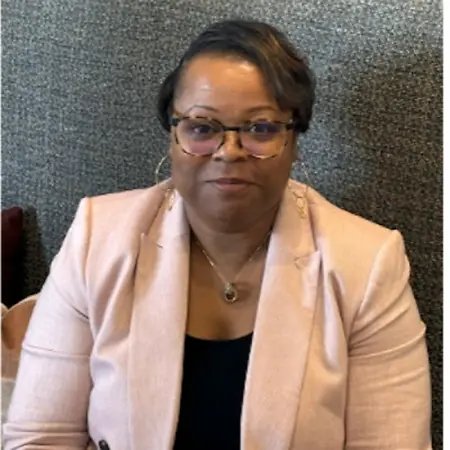
About Patricia
I have been working in public health for more than 35 years, and it's been an incredible journey. My career path was actually shaped by a wonderful mentor, Dr. Daniel Abebe from Metropolitan State University in Minneapolis, who advised me about 20 years ago when I was considering human resources and affirmative action law. He told me that public health would be the area in the next decade that would be most popular and in high demand, and he even predicted that one day we would experience a pandemic and we would need people to address it. I'm so glad I listened to him. I started my career early with prevention and education, focusing on breast and cervical cancer awareness and really getting women screened, and I just fell in love with it. The rest is history - I continue to promote and educate prevention across the board for women, as well as men. Today, I'm focusing on maternal health, particularly Black maternal health, and I'm working with an NIH grant to support maternal health and wellness and educate practitioners and individuals who treat women of color and work with doulas. I'm also a professor at Howard University. Now I do a lot of consulting and mentoring with my new book that I published, 'Strive to Finish: The Dissertation Recipe, A Practical Guide for Grad Students and Emerging Scholars.' Since I mentor a lot of dissertation students or doctoral students, I wanted to be able to give them something in simplistic terminology on how to matriculate when they go through a doctoral program. My most notable professional achievement has been working with the community to promote health and wellness, because that's what my discipline is all about, and next will be definitely the book.
Her Interview
Ten minutes with Patricia
01What’s the best career advice you’ve ever received?
The best career advice I've ever received is to continue to thrive and don't be happy with the bare minimum, but always strive - and no pun intended with my book - but strive to finish with excellence in everything that you do. I think sometimes when you stumble, it gives you a chance to center and think and then reset, and then come out with, okay, this is how I need to move accordingly. You can't teach people if you're not willing to continue to learn yourself.
02What advice would you give to young women entering your industry?
Know that you belong, whatever you do, whatever space, whatever organization, institution, you know, know that you belong. You are where you deserve to be.
03What are the biggest challenges or opportunities in your field right now?
In my field right now, the biggest challenge is continuing to educate and make sure that we provide the most accurate information and avoid disinformation or misinformation. The opportunity is continuing to reinvent yourself, as the famous word is to pivot - truly finding more ways to make a difference. Right now we need experts, we need gurus, we need those individuals that want to change the status quo, and now using technologies such as AI and any of the apparatus to continue to move us forward. AI is very important in healthcare and in public health. We're doing what we can, but it's also time, as individuals retire, to pass that torch. I find the vast majority of people in the U.S., probably even in the world, but I have to speak for the U.S., the vast majority at a higher... maybe 80% are willing and receptive. I think because of how things were handled in the pandemic, you might have that 20% who was exhausted and tired. But overall, the vast majority of people are saying, hey, continue to do what you do, continue to make sure you give me the best information, I want to be prepared for the future.
04What values are most important to you in your work and personal life?
The most important values to me are integrity, motivation, and believing in oneself - you have to have the belief, that's the most important value for me. I also value relationships and family, and then to sum it up, health and wellness. You can't do this work without compassion. I try to walk in that light of being kind. We don't realize that we're all interconnected, and during a major disaster, it's not your next-door neighbor, it's probably that stranger that will save your life in the end. During the pandemic, it was people who were stranded, and they had to just go to individual's houses and say they need help, and some people stayed months with them.
Join Influential Women and start making an impact. Register now.