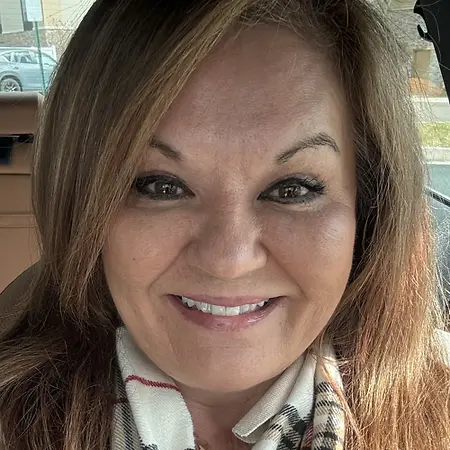
Her Story
About Patricia
There’s no clean, predictable schedule—and that’s the point.
A typical day can start with pipeline reviews and revenue forecasting, shift into strategic conversations around partnerships or sponsorship positioning, and quickly move into problem-solving across operations, marketing, and execution. One moment it’s evaluating how to increase exhibitor ROI or close a deal; the next it’s aligning stakeholders, troubleshooting a live initiative, or refining how a program actually performs on-site.
At the core, every day is a balance between three things: driving revenue, strengthening relationships, and ensuring execution matches the strategy. It’s not just about selling—it’s about making sure what was sold delivers.
And that’s where the real work happens. Because the gap between a good idea and a successful outcome is almost always execution.
Her Interview
Ten minutes with Patricia
01What do you attribute your success to?
There isn’t a single factor—and that’s usually the misconception. Success, especially in complex, relationship-driven industries, is the result of consistently doing a few things better and more intentionally than most.
First, I don’t separate strategy from execution. A lot of people can sell an idea. Fewer can ensure it actually delivers. I’ve built my career on staying close to both—understanding the business objective, structuring the opportunity, and then seeing it through to a result. That accountability matters.
Second, I prioritize relationships—but I manage them like a business, not a social network. Trust is critical, but so is clarity. People know where I stand, what I bring, and that I’m focused on outcomes, not just conversations. That balance is what turns relationships into long-term partnerships.
Third, I pay attention to where value is actually created. Not where it’s talked about—but where it shows up in revenue, efficiency, or experience. That means asking harder questions, challenging assumptions, and being willing to adjust quickly when something isn’t working.
I also attribute a lot to consistency and follow-through. This is an industry where opportunities are often won—or lost—after the initial conversation. Being responsive, prepared, and reliable over time compounds in ways people underestimate.
And finally, I’ve never been afraid to step outside a defined role. Some of the biggest growth moments in my career came from operating beyond a job description—connecting dots across sales, marketing, operations, and execution when others stayed in their lane.
At the end of the day, success isn’t about doing one thing exceptionally once. It’s about repeatedly aligning the right strategy, the right people, and the right execution—until that becomes your standard.
02What’s the best career advice you’ve ever received?
Early in my career, I was told something that stuck: “Don’t just do your job—understand the business behind it.”
At the time, it sounded simple. But in practice, it changed how I approached everything.
It shifted my focus from just executing tasks to asking better questions—How does this drive revenue? Where is the margin? Who actually makes the decision? What problem are we really solving? That mindset forces you to think beyond your role and operate at a higher level.
Another piece of advice that’s stayed with me is: “Be the person people can rely on when it matters—not just when it’s easy.”
A lot of careers are built on moments that don’t show up on paper—tight timelines, unexpected challenges, high-stakes situations. Showing up prepared, staying calm under pressure, and following through consistently is what earns trust over time.
And finally: “Don’t wait to be told—step in.”
Some of the biggest opportunities in my career came from leaning into areas that weren’t explicitly mine—connecting teams, solving gaps, or driving something forward when it needed ownership. That’s where growth actually happens.
If I had to sum it up, the best advice wasn’t about titles or timing—it was about ownership, awareness, and execution. Those three things compound faster than anything else.
03What advice would you give to young women entering your industry?
First, learn the business—not just the role you’re hired into.
Understand how money is made, how decisions are approved, and what success actually looks like for your organization. The faster you connect your work to revenue and outcomes, the faster you’ll stand out.
Second, don’t underestimate the power of relationships—but be intentional about them.
This industry is built on trust, but it’s not about collecting contacts. It’s about building credibility. Be someone people can count on, follow up, and deliver—every time. That consistency will open more doors than any title.
Third, get comfortable speaking up—early.
You don’t need to know everything to add value. Ask smart questions, share observations, and don’t wait until you feel “ready.” Confidence is built through action, not before it.
Also, don’t box yourself in too quickly.
There’s a tendency to specialize early, but some of the most valuable experience comes from understanding how different parts of the business connect—sales, operations, marketing, and execution. That broader view becomes a real advantage over time.
And finally, don’t confuse being well-liked with being effective.
You can—and should—be both, but your credibility will come from results. Set standards for yourself, follow through, and don’t be afraid to take ownership when something needs to get done.
There’s real opportunity in this industry, especially for women who are willing to lead, not just participate. The key is to step into it with intention—and stay consistent.
04What are the biggest challenges or opportunities in your field right now?
The biggest challenge right now is misalignment—between strategy and execution, between what’s being sold and what’s actually delivered, and between what customers expect and what organizations are structured to provide.
There’s no shortage of innovation. The issue is that many companies are still operating with outdated models—siloed teams, reactive sales approaches, and event strategies that prioritize activity over outcomes. That disconnect shows up in missed revenue, underperforming programs, and experiences that don’t fully deliver on their potential.
Another challenge is noise. There are more platforms, more tools, and more ways to engage than ever before—but not all of them create value. Knowing what actually moves the needle versus what just looks good on paper has become a critical skill.
But within those challenges is the opportunity.
Organizations that can align their sales strategy, partnerships, and execution are seeing real growth. Events are no longer just marketing moments—they’re revenue platforms. Relationships are no longer just touchpoints—they’re long-term business drivers. And technology, when applied correctly, becomes an enabler of scale, not complexity.
There’s also a significant opportunity for professionals who can operate across disciplines—people who understand sales, marketing, operations, and execution as one connected system. That kind of perspective is still rare, and it’s increasingly valuable.
Ultimately, the companies and individuals that will win in this environment are the ones who stay focused on outcomes—cutting through the noise, tightening their strategy, and executing in a way that actually delivers.
05What values are most important to you in your work and personal life?
At the core, everything comes back to integrity, accountability, and consistency.
Integrity is non-negotiable. Whether it’s a deal, a partnership, or a personal commitment, I believe in being clear, honest, and straightforward—even when it’s not the easiest path. Long-term trust is built on that, and without it, nothing else scales.
Accountability is just as important. I take ownership of outcomes—good or bad. It’s easy to take credit when things go well, but real growth comes from being willing to step in, solve problems, and stand behind the results. That mindset carries across both work and personal life.
Consistency is what ties it all together. Success isn’t built on one big moment—it’s built on showing up prepared, following through, and delivering over time. People remember how reliable you are long after they forget what you said.
I also value relationships, but in a meaningful way. Not surface-level connections—real relationships built on mutual respect, trust, and shared goals. Those are the ones that last, both professionally and personally.
And finally, balance through intention. Life is full—career, family, commitments—and I’ve learned that balance doesn’t happen by default. It comes from being present where you are, setting priorities, and making sure the people and things that matter most don’t get pushed aside.
At the end of the day, these values aren’t separate between work and life—they’re the same. And that consistency is what keeps everything aligned.
Join Influential Women and start making an impact. Register now.