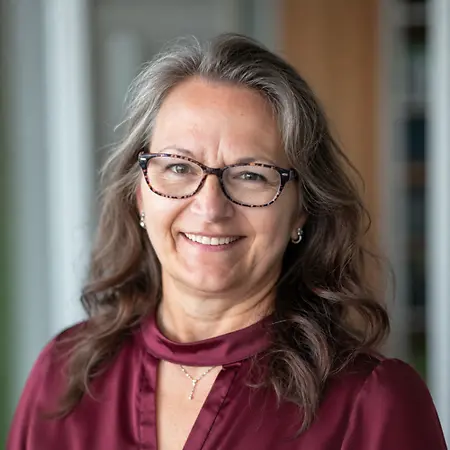
My manager saw my potential before I did, telling me "I'll let you do whatever your heart desires." His encouragement to pursue project management shaped my entire career.
Paula Brossard, PMP · In Her Own Words
Her Story
About Paula
Paula Brossard, PMP, is a Senior Technical Project Management professional based in Elkhorn, Wisconsin, with over 20 years of experience leading complex IT initiatives across infrastructure, security, healthcare, higher education, and local government environments. She is known for her ability to translate executive-level goals into structured technical execution while coordinating cross-functional and distributed teams. Her expertise spans enterprise infrastructure delivery, identity and security management, Agile and Waterfall methodologies, PMO operations, and large-scale technology transformation programs. Throughout her career, Paula has led high-impact, mission-critical projects that required precision, speed, and strong stakeholder coordination. Her work includes managing large data center migrations, such as a rapid weekend lift-and-shift for the University of Wisconsin–Milwaukee, as well as complex infrastructure and network segmentation projects in healthcare settings, including St. Luke’s Hospital. She has also contributed to enterprise system modernization efforts in both corporate and public sector environments, consistently ensuring operational continuity under tight deadlines and high-risk conditions. Paula holds a Project Management Professional (PMP) certification from the Project Management Institute, earned in 2011 and maintained through continuous professional development. Recently, she has expanded her skill set into artificial intelligence applications for project management, earning multiple AI-related certifications. Her leadership style emphasizes hands-on guidance, accountability, and team development, with a focus on teaching and empowering others. Currently between roles due to a recent organizational restructuring, she is actively exploring new opportunities while continuing to deepen her expertise in emerging technologies and modern project delivery practices.
Her Interview
Ten minutes with Paula
01What do you attribute your success to?
I attribute much of my success to a strong work ethic and a willingness to accept and act on candid feedback. Constructive input—particularly around communication style and tone—can be challenging to receive, but it provides critical insight for growth. By consistently reflecting on and applying that feedback, I’ve been able to refine my approach and strengthen my effectiveness over time. While not always easy, turning feedback into actionable improvement has been a defining factor in my professional development.
02What’s the best career advice you’ve ever received?
One of the most impactful pieces of advice I’ve received is to maintain professional objectivity and not internalize every outcome. Early in my career, I approached my work very personally—driven by a strong work ethic and a self-directed approach to learning and problem-solving. Over time, I came to appreciate the importance of separating personal investment from project outcomes. Projects are inherently transitional; you deliver, learn, and move forward. While I’ve adopted that mindset to an extent, I remain deeply committed to excellence and consistently bring a high level of ownership and effort to my work—always focused on delivering meaningful value to those I support.
03What advice would you give to young women entering your industry?
I advise emerging project managers to prioritize patience and rigor. Success in this discipline depends on asking the right questions early and often, rather than accelerating prematurely. A common root cause of project failure is insufficient time spent in requirements definition—failing to fully understand the problem being solved and the outcomes expected. Leaders must ensure there is clear alignment on the current state, target state, and the path between them. Investing the necessary time upfront is not a delay—it’s a risk mitigation strategy that drives stronger execution, reduces rework, and significantly improves the likelihood of successful delivery.
04What are the biggest challenges or opportunities in your field right now?
A key challenge in project management is the gap between executive expectations and delivery reality. Leadership often sets aggressive timelines before proper discovery and planning, overlooking the complexity of execution. Focus on ensuring adequate time is spent upfront—especially on defining requirements—so timelines are realistic and outcomes are achievable. This helps reduce rework, improves delivery confidence, and builds trust with stakeholders.
05What values are most important to you in your work and personal life?
Integrity is my top priority. While organizations occasionally encounter gaps in transparency, I firmly believe that consistent honesty is foundational to trust, alignment, and effective decision-making.Equally important is an authentic commitment to valuing employees. When individuals feel recognized and supported, engagement and performance follow. I’ve seen firsthand that organizations which invest in their people ultimately strengthen their outcomes, including financial performance.
As a leader, I model accountability and lead by example—I don’t ask my team to take on anything I wouldn’t do myself. This approach reinforces trust, credibility, and a shared commitment to success.
Join Influential Women and start making an impact. Register now.