Discover why menopause is silently eroding organizational leadership and how structured workplace support can retain top female talent while strengthening engagement and performance.
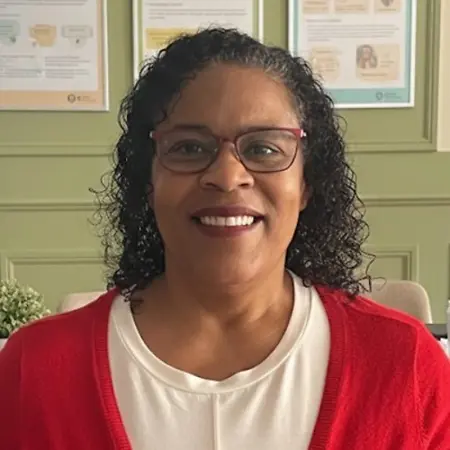
Influential Woman · Workplace Health Strategy, Corporate Wellbeing, Organizational Development, Healthcare, Menopause Support
Paula Wise
Workplace Menopause Support Architect | Founder, Transition with Paula, Transition with Paula
Menifee, CA
1Article published
“
I stopped explaining menopause and started showing its impact on workforce sustainability. Clarity replaced explanation; the work became about implementation, not persuasion.
Paula Wise · In Her Own Words
Her Story
About Paula
Paula Wise is the founder of Transition with Paula and the creator of the CPD-accredited Menopause Support Officer (MSO) Certification—a structured workplace capability designed to help organizations respond effectively to menopause as a workforce issue, not a wellbeing initiative.
With over two decades of experience across employee benefits, healthcare systems, and workplace training, Paula brings a unique combination of operational insight and program design. Her work sits at the intersection of employee wellbeing and organizational performance—particularly where menopause is impacting retention, confidence, and day-to-day capability.
Recognizing that most organizations lack the internal structure to respond appropriately, Paula developed a scalable model that equips trained, in-house Menopause Support Officers. These professionals are able to navigate sensitive conversations, recognize patterns without stepping into clinical territory, and implement practical workplace adjustments within clear HR and legal boundaries.
In addition to certification, Paula supports small and medium-sized enterprises through outsourced menopause support solutions—providing immediate access to structured guidance, practical tools, and consistent workplace response.
Her work is grounded in one principle:
menopause is not a personal issue to be managed privately—it is a workforce reality that requires a structured, organizational response.
Through this approach, Paula helps organizations retain experienced talent, reduce misinterpretation risk, and build workplaces where women can continue to perform at their highest level.
Her Interview
Ten minutes with Paula
01What do you attribute your success to?
My success comes from something my father taught me early: ‘Nothing beats a failure but a try.’ But more than persistence, he taught me to reflect—to stop, reassess, and return with a better approach every time. That discipline of learning, adjusting, and trying again has shaped how I build and lead today.
02What’s the best career advice you’ve ever received?
The best career advice I ever received was this:
stop explaining the problem and start building the solution.
For a long time, I focused on helping people understand menopause—why it mattered, what women were experiencing, why it needed attention. But understanding alone doesn’t change anything.
The real shift came when I stopped trying to gain agreement and started creating structure—something organizations could actually use. That’s when the work moved from awareness to implementation.
It taught me that insight is valuable, but execution is what creates impact. And in any field, the people who move things forward are the ones who build what others are still talking about.
03What advice would you give to young women entering your industry?
Don’t build your work around awareness alone—build it around application.
Understanding women’s health is important, but it’s not enough. If you want to create real change, you need to understand how organizations function—how decisions are made, how performance is measured, and how support is implemented.
The women who make the greatest impact in this field are not just informed—they are able to translate that knowledge into structure, systems, and action.
04What are the biggest challenges or opportunities in your field right now?
One of the biggest challenges in the menopause space right now is that awareness has outpaced implementation.
Organizations increasingly recognize the impact on their workforce, but many lack the structure to respond in a way that is consistent, appropriate, and aligned with workplace boundaries. This creates a gap between intention and action—where support is needed, but uncertainty around risk, responsibility, and scope prevents meaningful progress.
The opportunity lies in moving beyond awareness into structured capability. Workplaces don’t need more conversation alone—they need clear, repeatable frameworks that enable appropriate, supportive responses within defined parameters.
This is where the role of a trained Menopause Support Officer becomes critical—providing internal capability to navigate conversations, recognize patterns without crossing into clinical territory, and implement practical adjustments with confidence.
The future of this space is not awareness alone—it is the integration of menopause into workplace systems in a way that is normalized, sustainable, and professionally governed.
05What values are most important to you in your work and personal life?
The values that guide my work and life are integrity, responsibility, and respect for people’s lived experience.
Integrity means being clear about what I do—and just as importantly, what I don’t do. In my work, that shows up as maintaining clear boundaries, especially in spaces that can easily become personal or clinical.
Responsibility means building work that can be trusted and applied consistently, not just delivered in theory. I believe if something is worth doing, it should be structured in a way that others can rely on.
And respect means meeting people where they are—without judgment, assumption, or oversimplification—while still holding a professional standard.
These values shape how I work, how I lead, and how I support others.
Her Content Hub
Articles by Paula
Menopause Is Quietly Costing Organizations Their Best Leaders - And Most Companies Don't See It
How organizations are quietly losing their best female leaders—and what structured support can do to change that.

Most organizations believe they are retaining their top female talent.
Many are not.
What they are actually experiencing is a slow, quiet erosion of leadership — often mislabeled as disengagement, burnout, or declining performance.
But beneath the surface, something else is happening.
A biological transition that workplaces have not yet learned to understand — let alone support.
Menopause.
The Hidden Workplace Reality
At the peak of their careers — often in leadership, management, or highly specialized roles — many women begin to experience symptoms that directly affect their day-to-day work.
Not because they are less capable.
Not because they are losing ambition.
But because they are navigating:
- Sleep disruption
- Cognitive strain
- Fatigue
- Anxiety or loss of confidence
- Physical symptoms that are difficult to explain in professional settings
In most organizations, there is no clear or structured way to provide support.
So, what happens instead?
- Silence
- Women push through
- They mask
- They adjust quietly
- Until, in some cases, they disengage — or leave altogether
The Cost Organizations Are Not Measuring
This is not a niche issue; it is a workforce reality — yet it is rarely tracked, rarely discussed in operational terms, and almost never built into leadership or retention strategies.
As a result, organizations are losing:
- Experienced leaders at the height of their contribution
- Institutional knowledge that cannot be quickly replaced
- Diversity within leadership pipelines
- Engagement from high-performing employees who no longer feel understood
Instead of recognizing what is happening, many organizations misinterpret it.
Performance conversations shift.
Confidence is questioned.
Capability is quietly re-evaluated.
When in reality, the issue is not capability.
It is context.
Why Awareness Alone Is Not Enough
In recent years, menopause has become more visible in workplace conversations.
And that visibility matters.
But visibility without structure does not create change.
Many HR teams and leaders are now aware of menopause — but still lack:
- A clear framework for responding appropriately
- Confidence in how to have safe, professional conversations
- Boundaries around what is — and is not — their role
- Practical pathways for support and signposting
This creates hesitation.
And hesitation leads to inaction.
The Missing Link: Structured Support Inside Organizations
Forward-thinking organizations are beginning to understand this:
Support cannot rely on individual managers “figuring it out.”
It must be built into the organization itself.
This is where structured roles and frameworks become critical.
When organizations introduce trained internal capability — such as a Menopause Support Officer (MSO) — they create:
- A safe, informed first point of contact
- Consistent, appropriate workplace conversations
- Clear boundaries between support and medical advice
- Confidence across leadership and HR teams
- A culture where women do not have to struggle silently
This is not about creating a new layer of complexity.
It is about creating clarity.
A Leadership Responsibility — Not a “Women’s Issue”
Menopause is not simply a personal experience.
It is a leadership and organizational responsibility.
When workplaces are not designed to account for real human transitions, they unintentionally push people out at the very moment they should be retained, supported, and elevated.
Strong organizations do not wait for problems to become visible.
They design for reality.
They recognize patterns early.
They build capability internally.
They create environments where people can continue to perform — not in spite of challenges, but with the right support around them.
The Opportunity Ahead
Organizations that address this well will do more than retain talent — they will strengthen it.
They will:
- Build trust
- Increase engagement
- Protect leadership pipelines
- Position themselves as environments where experienced professionals can continue to thrive
Because the question is no longer whether menopause exists in the workplace.
It is whether organizations are prepared to respond — professionally, practically, and with clarity.
About the Author
Paula Wise is the founder of Transition with Paula, specializing in workplace menopause strategy and support. Through her CPD-accredited Menopause Support Officer (MSO) Certification, she helps organizations build structured, professional approaches to supporting women at work — improving retention, engagement, and leadership continuity.
Join Influential Women and start making an impact. Register now.