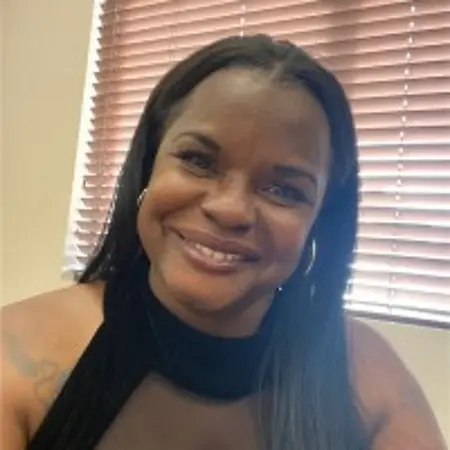
Her Story
About Paulette
Paulette Bryant, MSW, LCSW-QS CTP, C-RYT-200, is a dedicated behavioral health professional serving as Director of Behavioral Health at Vista Medical of Alabama in Mobile, Alabama. with extensive experience in mental health, substance use disorder treatment, trauma-informed care, integrated behavioral health, veterans' services, correctional environments, employee assistance programs, clinical supervision, and behavioral health leadership.
Her professional background encompasses work with diverse and high-risk populations across behavioral health, addiction treatment, primary care, correctional, veteran, corporate, and community-based settings. Her clinical experience includes biopsychosocial assessment, individual and group therapy, crisis intervention, treatment planning, substance use recovery support, trauma treatment, interdisciplinary collaboration, clinical documentation, patient advocacy, and behavioral health program development.
Her professional interests center on improving access to high-quality behavioral healthcare, particularly for veterans, individuals affected by trauma, and individuals experiencing co-occurring mental health and substance use disorders.
Bryant is a Licensed Clinical Social Worker with a bachelor's degree in Human Services earned in 2010 and a master's degree in Social Work earned in 2019 from the University of West Florida. Her professional preparation is further strengthened by certifications in Eye Movement Desensitization and Reprocessing (EMDR), Certified Trauma Professional (CTP), and yoga instruction, supporting her ability to incorporate trauma-informed and holistic approaches into behavioral health care. As a U.S. Army veteran who served from 1991 to 1997, Bryant brings a personal understanding of service, resilience, and perseverance to her work and is committed to creating an environment where patients feel supported, respected, and empowered. Beyond her clinical responsibilities, Bryant is passionate about service and giving back to her community. She is a member of Zeta Phi Beta Sorority, Incorporated, and participates in community service initiatives, including visiting nursing homes to provide gifts, organize bingo activities, and create opportunities for meaningful social engagement. Bryant attributes her professional success to her faith, resilience, and the challenges she has overcome throughout her life, which have shaped her commitment to helping others navigate difficult circumstances. She places a strong emphasis on ethical practice, transparency, accountability, compassion, and integrity, values that guide both her professional relationships and her approach to serving patients and the broader community.
Her Interview
Ten minutes with Paulette
01What do you attribute your success to?
I attribute my success to first and foremost God that kept me through all the times that I wanted to give up. My Husband of 38 years and my children. Also just to my life because of where I came from it made me be a better person, and therapist. So, I attribute it to all the pain and the failures of my life that made me be really good at what I do.
02What’s the best career advice you’ve ever received?
Treat people the way that you want to be treated. Also, that you're only accountable for the things you do and say and that you're also accountable for how you react to the things that are done and said to you.
03What advice would you give to young women entering your industry?
Know your WHY. Because it could be one of them fields that you can easily get burned out in. And it depends on why you want to do it. Because this is not a field that we can be judgmental in. We have to be real empathetic and compassionate in doing what we do so basically just to know your WHY. Why do you want to do this?
04What are the biggest challenges or opportunities in your field right now?
The biggest challenge will be that when patients aren't like serious about their treatment because they chose to come to treatment in the first place. But one of the biggest challenges is I suffer from PTSD, Depression so oftentimes I may get triggered by some of the situations of some of our patients and I have to work through it on the spot because my job is to be here for them, not for them to know about my stuff and be my therapist.
05What values are most important to you in your work and personal life?
Showing compassion, and empathy. As well as being real in all you do. Being able to be a helper and not a harmer.
Join Influential Women and start making an impact. Register now.