Her Story
About Pauline
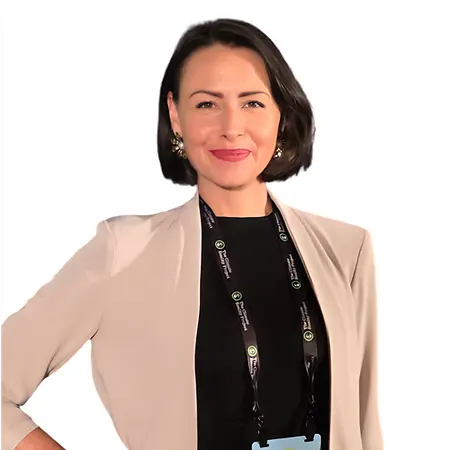
Pauline Egan is a global health, humanitarian, and creative leader whose career spans more than a decade in international development alongside over 20 years in the film and storytelling industry. She holds a bachelor’s degree in nursing and a postgraduate qualification in Primary Health in Developing Countries from Australia, grounding her work in both clinical understanding and public health systems strengthening. Her early career in healthcare and her parallel path as an actress, writer, and filmmaker have uniquely positioned her to bridge science, community engagement, and narrative-driven advocacy.
Her professional trajectory took a defining turn in 2014 when she met a documentary filmmaker at a film festival where she had written and directed a film. He was developing a documentary on the global water crisis in Africa and invited her to design a women’s health and hygiene education initiative for water and sanitation programs in East Africa. In 2015, she spent five months in rural Mozambique listening to communities, learning directly from women and girls, and gaining a deep understanding of local needs. This field experience led her to develop a community-led training model focused on WASH education, disease prevention, and women’s empowerment through improved access to sanitation, health knowledge, and economic opportunity.
This work evolved into her long-standing leadership role with FACE Africa, where she has served in senior leadership for over seven years and currently acts as Executive Director. In this role, she leads fundraising, strategic partnerships, and organizational direction in collaboration with founder Saran Kaba Jones and the board of directors, supporting the scaling of clean water and sanitation programs across the continent. Her background in storytelling continues to shape how the organization communicates community impact with dignity and authenticity, and her non-linear career path spanning healthcare, development, and the arts has informed a leadership style rooted in empathy, creativity, and systems thinking.
Her Interview
Ten minutes with Pauline
01What do you attribute your success to?
I attribute my success to all of the non-successes, honestly, all of the people that came before me, all the people that took a chance on me, and also all the people that didn't believe in me. I think it's an amalgamation of all those things. My success right now in this role is deeply connected to the founder of our organization, Siran Carber-Jones, who really trusted me to come in and join her in this organization and take her vision forward. I think it's all the other things that I did throughout my life that were maybe sort of not a linear path to where I am now. Some people study specific things to get them to a role like where I am now, but interestingly, I think my journey has been a lot more non-linear. That's kind of why I think it maybe makes me a more dynamic person as well, because I've been in a lot of different professional roles and seen a lot in my life. Because I've experienced some level of adversity, not the extent that some of the communities I work in face, but I did have a perspective, even from a young age, and I think that's really served me as well. I feel that I have a responsibility in this life. We don't just get given this life for no reason. If there's injustice, of course we can't solve it all, but I have to play some role in trying to alleviate some injustice in this area of the work that feels right for me.
02What’s the best career advice you’ve ever received?
There's a quote from Nelson Mandela about leading from the back, and that really resonates with me. You have to look at why you're leading. For me, when I came into the organization, I wasn't like I came into Face Africa and was like, I'm gonna be the CEO or the executive director one day. That wasn't my goal. My goal was I saw that Siran had built this amazing organization, and I thought, maybe I can help, or support, or strengthen her efforts. This has unfolded, but I think the intention behind it was never about titles or position. It was just to see real change happen in a sustainable way, and that led to where I am now. Leading from the back means you don't have to exert your authority in a way that makes people feel small. You can be a strong leader, and you can be resilient, but true leadership is about empowering your team, supporting them, and allowing them to take the lead while you guide and protect the collective vision.
03What advice would you give to young women entering your industry?
What I try to impart on each of my mentees is just that it's never going to unfold the way you think it's gonna unfold, and that's not a bad thing. It's just understanding that the journey of life is wonderful and unpredictable, and not feeling like you're a failure if you didn't reach a step or an achievement that you had really fixated your direction on. Instead, remain open and just listen to your instincts, and be in tune with who you are and what your core values are. If you really know what your core values are, they'll steer your life in the right direction, and you'll get where you want to go, but it's never going to be the way you think it's going to be. So that would be my advice: you're on track if you're listening to your gut, and if you're listening to your core values, and you're living those core values, you will find yourself where you want to be.
04What values are most important to you in your work and personal life?
Humility is my absolute number one value because without it, you won't grow, and you won't learn, and you won't be a good leader. Having the humility and being humble enough to listen first and then act, rather than just come in with your own ideas and impose them on others, is essential to me. Obviously, leading with compassion is also critical. It's all kind of interlinked in a way, because in order to have humility, I think you do need to have compassion. You can be a strong leader, and you can be resilient, but you don't have to exert your authority in a way that makes people feel small. For me, I think leading from the back, as Nelson Mandela said, really resonates with me. Your voice alone is not going to solve a problem. You really have to listen and share and come up with solutions together. You can't achieve anything alone or in a vacuum. Understanding that collaboration and listening are essential means centering my leadership on understanding rather than dictation.
Join Influential Women and start making an impact. Register now.