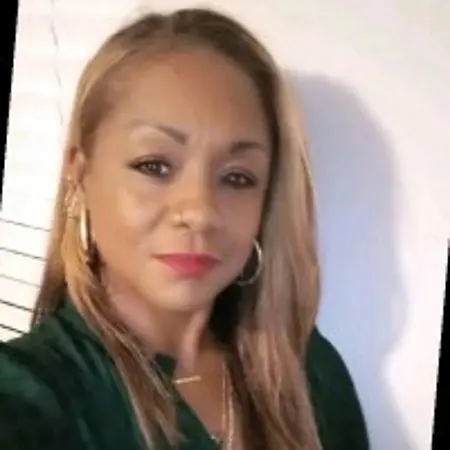
Her Story
About Persephone
Persephone Wallace serves as a senior case manager in healthcare, a role she has held for 12 years after entering the medical field in 1996. She works with patients requiring COPD therapy, helping them access pharmacy and medical benefits through pulmonary clinics while screening for financial assistance programs. Wallace began her career as a nursing assistant and certified medication assistant following personal experiences that sparked her interest in patient care. She attended Billy University to study business aspects before pursuing nursing school and phlebotomy training. Wallace attributes her success to her faith, strong work ethic, and commitment to helping others, drawing from life experiences that taught her the importance of empathy and persistence. She values morals and self-respect in both her professional and personal life, and she advises staying true to oneself while navigating industry challenges such as evolving drug changes, shifting patient demographics, and rigid guidelines that limit human connection.
Her Interview
Ten minutes with Persephone
01What do you attribute your success to?
One faith. And just the ability to keep going through my schooling, and then from there, my career. When I started my career where I am now, 12 years ago, it just started out as a temporary position. From there, it was more so just driven in me to just help people, just because what I think more so what I was feeling also, again, we got that empathy, the emotions again, but knowing how I felt when someone, or if it didn't you didn't hear anything, or you didn't get the response, or just not being helped, just in general, that will lead me to keep going, no matter what the day looks like, no matter how it may look on the outside. I just still that just led me through. And not having that nurtured from my mother, and then not having my father, and me being my self-made, or my believer in myself. That took another mindset. I do not know, honestly, how I got to that. I just know it was my faith, and also it was my work ethic, and knowing this field that I'm in. Oh, this is bigger than what I'm feeling. I need to help and keep going and keep going, because it's a bigger picture.
02What’s the best career advice you’ve ever received?
Don't lose your personality. Don't lose your smile. Stay with your energy. That was the best advice, and I took it because I was having one of those days that I just spoke about, and everything was like going just kind of awake, like, what's going on? Started questioning that day, started questioning my purpose, and someone pulled me inside, it was a colleague of mine, and off record, she called me offline, on my cell phone, said, Persephone, what's going on? And, you know, I talked to her and told her, she's like, no, no. what is really going on? So I kind of went in-depth of it, and she's like, no, just stay true to yourself, because I was questioning my decision on this field in 30 years. But it's changed so much. So I'm like, is this really for me? Am I really doing this? So the best advice she gave to me was stay who you are, stay true to yourself, keep your energy. And keep that smile. Because you are more than what you're thinking you are.
03What advice would you give to young women entering your industry?
Younger women. Stay truthful to yourself, stick to your guns. If you know something does not feel right, if you feel something does not feel right, express it. Express it, because you never know what that person may think the same thing you're thinking, but doesn't have the balls to say what they're thinking. Stick with it, because you never know The other side of it. You never know the ever side of it. And if you have a dream, it's not just a dream, it's your reality. Always remember that, because someone could tell you, oh, that's a good dream, but what do you really want to do? No, you stick with it. This is what I want to do, this is what I envision for myself. It's okay to not be okay. And it is okay to follow your dreams, because it's your reality. Stick with it. No one else can tell you where you're going. If you feel it, that's what you feel, and that's what you know. No one else can intervene unless you allow them to. Once you allow someone to intervene. You lost your power. And believe it or not, we have power. But you have to know that, because once someone intervened, it would sabotage your whole thing, and then you would start to become or think like they will. That's not you. being you. And when you don't be you, and you're not being yourself. you could forget everything else, because nothing else would be aligned, because you're not being true to yourself, so I would say stick with it. Keep believing, and it's it's okay not to be okay. We have our days, it's okay. But make sure you come back. Make sure you come back, or do not give up.
04What are the biggest challenges or opportunities in your field right now?
The changes of the drugs, meaning the prescription drugs, the changes of the patient Demographic, meaning It's not just the elderly. So the biggest challenge now, we have [AGE] who have diagnoses that you wouldn't think until, like, their late [AGE] or 60s. So the challenge now is just how to navigate that to people, everyday people, that has this, and I'm educating them on their benefits, or I'm educating them on this, on their, on their profile, what they may be qualified for. So that's the biggest challenge, because what I consider to be But we have guidelines, we have poverty guidelines, and we have to screen our people for our patients, so the biggest challenge is understanding that the guidelines now, how not less the never less the economy, we know. But to get care is very challenging now. It didn't used to be this hard. And when I say challenging, it's this certain age group. The challenge is, like, what is going on? For me, to understand Stand and navigate that, to understand it for myself, when I'm hearing it from the doctors, is a quick diagnosis. Again, it's not the talking, it's not, hey, how are you doing? It's the quick diagnosis, the self the evaluations or the assessments that are given to people. The assessments now that are given to people are so black and white, there's no gray area. And there's no understanding. So that's the biggest challenge in my industry now. It's just understanding the guidelines that are just proposed to the person who needs or is receiving help, and to keep it continuous.
05What values are most important to you in your work and personal life?
Whew, I'm big on morals. Respecting yourself, meaning Let's say if it's monetary. Is this something that you really want to do, or you're doing it just because you're just receiving? Something that is is tangible, But it's not a guarantee that it's gonna be forever. So the biggest that would be the biggest value, or, I would say. Everything that is tangible is not always good for you. It totally is. And I, again, I've been wanting to, you know, seen that, and believed it, and then experienced it, you know? That is that was that's my biggest Value, just because it's Sid, doesn't matter. is It's true.
Join Influential Women and start making an impact. Register now.