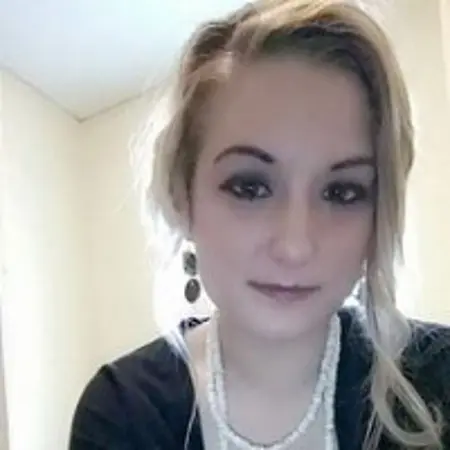
Her Story
About Polly Anna
Polly Anna Burnette is an accomplished archaeologist specializing in cultural resource management and historical archaeology. Her journey began at the University of Michigan-Dearborn, where she earned a Bachelor’s degree in Anthropology and discovered a passion for fieldwork and excavation. A pivotal moment came when she received a field school scholarship to excavate a Neanderthal site in southern Spain, which set the stage for internships at prestigious institutions, including the Smithsonian and the Kelsey Museum of Archaeology. These experiences helped her develop expertise in zooarchaeology, lab methods, and excavation, ultimately shaping her career path. Following her undergraduate studies, Polly Anna pursued a Master’s degree at Cornell University in Near Eastern Studies, Anthropology, and Archaeology. During her time at Cornell, she expanded her international field experience, including excavations in Israel, and honed her skills in laboratory management, research, and mentoring students. She also earned recognition through multiple research grants, including the CIAMS Hirsch Travel and Research Grants, which supported her academic and fieldwork endeavors. Today, Polly Anna serves as an Associate Archaeologist at Chronicle Heritage, where she conducts surveys, archaeological monitoring, lab processing, and urban excavations across the Midwest. She is SOI qualified and takes a leadership role in guiding field crews and producing detailed reports. Passionate about mentorship and community, Polly Anna also shares her expertise with students, giving talks on archaeology and helping the next generation of archaeologists navigate the challenges of the field. Her career reflects a combination of dedication, hands-on experience, and the guidance of influential mentors, particularly women who have inspired her perseverance and success in archaeology.
Her Interview
Ten minutes with Polly Anna
01What do you attribute your success to?
I attribute my success to a combination of determination, mentorship, and hands-on experience in the field. A pivotal moment came with a field school scholarship that allowed me to excavate a Neanderthal site in Spain, which opened doors to internships at the Smithsonian and the University of Michigan museums, as well as international projects in Romania, Serbia, and Israel. Travel, diverse fieldwork, and rigorous graduate studies at Cornell University deepened my expertise, while involvement in professional organizations and supportive mentors—particularly women in archaeology—helped guide my career. Ultimately, my success comes from a persistent curiosity about the past, a commitment to responsible fieldwork, and a dedication to giving historical voices a platform through every artifact I study.
02What advice would you give to young women entering your industry?
I've recently been doing alumna talks at the University of Michigan-Dearborn and answering this question a lot. My advice is networking and volunteering, especially if you're in an academic setting. If you can volunteer to get in on a research project and actually commit to doing that - like committing to two times a week or whatever - that's where you make the connections where you can get invited to these types of excavations and exciting projects. A lot of these are unpaid, so it is a privileged to participate, but if you can do that, it's invaluable. I would also say don't be afraid to make a cold email. Even if somebody doesn't respond, it doesn't necessarily mean anything about you, because they might be on sabbatical or busy with department obligations. Just being able to put yourself out there is important. And when you do make commitments, make sure you follow through on the commitments that you do make. That follow-through is critical.
03What are the biggest challenges or opportunities in your field right now?
Political things are always making us nervous and uncertain because a lot of the contracts that we have are with the National Forest Service, and those were heavily affected by DOGE cuts. There was a period of time in the fall where we were like, oh no, are we going to be able to work? Thankfully, the company that I work at is on top of that and they worked it out, finding ways to move contracts around. They'll send out emails with the company vision every time something disruptive in the politics works. Travel is also very difficult - trying to get to a position where I'm promoted enough that I don't have to have such a vagabond life would be a challenge and a goal. Though I'm lucky because I mostly work within my state, whereas a lot of other archaeologists in North America travel all over to get work. It's kind of a love-hate relationship with the travel - if they're sending me to the Upper Peninsula, I'm excited, but if it's to an agricultural field in a one-horse town, it's harder. It's honestly project-based - if the project is exciting, then I'll put up with the constant travel.
04What values are most important to you in your work and personal life?
Beyond archaeology, I’ve also been involved in environmental efforts with Friends of the River Rouge, a group dedicated to monitoring and protecting the health of the Detroit River watershed.
Join Influential Women and start making an impact. Register now.