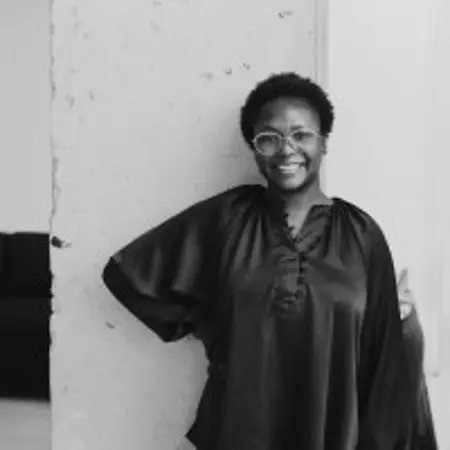
Influential Woman · Victim Services / Social Services
Portia Firnhaber
Program Manager, Community Based Services
Arlington, VA 22202
Her Story
About Portia
Portia Firnhaber is a dedicated Program Manager specializing in Community-Based Services, currently serving in Arlington, Virginia. Her career journey began with a Bachelor’s in Social Work, during which she interned at Indiana’s Department of Child Services. Drawn to the mission of addressing child abuse and neglect, she worked in both permanency and investigation roles, handling cases involving sexual abuse, domestic violence, and human trafficking. Her experience collaborating with Child Advocacy Centers, law enforcement, forensic interviewers, and the court system shaped her commitment to trauma-informed care and holistic support for families. Building on this foundation, Portia transitioned into victim advocacy, working with a local county Prosecuting Attorney’s Office to serve as a liaison between victims and prosecutors for all types of crimes. Serving both rural and urban communities, including immigrant and marginalized populations, she became passionate about providing psychoeducation to help survivors understand and navigate the justice system. In 2023, she moved to Washington, D.C., entering the nonprofit sector to provide hospital response services for survivors of sexual assault and collaborating with law enforcement and other partners to ensure comprehensive support. During this time, she also launched her blog, Systemically Unhinged, to share information, resources, and education on domestic and sexual violence. Today, Portia oversees programs including hotline support, court advocacy, and hospital accompaniment, bringing her full-circle perspective to her role as Program Manager. She combines her direct field experience with expertise in program management, grant writing, facilitation, and innovation projects to empower both survivors and the professionals who serve them. Beyond her professional work, she serves on the Violence Fatality Review Committee under the Washington D.C. Mayor’s Office, advocating for strategies to prevent violence and support affected communities. Passionate about education, collaboration, and community impact, Portia continually seeks opportunities to connect, network, and foster meaningful change.
Her Interview
Ten minutes with Portia
01What do you attribute your success to?
I would say my success comes from staying connected to my why and remembering the survivors I've encountered who have motivated me with their willingness to try and be better for themselves. Working across different communities, I've seen commonality in marginalized areas and groups that are still in need of services and psychoeducation, and that's really driven me to work hard to get to where I'm at now. I'm proud that I've been able to bring something to the table and be in a space where I can facilitate and train others. Even though I don't really consider myself super creative, deciding to pivot and start a blog was probably one of my proudest moments. As someone who comes from a marginalized group and a transracial adoptive home, born in another country, I'm grateful that I've had these opportunities that I've worked to get, and I feel privileged to be able to work in these spaces and give back in a way. Another proud achievement is being appointed to the Violence Fatality Response Committee in DC. Even though I'm just a civilian in this space and don't always have all the answers, the fact that they want me there to bring different recommendations to government agencies to help prevent violence in DC means so much to me. My parents, who both come from humanitarian fields, definitely shaped my decision to get into social work. My mom, who just retired two days ago, is a physician who specialized in health epidemics like HIV and AIDS and tuberculosis, with a lot of research in that area. My dad works in housing and has been passionate about implementing effective and sustainable things like affordable housing and clinics in communities. They've both been incredibly supportive, and my whole family has motivated each other in the work we all do. I also have to credit my old supervisor, Gail Bos, who is literally a boss woman. I learned so much from her about victim services coming from CPS, and she helped me change my mindset. She taught me about planting seeds instead of telling survivors what to do, giving them autonomy to make their own decisions while empowering them. She was in her 70s at the time and still wanting to be in the work, and she would always say she learned so much from me, but I was learning from her. She gave me the confidence that I was doing good work and paved the way for me to continue in victim services.
02What’s the best career advice you’ve ever received?
The best career advice I've received came from my old supervisor, Gail Bos, who taught me about planting seeds instead of telling survivors what to do. She showed me how to give survivors autonomy to make their own decisions while empowering them, teaching them by offering different perspectives rather than directing them. She would say things like 'hey, look at it from this perspective' to help them learn. Even though she was in her 70s at the time, she was still so passionate about being in the work, and she would always tell me that she learned so much from me, but honestly, I was learning from her. She gave me the confidence to know that I was doing good work and really paved the way for me to continue in victim services. That lesson about empowering people rather than controlling their decisions has shaped how I work with survivors and has been invaluable to my career.
03What advice would you give to young women entering your industry?
This is definitely a hard field to be in, and it's not a field that anyone can handle because there's a lot of frustration and a lot of pain. My advice is to always touch on your why - why you want to step into this space and be in the field, or if you've already started, why you want to continue the work. When you're able to sit with that and be in gratitude of it, you remember that there's a reason why you're continuing this work and why you want to be in this space. Give yourself grace, because as much as we try to give to the community and to our survivors, you're still putting in the work and doing the best that you can, and that's so much more important than any limitations you might face. There's always going to be a success in that. Those successes might be few and far in between depending on where you're at, but remembering those successes is such an important reminder of why we do the work. When you see a survivor who was able to get what they wanted or get to a space of healing and are continuing that journey, it's so nice to see. And as hard as it is, you have to remind yourself to take care of yourself. Listening to yourself and setting boundaries is really important - you have to know when to set those boundaries and take care of yourself, because that's so important to prevent burnout.
04What are the biggest challenges or opportunities in your field right now?
Portia will be jumping in to add more detail regarding what has inspired her career path and keeps her motivated each and every day, what brings her joy outside of work including her interests and hobbies, more detail regarding the people who have impacted her journey and mentored or inspired her, how she would like to connect with other women in our network and how she would like to inspire our readers, Detail regarding what she foresees in the future and what her goals are as the next chapter of her career continues.
05What values are most important to you in your work and personal life?
The values that are most important to me are family, advocacy, equity, and empathy. It's important to really navigate working with survivors in a way where you're meeting them where they are and providing them with the resources to empower them. I believe in planting seeds for them so that they are able to truly learn how to step out into the world and create better futures, along with giving them the tools needed to begin anew. I want to give survivors autonomy to make their own decisions while supporting them with the education and perspective they need to move forward on their own terms.
Join Influential Women and start making an impact. Register now.