Her Story
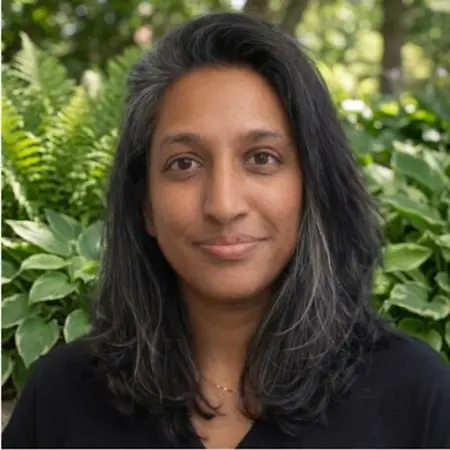
About Prasanthi
I visualize what teams are working on and help them move from strategy to execution. Most organizations have defined their strategy, vision, goals, and objectives, but I take it down to the nitty-gritty of how we're moving individual objectives forward and who is responsible for it. I make meetings effective and useful, finding out where the barriers are to success and using tools to communicate better about what we see as problems and how we can make changes. I help make improvements stick long-term with standard work and workflows that are expected. This helps reduce burnout where people have a shared understanding of what the task is, and there's a document we create of each person's job and their tasks. This helps hand off work so people can take vacations, and if the organization loses staff, they can still move forward with the work that needs to get done. I sit with staff, go to where the work is being done, find out what the barriers are, and work as an organization to provide alternative options and ideas on how to solve these challenges. Ultimately, I document and track the work so we're showing progress towards our outcomes, collectively as an organization or as a collaborative. I love helping the helpers of our community, and I've always loved operations because it's the background work that has to get done to do the wonderful things frontline direct service providers do every day.
Her Interview
Ten minutes with Prasanthi
01What do you attribute your success to?
I think intuition. Knowing that something wasn't working, it wasn't going the way that I expected it to or hoped that it would, and then saying, okay, that's not working, let me try something else. Listening to when that job didn't feel right when I was interviewed, you know, don't pursue it. Or listening to myself, why am I so stressed at this point, every Sunday night, because I had a Monday morning one-on-one with my supervisor? Why is that so stressful? And there might be something underneath that, trying to dig into that intuition, trying to find out what's going on underneath it. Every step of the way, the more that I listen to myself and what's going on inside, I can keep moving forward in the right direction, because I'm not forcing myself to do something that doesn't make sense or that I don't believe in. It's much harder to keep knocking on the same door and things don't get changed. I also know that I have more to offer than to keep knocking on that same door for the rest of my life. Knowing that and pursuing something that will help me be more in love with the work every day, what I care about, and that I want to do, there's no bounds to that kind of life, work or personal. Just really listening to that intuition and moving in that direction that it's calling for.
02What’s the best career advice you’ve ever received?
You're not the first, and you will not be the last. I'm not the first person to be a woman of color in a field that is totally full of mostly white folks and white men, actually white women in public health, and I won't be the last one to come up with this great idea of how to do our work better. It helps me not be focused on the perfection of the field and trying to do it exactly right, because there's so many iterations of us doing work, women doing work in the world. There's no right way, and everyone comes to it with their own perspective and expertise. I can't get stuck in trying to do it a particular way, or that even this is the right time, or I have to wait for the right time. Just put your... just do it. Because what have you got to lose? You're not the first one to fail, and you're not going to be the last one to succeed. So keep going. Each step of the way that works for you, and that will lead you. You won't be stuck doing work every day because you'll love what you're doing, and you're not pigeonholing your own self into something that you don't care for.
03What advice would you give to young women entering your industry?
Go be bold, brave, and do it anyway. I think it is really the do-it-anyway. That's it. Because we all have fears, we all have worries, we all have concerns, and when we start to just do it anyway, then we're more likely to overcome those fears and we're gonna be able to do the thing. Why let all those things hold us back? I think about people who have made things in the past, like our history, our forefathers, our foremothers, what have they done? They did it anyway. They knew it was scary to cross the river on a raft, and they still did it, because it was worth it in the end. And the goal was worth it to pursue. So do it anyway. Go grab the job, apply to the places, go and network, even though it's the hardest thing you could do. Just do it anyway.
04What are the biggest challenges or opportunities in your field right now?
The challenge for me is that this way of thinking, of bringing a business mindset to nonprofits, is really a big challenge, because we have forever thought of nonprofits as being service and community, and we're holding each other's face, and that kind of thing. There's space for that and merit in doing our work that way. But we need to think about nonprofits as a business too, because if we don't think of it as a business, then we're not able to pay our staff the right rate, we're not able to be flexible in people taking time off, we're not able to keep our... be financial stewards of the work. Our field needs a little bit more structure to be successful going forward, to not be so fearful of funding cuts. In the past several years, we keep getting these large funding cuts to social services across the board. We get stuck at the end of the day with the burden that we still need to serve our clients, our clients are still living their life and they still need the help and the care, and we have staff that we don't want to let go of. It becomes very heavy for all of the leaders in our field. That is a much heavier burden, it's doubled down. We're already trying to serve people, and then we have to serve our own people and our organizations and the industry, and it burns us out, and less and less people want to come to service fields. We have to figure out how to do this differently. What we've done so far has worked to an extent, and I'm willing to pursue doing it yet a different way and seeing if that helps. Transitioning people's thinking and helping folks think about it differently, getting people to be willing to try something else is very challenging. It's the entire industry that needs to think differently.
Join Influential Women and start making an impact. Register now.