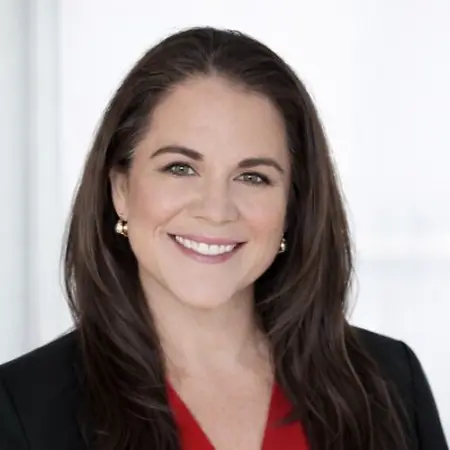
Her Story
About Rachael
I've been in communications for about 26 years, though I've only been in the energy sector for the past three years. I currently work as a Senior Communications Advisor at URENCO USA in Eunice, New Mexico, which is a nuclear fuel enrichment facility. In my role, I focus on external communications including maintaining our website, social media, community engagement, and educational pieces about the nuclear industry, as well as internal communications like our internal newsletter, email publications, and digital publications. Before joining URENCO, I worked for the San Antonio Spurs as a Senior Service Innovation Manager, where I oversaw a major transition of bringing our service element in-house, including ushers, ticket takers, and elevator operators. That first game when our part-time service employees and security employees were able to wear that Spurs Sports & Entertainment badge versus that external contractor badge was incredibly special - there was a real pride that they felt in that, and we felt the same. I was fortunate to be there during the 2014 World Finals when we won, and I joke that I'm the shortest person with the least amount of basketball knowledge with an NBA World Finals Ring. I completed my Master's degree in Strategic Communication and Innovation just last August, along with a graduate certificate in Sports Communication that I started based on my work with the Spurs. My Bachelor's degree is in Communication Studies. My husband was a Texas high school football coach and is now a principal, and we've moved 14 times in 23 years across the state of Texas, during which time I've spent a lot of time with students and athletic departments.
Her Interview
Ten minutes with Rachael
01What do you attribute your success to?
I attribute my success to my natural ability to talk too much - I think I got that on every report card throughout school, like 'her grades are decent, and she talks too much.' It sort of organically fell into my lap. I started trying to figure out what I was going to do in college, changing my major from photography to English to art history, and then I stumbled upon PR. My older brother was in advertising and started talking to me about public relations and what that department was like, and I was like, oh, I kind of like that, the people piece of it. Then you get into the events side of it, and it was just intriguing how all of those pieces come together. I like to write, and once I switched over to PR at school, the case studies and learning what worked and what didn't was really interesting for me. But again, it all comes down to the people element. I always say, good or bad, people are fascinating. Feedback is a gift, so you take what happens and what you see and work it into whatever strategy that you need.
02What’s the best career advice you’ve ever received?
Don't talk yourself out of a job. Make somebody tell you no. I tell my kids, go for it. Read through the job description. If it's something that you feel like you are interested in, you're passionate about, you're headed in that direction, maybe you can't tick off all the boxes, don't count yourself out, don't ask the question and then give yourself the no. Make somebody else tell you no, because in that conversation, you may get 'it's no for now,' or you may get 'you know what, we can adjust this a little bit, and we can teach you and fill in the gaps of what you maybe don't know yet.' Don't talk yourself out of it, go for it. I got some good advice pretty early on like that, and it kind of changed how I look at jobs and how I look at next steps and things like that.
03What advice would you give to young women entering your industry?
Absorb all you can from people, talk to people. I've got kiddos that are in college and graduating, and I think the next generation, just based on the technology and things that they have, they don't necessarily have the opportunities to interact face-to-face quite like we did. I think they're actively going to have to seek out those opportunities to have face-to-face conversations. You learn to read body language, nonverbal communication, social skills that you just can't get from a Zoom or watching videos on a phone. If you're going to go into comms, one, start reading up on AI. Get a real understanding around that. And then, seek out opportunities to interact face-to-face with all different kinds of people, as many types as you can find, because everybody receives information differently, and you'll build up your skill set of how to deliver it.
04What are the biggest challenges or opportunities in your field right now?
We're having these conversations around AI in 2026. I've got three kids and they're navigating a college world with AI, where I'm like, you guys have never had it so easy - you can just ask something to plug in a bunch of information and ask it to put it in any kind of document or format that you need. That's absolutely incredible. We had to use rulers and pencils and whatever. But then on the professional side of it, it's how can we utilize AI, not to take over our job, but to enhance it. It feels really, really crummy sometimes, like it's about to take over. So I'm like, okay, well, let's harness this thing. The job demand, I think, is just going to keep going up as things get more automated, and so the conversation we're having is how to project manage that. If we can produce more because AI can produce more, then let's put some strategy around how we use it and work smarter, not harder. In the writing field, I mean, I guess you guys probably feel this too - you've got to keep writing yourself, or you lose the ability to do it. And it becomes such a knee-jerk reaction to just be like, oh man, I could just plug in some little fun fact nuggets, and it'll rework it for me. We've got to get our arms around how to make it work for us, not work instead of us.
05What values are most important to you in your work and personal life?
Core value, honesty. Feedback is a gift. I'm trying to not take things too seriously or too personally, but honesty is definitely at the core. I think being a servant leader is something that I strive to do and be. I don't want to ask people to do things that I'm not willing to dive in and do. I lead with my heart and my gut. I'm definitely on that side of the brain, versus the logical, let's think this through. I tend to be like, this feels right, let's get into it. We'll figure it out here in a little bit, if we need to adjust. I would say honesty, servanthood, and just caring about people are probably the top three pillars that I lead with.
Join Influential Women and start making an impact. Register now.