Her Story
About Rachel
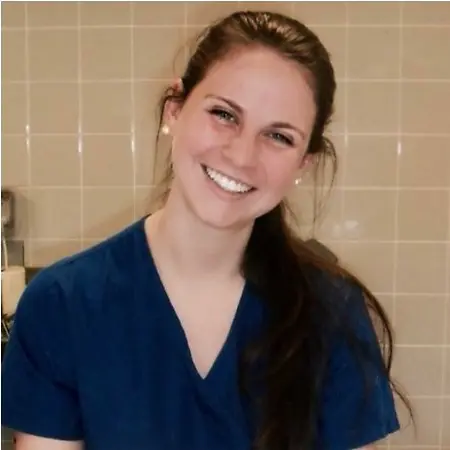
Rachel Grossman Mir is a Doctor of Veterinary Medicine specializing in emergency and critical care medicine. She was inspired to pursue veterinary medicine through her upbringing in a household closely connected to animals and ecology, influenced by her father’s work as an ecologist. She earned her Doctor of Veterinary Medicine from St. Matthew’s University, complemented by a Master of Business Administration in Health/Healthcare Administration/Management from Davenport University, building a strong foundation in both clinical practice and healthcare leadership.
Following graduation, she completed extensive postgraduate clinical training, including a small animal rotating internship at Cornell University College of Veterinary Medicine, followed by advanced surgical and emergency-focused internships. Her early career included roles in general practice and emergency settings, including CARE | Charlotte Animal Referral & Emergency and Downtown Pet Hospital, where she developed strong competencies in both preventive and acute veterinary care. Since entering the field in 2019, the majority of her work has centered on high-acuity emergency and critical care cases, including trauma, gastrointestinal emergencies, and complex surgical interventions.
She currently serves as Lead Doctor at VEG ER for Pets in Florida, where she focuses on emergency medicine and critical care while guiding clinical teams in fast-paced, high-stakes environments. Her professional philosophy emphasizes clear communication, trust-building with pet owners, and compassionate care during emotionally difficult moments. She is known for her commitment to supporting families through emergencies while striving for the best possible outcomes for their pets, and she finds deep meaning in the lasting impact her care has on both animals and their owners.
Her Interview
Ten minutes with Rachel
01What’s the best career advice you’ve ever received?
The best career advice I've received is that you can't take everything home with you. In emergency medicine, we see some really horrible, heavy things, and it gets really hard to do this job if you let it consume you. Veterinarians have one of the highest suicide rates, and within our community, we talk a lot about suicide prevention and burnout. There's a wonderful organization called Not One More Vet that addresses suicide rates and provides support, including anonymous Facebook posting so colleagues can support you during difficult times. You can't take it home with you because it eats you and affects your relationships and wellbeing. It's okay to not be okay, and we need to speak out about it and decrease the stigma. We don't always have to be this happy, perfect person who only plays with puppies. We need to break that cycle of thinking you have to be okay and happy every day and give your heart and soul 100% all the time, or you're a bad veterinarian.
02What advice would you give to young women entering your industry?
I would say that women in society today still face a lot of stigma about what other people think about you and how that defines you. You have to be perfect, look the right way, act the right way, do all of this. But the best thing I could say is that other people don't define you - you define you. Try to embody that as much as possible, especially in a profession where we unfortunately encounter people who are very negative and will say things that are going to bring you down and hurt you. You just have to realize it's not going to define you. It doesn't make you less of a person if someone thinks negatively about you. You define yourself.
03What values are most important to you in your work and personal life?
One of my biggest values in both my personal and professional life is honesty. We put a lot of pressure on doctors and vets and professional careers that you can never make a mistake. As a result, it has created sometimes unsafe conditions because people feel like they can't speak up when they make a mistake. Speaking up when you make a mistake can save a pet's life or a person's life. We have to make the culture within hospitals, both veterinary and human, where it's okay to say you did something wrong so we can prevent catastrophes from happening. We need a safe culture for that. We're all human, we all make mistakes. Don't lie in your friendships, be honest. We make mistakes, we say hurtful things to each other, let's just own it and have open communication. It creates a sense of trust, both in professional and personal relationships, which I think is really important. Trust is also very important.
Join Influential Women and start making an impact. Register now.