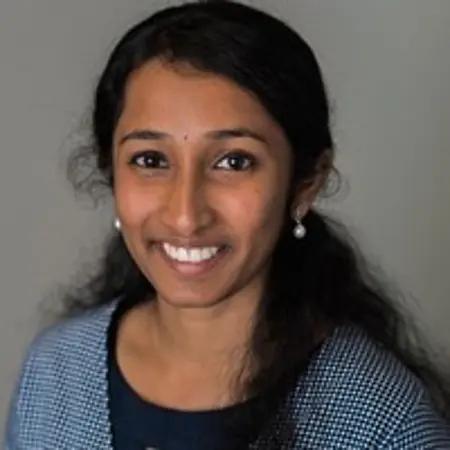
Her Story
About Ramya
My journey in science began with my bachelor's degree in India, where biology became my favorite subject because of all the unknowns and how it could impact people's lives. Through a semester abroad opportunity, I came to the U.S. and worked at one of the Harvard-MIT labs in collaboration with Brigham and Women's Hospital, focusing on kidney fibrosis research. That experience helped me realize I really enjoyed what I was doing. After continuing for another year and gaining publications and research experience, I pursued my PhD in pharmacology and toxicology at Michigan State University. For the past 5 plus years, I've been working as a study director in preclinical pharmacology and toxicology. In this role, I serve as the single point of contact for pharmaceutical company sponsors, overseeing studies that test their drug compounds in animals to ensure safety before first-in-human trials. I coordinate with teams internally and externally, develop protocols, interpret data, and ensure FDA-compliant reports are delivered in a timely manner within a regulated environment. What I find most amazing about being a scientist is that when an experiment works, you're the first person in the whole world to know that discovery - only you know, and that's an incredible feeling.
Her Interview
Ten minutes with Ramya
01What do you attribute your success to?
I've had wonderful mentors throughout my journey who have guided me. My family has been incredibly supportive - I remember right out of undergrad, I was offered two jobs and was ready to take one just for the money, but my parents both independently asked if I was sure, reminding me of my passion. That was a pivotal moment when I realized I was about to settle instead of pursuing what I truly cared about. Now my husband supports me and takes pride in my successes. Beyond my mentors, friends, and family, I do believe in a superpower - there's something greater that has guided my path. All of these people and forces together have contributed to where I am today.
02What’s the best career advice you’ve ever received?
The best advice came from my PhD mentor, Dr. Stephanie Watts. When we would talk to non-scientist people like technical staff or administrative staff, she would always make sure to talk about the science with them too, so they could connect with what they were doing and understand it wasn't just a mundane task. She would give them the broader picture of how their work fit into the whole. From her, I learned that kindness goes a long way, and curiosity goes a long way. I've definitely inherited that approach from her, and now I make sure to appreciate my technical staff and team members, ensuring their work is seen and appreciated on the right platforms so they are more visible in the organization. The lessons of curiosity and kindness to people that I gained from my mentor have shaped how I lead.
03What advice would you give to young women entering your industry?
I would say never stop asking questions. Be curious. Be patient, but also kind of be impatient, you know? Never be afraid to connect with others or ask for help and learn more. If an experiment doesn't work, it's not failure - that's just how science is, and that's actually the fun part. You get to do all this cool stuff, experiment, and come up with new ideas. So I would definitely say go in. This is the moment. Seize it.
04What are the biggest challenges or opportunities in your field right now?
I think we are in a very exciting position in the field right now, with AI coming into the preclinical world. I think it's going to be wonderful, though it's also intimidating. There are questions about what the future holds, what it means for job security, and what the ethical concerns are - those challenges definitely exist. But I believe it is really good for the field and will help us move forward in the direction of curing incurable diseases, advancing personalized medicine, and delivering treatments to rare diseases, pediatric populations, and getting to those nitty-gritty details at that nuanced level and delivering them very quickly. That's something I really look forward to in the field.
05What values are most important to you in your work and personal life?
Honesty is incredibly important to me. If something goes haywire or goes down south, I appreciate when people can own it and talk about it, talk it through. Every problem always has a solution - you just need to figure it out through communication. Being able to be upfront and honest when things don't go as planned allows us to work together to find solutions.
Join Influential Women and start making an impact. Register now.