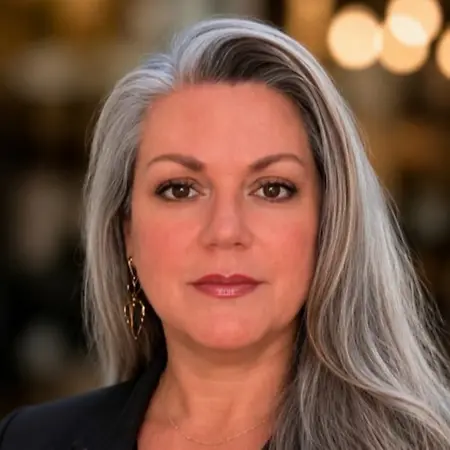
Influential Woman · Mental Health Counseling
Dr. Randi Gray
Practice Owner, Counselor, Randi Gray Counseling
Mesa, AZ 85206
Her Story
About Randi
Dr. Randi Gray is a licensed professional counselor, a board-approved clinical supervisor, and an entrepreneur whose career reflects an extraordinary commitment to service, perseverance, and lifelong learning. As the founder and owner of Randi Gray Counseling in Mesa, Arizona, she leads a thriving trauma-focused and trauma-informed practice dedicated to helping individuals heal, build resilience, and achieve lasting emotional wellness. Known for her compassionate approach and dedication to high-quality care, Dr. Gray has built a reputation as a trusted clinician, mentor, and advocate within the behavioral health community. Her path into the counseling profession was anything but traditional. Before entering the field, Dr. Gray devoted herself to raising a family of seven children—five daughters and two sons. While balancing the demands of motherhood, she returned to school to pursue her passion for helping others and did not begin her counseling career until her late thirties. After several years of clinical practice, she took on the challenge of earning her Ph.D. in Psychology from Grand Canyon University while simultaneously managing a growing private practice, counseling clients, and providing clinical supervision. Her entrepreneurial journey is equally inspiring. When she launched Randi Gray Counseling nine years ago, she transformed an empty office suite into a fully functioning practice in just nine days and opened her doors with a full client schedule. Through exceptional client care, strong community relationships, and unwavering determination, she steadily grew the practice without outside investors or business loans. By carefully reinvesting in the business and saving for years, she successfully expanded into additional office space, creating a larger, more comprehensive counseling center that now supports a growing team of clinicians and serves an increasing number of clients seeking specialized trauma-focused care. Today, Dr. Gray oversees a team of nine counselors while maintaining an active clinical caseload and mentoring the next generation of mental health professionals. She supervises counseling interns and licensed associate counselors, providing guidance that supports both professional development and quality client care. In addition to her clinical and supervisory responsibilities, she remains deeply involved in the practice's strategic growth, including operations, marketing, networking, and business development. Beyond her professional achievements, Dr. Gray treasures time with her family and is the proud mother of seven children and grandmother of five grandchildren. She enjoys spending time outdoors and particularly loves paddleboarding with her family in Arizona, embracing opportunities to connect, recharge, and create lasting memories. Through her leadership, expertise, and unwavering dedication to trauma-informed care, Dr. Gray continues to make a meaningful impact on the lives of her clients, colleagues, and community.
Her Interview
Ten minutes with Randi
01What do you attribute your success to?
I think I would attribute my success to two main things: my own determination and the support of the people I love.
I have always had something in me that says, “You finish what you start.” I am not someone who gives up easily. Even when something is difficult, overwhelming, or takes longer than I expected, I keep working at it until it is done. There is a lot of research about the importance of grit, and I think that has been a significant part of my own journey. I have had to stay committed to what I started, especially in moments when quitting or slowing down would have been easier.
The other part is the support of my family and the people close to me. They do not just tell me they support me. They show up and help.
When I first opened my practice, I gave myself one week to furnish the office and get everything ready. My kids were there putting things together, moving furniture, and helping with whatever needed to be done. My husband was there too, and fortunately, he is a contractor, which has come in very handy over the years. Everyone showed up, pitched in, and somehow we got it all done.
The same thing happened during our recent expansion when we knocked down the wall and added the new space. My husband, my kids, my friends, my cousins, everyone came and helped. It was not just my project anymore. It became something we were all working on together.
Honestly, that is one of the sweetest parts of these accomplishments for me. I am proud of what I have built, but when I think back on those moments, what stands out most is seeing the people I love there beside me, helping me make it happen.
02What’s the best career advice you’ve ever received?
The best career advice I ever received came from a trainer I had during my bachelor’s program. She had her PhD, and she told us, “You’re probably going to use about 10 percent of what you learn in school in the work you actually do.”
I remember thinking, There is no way that can be true. She cannot possibly know what she is talking about.
But the point she was making was that we needed to pursue specialized training. She told us those trainings would become the things we used most—the tools that would be most practical, most applicable, and most helpful when we were actually sitting across from another person.
Even though I was skeptical, I listened to her. I continued pursuing trainings throughout school, before I was even seeing clients. By the time I started my internship, I had already completed training in Somatic Experiencing and EMDR.
I am so glad I took her advice, because she turned out to be right.
Graduate programs give us an important foundation, but for some reason, they do not always prepare us for what it actually feels like to sit in a room with a client and know what to do next. It is different from a field like nursing, where students complete their programs with extensive hands-on preparation for the work they are about to perform. Counseling programs do not always provide that same level of practical readiness.
For me, those additional trainings shaped nearly everything I did as a clinician. They gave me real tools, helped me understand what was happening in the room, and made me much more effective in my work.
I have been passing along that same advice for probably 15 years now. Whenever an intern or student calls me with questions, I tell them the same thing: get your trainings while you are still in school. Those trainings are what will help you become a stronger, more capable, and more effective clinician.
And there is also a very practical reason to do it early: students often receive significant discounts. These trainings can be expensive, so take advantage of the student rate while you can. You will likely need the training eventually, and it is much better to complete it before you have to pay full price.
03What advice would you give to young women entering your industry?
My advice to young women entering this field is the same advice I received and followed: get your trainings while you are still in school.
Yes, you need the degree. You need the education and the credentials, and there will certainly be classes that are valuable and useful. But in my experience, the specialized trainings are what really make the difference. They give you the practical tools you will reach for most often when you are sitting across from a client and trying to determine how to help.
So start collecting those trainings early. Look for the approaches and modalities that interest you, and begin building your skills before you graduate. Counseling programs provide an important academic foundation, but they do not always prepare you for the day-to-day reality of doing this work. In some professions, students finish school having already practiced many of the specific tasks they will perform in their careers. Our field does not always work that way. You may graduate with a great deal of knowledge and still feel uncertain about what to do once you are actually in the room with a client.
The right trainings help close that gap. They shape the way you understand clients, give you concrete tools to use in sessions, and help you become a more confident and effective clinician.
There is also a practical reason to complete them while you are in school: student discounts. High-quality trainings can be expensive, and many organizations offer reduced rates to students. Take advantage of those discounts while they are available. You will likely want or need the training later, and it is much better to get it early than to wait until you are paying full price.
04What are the biggest challenges or opportunities in your field right now?
One of the biggest challenges right now is that the mental health field as a whole is experiencing a significant slowdown. Typically, when cash-pay practices like mine are slower, practices that accept insurance remain fairly steady. But right now, even many insurance-based practices are struggling. Some practices across the Valley have closed altogether. I cannot say exactly what is driving it, but after nine years in practice, I have never experienced a season quite like this one.
Another challenge is the cost of growth. There are things I know the practice needs, whether that is expanding our social media presence, improving our infrastructure, or investing in other systems that would help us grow. But those investments can be very expensive. At times, I have had to pause projects that feel important and necessary because I need to build up the funds before I can move forward responsibly. That can be difficult, especially when I can clearly see what would help, but the timing is not financially right yet.
At the same time, there are meaningful opportunities in the work we do. Because we are a trauma-informed practice, we are equipped to provide a deeper level of care that is not available everywhere. Many clients need more than general support. They need clinicians who understand trauma, who have specialized training, and who can help them work through complex issues in a thoughtful and effective way.
That specialization has opened doors for us to provide education in different settings and to serve clients who truly need that deeper level of treatment. Even in a challenging season, that remains one of the strongest opportunities for our practice.
05What values are most important to you in your work and personal life?
The values that matter most to me are integrity, compassion, growth, responsibility, and meaningful connection. In my work, I want people to receive more than surface-level support. I believe in doing the deeper work, continuing to learn, and providing care that is thoughtful, ethical, and genuinely helpful. I also value excellence, not in the sense of perfection, but in being willing to work hard, follow through, and keep improving what I offer. In my personal life, family, faith, loyalty, and showing up for the people I love are at the center of everything. I believe relationships require effort, honesty, accountability, and a willingness to care for one another in practical ways. Whether I am working with clients, leading my practice, serving in my community, or spending time with my family, I want my life to reflect that people matter, that our commitments matter, and that the way we treat others matters.
Join Influential Women and start making an impact. Register now.