A profound exploration of authentic leadership shaped by resilience, survival, and human-centered values. Discover how true leadership transcends titles and emerges through courage, adaptability, and the willingness to lead with purpose and vulnerability in an era of rapid transformation.
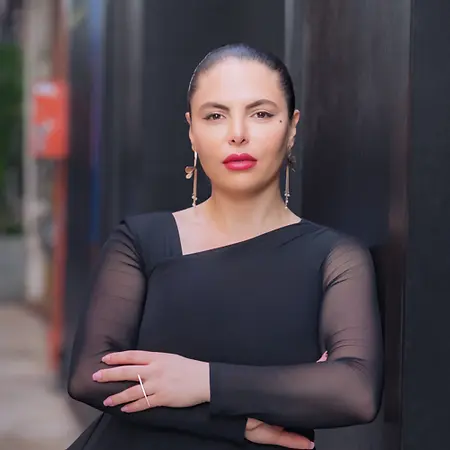
Influential Woman · Technology
Rania Hoteit
Multi-Award-Winning Serial Entrepreneur | Globally Recognized Impact Leader | International Speaker & Author | Executive Coach | Board Director & Strategic Advisor
1Article published
“
Criticism is only dangerous when it defines your identity. I learned to separate noise from wisdom, weigh opinions carefully, and keep moving forward with confidence.
Rania Hoteit · In Her Own Words
Her Story
About Rania
For more than 20 years, I’ve built my career as a serial entrepreneur, CEO, and transformational leader focused on innovation, impact, and global growth. Throughout my journey, I’ve led several companies across industries, and today I serve as a board advisor and board director for both nonprofit and for-profit organizations. I also work as an executive advisor, coach, speaker, and writer.
My work centers on helping organizations navigate critical transformation and growth phases—particularly at key inflection points where they are preparing to scale, expand internationally, or redefine their long-term vision. I partner with leaders to build strategies that not only drive profitability, but also create meaningful and measurable impact.
No two days look the same in my world. My work ranges from advising leadership teams across different countries, mentoring founders and executives, leading coaching sessions, speaking engagements, and meeting with organizations exploring new opportunities for growth and innovation. Travel is also an important part of my work, especially when collaborating with teams and partners in person around the world.
One of the accomplishments I’m most proud of is the impact we created through my former company, ID4A Technologies. Under my leadership, we embedded impact-driven strategies directly into the company’s business model and aligned our initiatives with the United Nations Sustainable Development Goals.
Through those efforts, we helped more than 2,000 businesses adopt sustainable and more efficient operational practices through the implementation of advanced technologies developed by our team. More importantly, the work contributed to improving the lives of more than 2 million people globally—particularly in industries where labor exploitation and workplace inequities are significant challenges.
Our initiatives focused on creating long-term systemic change by supporting job creation, workforce upskilling and training, advancing women into leadership roles, increasing representation for underrepresented communities, and helping reduce labor exploitation and child labor within global production pipelines.
At the core of everything I do is a belief that businesses have the power—and responsibility—to become vehicles for positive transformation in the world.
Her Interview
Ten minutes with Rania
01What do you attribute your success to?
I attribute my success to a combination of resilience, purpose-driven leadership, and the willingness to take risks even during uncertainty.
My journey has been shaped by experiences of war, displacement, rebuilding, and navigating challenges that forced me to develop resilience at a very young age. Those experiences taught me how to adapt quickly, lead through uncertainty, and continue moving forward even when the path was unclear. Over time, I learned that some of our greatest challenges can become catalysts for growth, innovation, and transformation.
I also believe a major part of my success comes from leading with purpose. I’ve never viewed business as solely a vehicle for profit. For me, business is a platform to create meaningful impact, solve real problems, and improve people’s lives. That mindset has shaped every company I’ve built, every leadership role I’ve taken on, and every organization I advise today.
Another key factor has been my commitment to continuous growth and learning. I’m deeply curious by nature, and I’m always seeking new perspectives, ideas, and ways to evolve both personally and professionally. I’ve learned the importance of emotional intelligence, self-awareness, and building strong relationships grounded in trust and empathy.
Most importantly, I attribute my success to the people I’ve been fortunate to work with throughout my career. No meaningful impact is created alone. The ability to build strong teams, empower others, and create environments where people feel valued and inspired has been one of the most rewarding parts of my journey.
02What’s the best career advice you’ve ever received?
One of the best pieces of career advice I’ve ever received actually came from self-reflecting during a major transition in my career. At the time, my company was being acquired, and I found myself questioning whether I wanted to build something new again or step into an entirely different chapter after reaching such a significant milestone.
During that period of reflection, I realized something that has stayed with me ever since: you should always approach your career as if you are still at the beginning of it. There is no final finish line.
That mindset shifted the way I viewed success. I understood that milestones are important to celebrate, but they should never become reasons to stop growing, evolving, or challenging yourself. Every achievement is simply the foundation for the next chapter.
What has guided me throughout my journey is maintaining a beginner’s mindset—a willingness to keep learning, stay curious, embrace reinvention, and remain open to new possibilities no matter how much experience I’ve gained. I believe that mindset is essential for long-term growth, innovation, and resilience.
Looking back, reminding myself of that perspective gave me the confidence to continue taking risks, building, and evolving instead of becoming too comfortable with past accomplishments. It remains one of the most valuable lessons I carry with me today.
03What advice would you give to young women entering your industry?
My advice to young women entering my industry is to challenge the narratives they may have inherited about technology, leadership, and their place within those spaces.
Too often, women are conditioned to think they need to prove themselves in systems that were not originally designed with them in mind. I would encourage them instead to shift that mindset entirely. Don’t enter the industry trying to fit into existing structures—enter it knowing you have the ability to reshape them.
Technology, innovation, and leadership need diverse perspectives to evolve. The most meaningful breakthroughs often come from people who see problems differently, question assumptions, and bring lived experience that hasn’t been represented before. That is a strength, not something to compensate for.
I would also tell them to trust their perspective early. You don’t need decades of validation to have valuable insight. Start contributing, start leading, and start building even before you feel “fully ready.”
And finally, surround yourself with environments and people who expand your confidence rather than shrink it. Your voice, your ideas, and your leadership belong in the room—not as an exception, but as a necessary part of shaping the future of the industry.
04What are the biggest challenges or opportunities in your field right now?
The biggest challenges and opportunities in my field right now are deeply interconnected, and they are both being shaped by the rapid acceleration of AI and digital transformation.
On the challenge side, one of the most significant issues is the gap between technological ambition and real organizational readiness. Many companies are moving quickly to adopt AI and advanced technologies, but they are often constrained by legacy systems, fragmented data, unclear governance models, and a lack of alignment between leadership and execution. As a result, there is a growing disconnect between investment and measurable impact. Another major challenge is ensuring that transformation is not just technical, but also human—meaning organizations must invest equally in culture, leadership capability, upskilling, and change management to truly succeed.
At the same time, there are enormous opportunities emerging.
We are at a point where technology is no longer just enabling efficiency—it is redefining how organizations operate, create value, and scale globally. AI, automation, and intelligent systems are opening the door to entirely new business models, more inclusive workforce structures, and unprecedented levels of productivity and innovation.
From my perspective, one of the most important opportunities lies in redefining leadership itself. We are moving from traditional operational leadership to a model where leaders are orchestrators of ecosystems—bringing together technology, people, and strategy to drive outcomes. This creates space for more diverse leadership voices and more purpose-driven approaches to business.
There is also a powerful opportunity to ensure that innovation is aligned with impact. We now have the tools to not only grow companies, but to solve systemic challenges—whether in sustainability, workforce equity, or access to opportunity at scale.
Ultimately, this moment represents both a test and an invitation: organizations that can bridge the gap between technology, leadership, and human-centered transformation will be the ones that define the next era.
05What values are most important to you in your work and personal life?
The most important values to me are integrity, trust, and courage. They are the foundation of both my work and personal life. Because I’ve never been motivated by success for its own sake, but rather by the ability to create meaningful impact.
Integrity is at the center of everything I do. For me, it means ensuring that my actions are consistently aligned with who I am and what I believe in. It’s about being honest, accountable, and intentional in how I lead and make decisions. Integrity also creates coherence between my inner values and outward actions, which I see as essential for sustainable leadership.
Trust is equally fundamental. I believe that without trust, nothing meaningful can truly be built—whether in business, in teams, or in personal relationships. Trust is what allows collaboration, growth, and long-term impact to happen. It is something that must be actively earned and consistently maintained through transparency and reliability.
Courage is the value that enables everything else. It’s the willingness to take risks, to lead through uncertainty, and to confront difficult decisions or situations rather than avoid them. As an entrepreneur and leader, I’ve learned that courage is not just about bold external action—it is also internal: the moral and emotional strength to stay true to your vision, even when it’s uncomfortable or challenging.
Together, these three values guide how I lead, how I build relationships, and how I navigate both success and uncertainty.
Her Content Hub
Articles by Rania
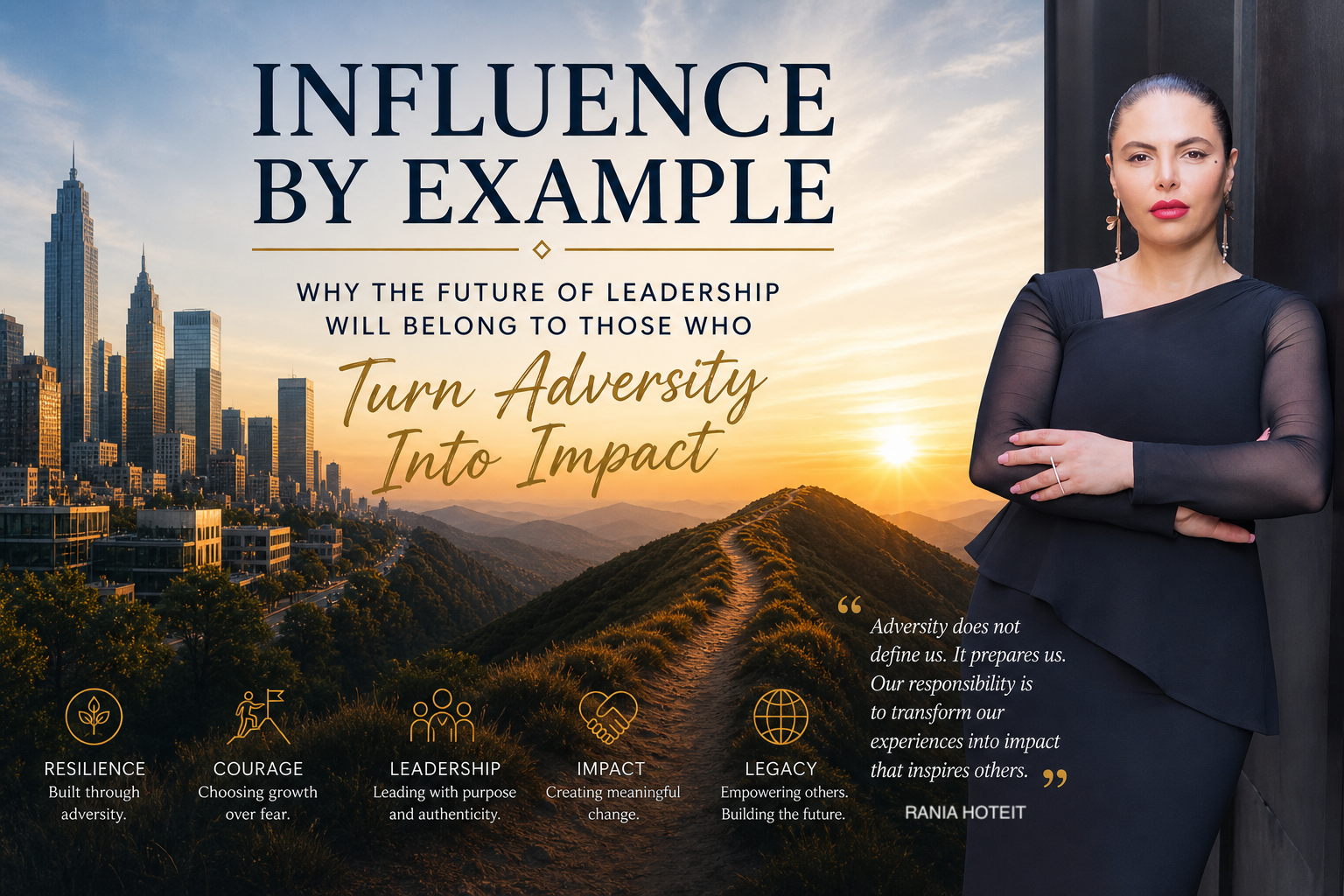
Influence by Example: Why the Future of Leadership Belongs to Those Who Turn Adversity Into Impact
How Resilience, Purpose, and Courage Shape Leaders Who Create Meaningful Change
Leadership is often associated with titles, visibility, success, or influence. But in my experience, true leadership is shaped long before recognition ever arrives. It is forged in uncertainty, resilience, reinvention, and the quiet moments when you choose to keep moving forward despite fear, setbacks, or seemingly impossible circumstances.
My understanding of leadership did not begin in boardrooms or through entrepreneurship. It began in survival.
As a child, I lived through war. I experienced forced displacement, instability, and the emotional reality of watching life change overnight. Those early experiences shaped the way I view the world, people, and leadership itself. They taught me that uncertainty is not an exception in life—it is part of the human experience. They also taught me that resilience is not simply about enduring hardship, but about finding meaning, purpose, and direction through it.
Years later, when I became an entrepreneur and CEO, I realized that many of the same principles that helped me survive adversity became the foundation of how I lead organizations: adaptability, courage, emotional intelligence, empathy, and the ability to remain grounded while navigating complexity.
Throughout my career, I have built and led multiple companies, advised organizations through transformation, and worked with teams across industries and countries. One of the accomplishments I am most proud of was leading my former company, ID4A Technologies, where we integrated impact-driven strategies directly into our business model and aligned our initiatives with the United Nations Sustainable Development Goals.
Through those efforts, we helped more than 2,000 businesses adopt sustainable operational practices and improve efficiency through advanced technologies developed by our teams. More importantly, this work contributed to improving the lives of more than 2 million people globally by addressing challenges related to labor exploitation, workforce inequities, upskilling, and access to opportunity.
But what I learned throughout that journey is that impact is never created by technology alone.
Technology can accelerate transformation, but leadership determines whether that transformation becomes human-centered, ethical, and meaningful.
Today, we are living through one of the most significant periods of disruption and reinvention in modern history. Artificial intelligence, automation, and rapid digital transformation are reshaping industries at a pace faster than many organizations can emotionally or structurally absorb. While there is understandable focus on innovation and growth, I believe one of the greatest leadership challenges of our time is ensuring that humanity evolves alongside technology.
The future will not belong solely to the organizations with the most advanced systems. It will belong to the leaders who understand how to align innovation with purpose, growth with responsibility, and performance with human impact.
That shift requires a new leadership model.
For decades, leadership was often associated with authority, control, and certainty. Today, the leaders who create lasting influence are those who are emotionally intelligent, adaptable, collaborative, and capable of leading through ambiguity.
This is especially important for women.
For many years, women entering leadership spaces were often encouraged—directly or indirectly—to adapt themselves to systems that were not designed with them in mind. Success was frequently measured by how well women could fit into existing leadership models rather than redefine them.
But I believe we are entering a different era.
Women are no longer simply participating in leadership conversations—we are reshaping them.
Women bring perspectives that are deeply needed in the future of business and innovation: empathy, systems thinking, resilience, collaboration, intuition, and the ability to lead with both strength and humanity. These qualities are no longer secondary leadership traits. They are becoming essential.
One of the most important lessons I have learned throughout my journey is that leadership is not about proving your worth. It is about understanding your value and using it to create meaningful change.
Too many people spend years waiting until they feel fully ready before stepping into leadership, speaking up, building something new, or pursuing a vision. But growth rarely happens from certainty. It happens through courage.
Courage is one of the values that has guided me throughout my life and career.
Not just the courage to take risks externally, but the internal courage to trust yourself, reinvent yourself, continue evolving, and remain aligned with your values—even during uncertainty.
There were many moments in my journey when criticism, doubt, failure, or fear could have become stopping points. Instead, they became opportunities for reflection, growth, and reinvention.
I learned that criticism only becomes dangerous when you allow it to define your identity instead of refine your growth.
That perspective changed everything for me.
As leaders, entrepreneurs, and changemakers, we cannot build meaningful lives by seeking universal approval. Innovation itself requires the willingness to challenge assumptions, question outdated systems, and pursue ideas that others may not initially understand.
The leaders who ultimately create transformation are often the ones willing to continue moving forward before the world fully validates their vision.
This is why mentorship, representation, and visibility matter so deeply.
When women share their stories honestly—not only the successes, but also the struggles, reinventions, failures, and lessons—they create permission for others to believe that transformation is possible for them, too.
Stories matter because they humanize leadership.
They remind us that behind every accomplishment is a person who has experienced uncertainty, fear, sacrifice, growth, and resilience.
I believe one of the most powerful forms of influence is not perfection—it is authenticity.
People are not inspired by leaders who appear untouchable. They are inspired by leaders who are willing to lead with humanity, vulnerability, and purpose while continuing to rise through adversity.
As I reflect on my own journey, I realize that the moments that shaped me most were not necessarily the moments of external success. They were the moments when I had to rebuild, adapt, trust myself again, and continue moving forward without certainty.
That is where transformation happens.
And perhaps that is the most important message I would want other women to remember:
Your challenges do not disqualify you from leadership. Very often, they are the very experiences that prepare you for it.
The future needs leaders who can navigate complexity with courage, lead with empathy, build with integrity, and create impact that extends beyond themselves.
It needs leaders who understand that success is not only measured by what we achieve, but also by the lives we elevate, the systems we improve, and the opportunities we create for others.
Most importantly, it needs leaders who are willing to influence not simply through words, but through example.
Because the stories that matter most are not the ones that only celebrate success.
They are the ones that remind others what is possible when resilience, purpose, and courage come together in service of something greater than ourselves.
Join Influential Women and start making an impact. Register now.