Influential Woman · Higher Education
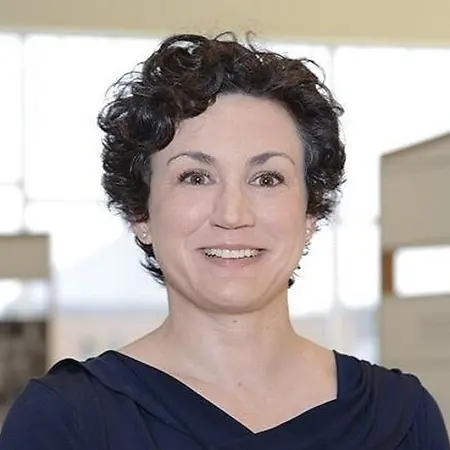
Rebecca Boyles
Deputy Director / Professor, UNC Chapel Hill (RENCI)
Chapel Hill, NC 27517
Her Story
About Rebecca
Rebecca Boyles is a data science and research infrastructure leader serving as Deputy Director of the Renaissance Computing Institute (RENCI) at the University of North Carolina at Chapel Hill. She also holds a faculty appointment as Professor of the Practice in UNC’s School of Data Science and Society. In her leadership role at RENCI, she oversees research operations and strategic partnerships across academia, government, and industry, with a focus on enabling large-scale, data-driven research that benefits public health and scientific discovery.
Prior to joining UNC, Boyles spent nearly a decade at RTI International, where she founded and directed the Center for Data Modernization Solutions. There, she led major federal initiatives supporting agencies such as NIH, CDC, and FDA, building data governance frameworks, cloud-based cyberinfrastructure, and scalable data systems for biomedical and public health research. Earlier in her career, she worked in data science roles at the National Institute of Environmental Health Sciences (NIEHS), where she contributed to foundational federal data science efforts, including early data cataloging systems, environmental health informatics tools, and workforce training programs.
Her professional work centers on modernizing data ecosystems so researchers and institutions can better access, govern, and use complex datasets responsibly. She is especially focused on applying data infrastructure, AI, and interoperability standards to improve decision-making in public health, environmental science, and biomedical research. Across her career, she has emphasized building collaborative, secure, and scalable systems that bridge research and technology, while advancing data governance models that support both innovation and public accountability.
Her Interview
Ten minutes with Rebecca
01What do you attribute your success to?
I think working in fields that I believe in is fundamental to my success. Having a lot of empathy for my clients and the teams I build, and the people on the team, has been crucial. I also believe in being willing to stay the course when there are ups and downs - you kind of have to persevere through that. Especially lately in science, that's really been something that I have continuously reminded myself of. You have to keep going even when things get challenging.
02What’s the best career advice you’ve ever received?
I've received so much great advice from people I respect throughout my career. My advisor in grad school told me I could make being pregnant and working full-time and going to school three-quarters time work, and she was completely supportive and just didn't see a boundary there - I'm very grateful for that. My last boss at RTI was a female leader powerhouse who had started her career in manufacturing, and she's about 20 years older, so a generation ahead. She really taught me that you can't take responsibility for the externalities or people's biased assumptions about you or your work. All you can do is do the good work. I really carry that with me to help me stay focused on what matters and what I can control.
03What advice would you give to young women entering your industry?
I tell most young professionals that they should not be so focused on what they think their objective is that they miss opportunities. I think having an open and broad mindset, and seeing each pivot, new project, or even obstacle or challenge as an opportunity, usually leads to opportunities that you could not have predicted. At one time, I thought I was going to work in water transport of chemicals, right? If I had decided to just stay focused on that, I would have missed out on so much. I'm really excited about where I've ended up, and I feel like it's a much better fit for my skill set, in all honesty. So I just think being willing to take those chances - not thoughtlessly, but being open to them and maybe being willing to shift despite them often being unexpected - I think that's the biggest advice I'd tend to give folks starting out.
04What are the biggest challenges or opportunities in your field right now?
The biggest opportunities we're excited about within the context of RENCI are actually AI and quantum computing, which I think is coming up right behind and isn't mutually exclusive. We think quantum's going to enable using these models in new and different ways and really could be an even bigger catalytic change, although it will probably take a little longer just because nothing is cost-effective right now in the quantum space - it's all at a research academic level. But we're not that far away either. I think in 5 years we'll be talking about quantum and what it's enabled. The biggest challenge is honestly the loss of public trust in science and the willingness to support scientific research in a way that I've seen before, especially working in environmental health and toxicology, but not to this degree. That, to me, is really troubling, especially when you look at how other countries are looking to step into the gap and hire away talent that's always been US-trained and US-focused. We're just trying to be creative in how we address this, but those are national-level problems, and we affect them where we can, but we're not in the rooms where those decisions are being made.
Join Influential Women and start making an impact. Register now.