Influential Woman · Research
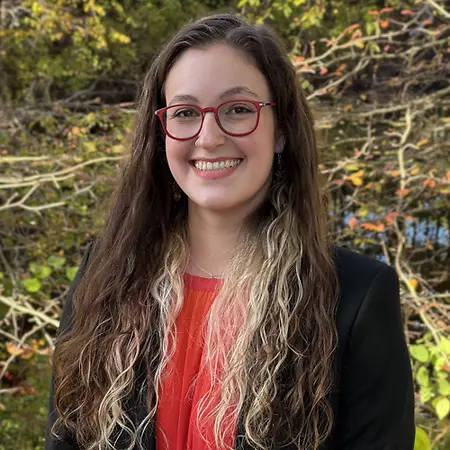
Rebecca Grekin
PhD Candidate, Tastefood
Mountain View, CA 94041
Her Story
About Rebecca
Rebecca Grekin is a Ph.D. Candidate in Energy Sciences & Engineering at Stanford University, expected to graduate in September 2026. Her research focuses on reducing emissions and improving energy efficiency in real-world systems, with a current emphasis on optimizing Heating, Ventilation, and Air Conditioning (HVAC) operations in commercial buildings. By combining rigorous experimentation with data-driven modeling, she has demonstrated that small operational changes can reduce cooling load by up to 10%, uncovering significant opportunities for energy and emissions savings in existing infrastructure.
Rebecca’s work bridges research and practical impact. During her master’s studies, she developed TASTE Food (The Automated Scope 3 Tool for Tracking Emissions from Food), a Python-based tool that automates the categorization of food purchases for emissions calculations. Adopted by over 50 universities and applied to more than 150,000 unique items, TASTE Food demonstrates her commitment to translating complex research into actionable tools. Her approach is grounded in a systems perspective, seeking synergies across sectors to accelerate sustainability impact and ensuring that research findings are immediately applicable to institutions and communities.
With a career spanning sustainability research since 2016, Rebecca has built partnerships with universities, industry, and policy platforms to scale her work. She holds a Bachelor’s in Chemical Engineering and has consistently leveraged her expertise in life cycle analysis, modeling, and software development to advance energy and emissions solutions. Recognized as a Forbes 30 Under 30 honoree and recipient of the 2025 AASHE Student Leadership Award, she combines technical excellence with leadership and advocacy, mentoring peers, making research accessible, and championing meaningful change in sustainability. Outside her academic work, she enjoys time with her rescue dog and remains committed to mentoring and inspiring the next generation of sustainability innovators.
Her Interview
Ten minutes with Rebecca
01What do you attribute your success to?
Passion for sustainability and an orientation toward measurable impact; proactively seeking partnerships to apply research quickly; sustained hard work along with some luck.
02What’s the best career advice you’ve ever received?
Show that it is possible to reach advanced degrees and leadership even if you are the first in your family to do so; seek out impact-driven opportunities, connect with other women in the field, and be willing to apply research outside academia.
03What advice would you give to young women entering your industry?
The sustainability sector is facing significant near-term setbacks (fewer roles and paused momentum in the U.S.), which makes rebuilding leadership and ambition urgent. Cumulative emissions create additional urgency; she is also exploring opportunities outside the U.S. given current conditions.
04What are the biggest challenges or opportunities in your field right now?
Impact and sustainability are central values; she prioritizes work that leads to immediate, measurable reductions in emissions.
Join Influential Women and start making an impact. Register now.