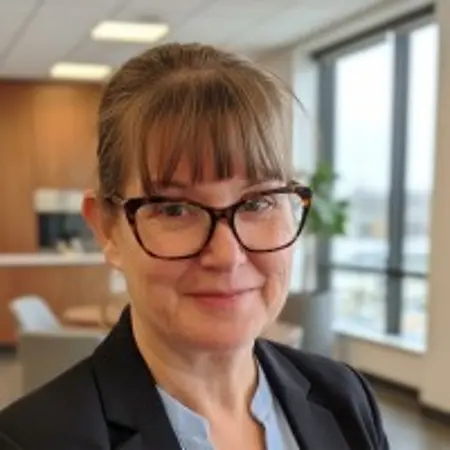
Her Story
About Rebecca
Rebecca “Becca” Holbrook-Raymond is a Certified Peer Specialist, Recovery Peer Advocate, and Family Support Advocate whose work is deeply grounded in lived experience, compassion, and authentic connection. She currently serves as Administrative Lead at the Regional Food Bank, where she supports day-to-day operations while remaining committed to community service and reentry-focused work. Rebecca is widely known for meeting people where they are and helping them rediscover hope, confidence, and purpose during difficult life transitions.
Earlier in her career, Rebecca spent more than 20 years in human resources, including building and scaling HR teams and serving in leadership roles across multiple industries. After facing personal challenges that reshaped her professional path, she transitioned into peer support work and found her calling in recovery advocacy. As an SUD Team Lead and Family Support Specialist, she led multidisciplinary peer teams across multiple counties, strengthened community partnerships, mentored peer staff, and provided trauma-informed, strengths-based support to individuals and families navigating substance use, mental health challenges, and reentry after incarceration.
Rebecca’s professional philosophy centers on dignity, honesty, and empowerment. She believes progress should be celebrated at every stage—not just at major milestones—and that lived experience can be a powerful tool for connection and change. Whether leading teams, supporting families, or serving as a welcoming front-line presence in a community organization, Rebecca is driven by a simple mission: to uplift others, reduce stigma, and help people see what’s possible for their lives moving forward.
Her Interview
Ten minutes with Rebecca
01What do you attribute your success to?
I attribute my success to discovering what I was supposed to do with my life. When I took the course to become a Certified Recovery Peer Advocate, the second day of the course, I realized this is what I was supposed to do with my life - it was a career I never knew I needed. After spending over 20 years in HR and then being incarcerated in 2018, I was able to rebuild myself and start a whole new career helping people like myself. I take full responsibility for what I did, but I was able to see hope in my own path and now I help others who have been through similar experiences to see hope in their paths too. Being able to make a difference in the lives of others and show love and support to others is what drives me, whether that was in my HR roles where I loved every second of building teams, or in my peer work helping people find housing and resources, or now at the Regional Food Bank helping ensure families have the food they need.
02What’s the best career advice you’ve ever received?
The best career advice I’ve ever received is that you can build a career making a real difference in people’s lives while also loving what you do.
03What advice would you give to young women entering your industry?
You can make a mistake and come out with a rewarding career and hold your head high. I want young women to know that even if you've been incarcerated, there are paths forward. As a peer, they look for people that have what's called lived experience, whether it be with mental health, with substance use, with family members, whatever, and it's a career that a lot of people don't realize is available. It can be very discouraging when you're coming home from prison thinking nobody's gonna hire you, but there are careers where your lived experience is actually valued and sought after. I'm living proof that you can rebuild your life and find meaningful work helping others, even after making serious mistakes.
04What are the biggest challenges or opportunities in your field right now?
The biggest challenge is being able to have a career despite being incarcerated, because everyone makes mistakes and should have a chance to move forward. When I came home from prison, it was incredibly difficult for me to find another job, especially in human resources. But the opportunity I see is in peer work and reentry services. A lot of people don't realize that peer roles are available, and these are careers that actually value lived experience with mental health, substance use, or incarceration. I'm now part of a program that goes and talks to people that have just been off parole or at other events where they're looking for people that have been successful in finding and rebuilding their lives after being in prison. There's also a huge need in food security - people don't always realize that there are resources available, especially now with everything that happened with SNAP, and the work we do at the Regional Food Bank supplying food to food pantries is critical.
05What values are most important to you in your work and personal life?
Being able to make a difference in the lives of others and show love and support to others is what's most important to me. Whether I was in HR building teams, working as a peer specialist helping someone who was living under a bridge get into housing and then into permanent residence, or now at the Regional Food Bank helping ensure families have food, it's always been about helping people. I loved every second of my HR work, and when I discovered peer work, I realized it was what I was supposed to do with my life. Taking full responsibility for my mistakes and using my lived experience to give hope to others who are rebuilding their lives after incarceration is central to who I am. My family is also incredibly important - my son is my motivation to keep going, and I don't like not working because I need to provide for him and be there for him.
Join Influential Women and start making an impact. Register now.