Her Story
About Rebecca
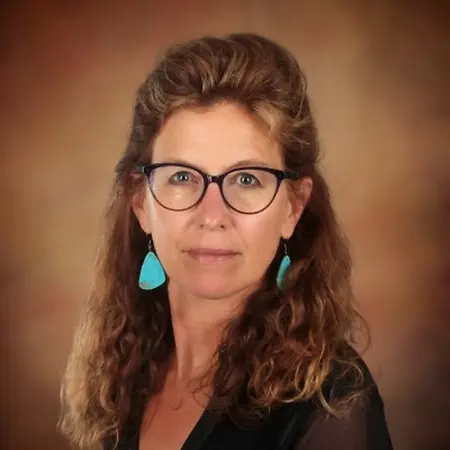
Rebecca Ruland is a school founder and education leader with more than 30 years of teaching experience and two decades in leadership roles across Colorado's public and charter school systems. Selected as one of six fellows statewide from a pool of over 1,000 applicants, she recently completed a year-long fellowship with The Legacy Institute, during which she vetted community and industry need, built partnerships with hospitals and higher education institutions, and authored the charter application, grants, and curriculum that led to the launch of BridgePoint Health Professions High School in Grand Junction. The school was designed specifically to prepare educationally disadvantaged students for careers in health sciences while addressing regional workforce shortages. Prior to this venture, she served as Head of School at Animas High School in Durango, guiding its academic, administrative, and cultural direction for three years, and spent seven years in district-level administration.
Earlier in her career, Ruland led a charter school that earned accreditation with distinction from the Charter School Institute in three separate years, a recognition tied to strong performance in growth, culture, and graduation outcomes. Her professional background also includes coordinating induction and mentoring programs for rural Colorado school districts, teaching secondary methods as adjunct faculty at Fort Lewis College, running literacy and family-literacy initiatives, and training Peace Corps volunteers across Southern and Eastern Africa. She holds an Education Specialist degree in Educational Leadership from the University of Northern Colorado, a master's degree in Multicultural Education from the University of New Mexico, and a bachelor's degree in Science Education from Northern Arizona University, and she is fluent in Spanish.
Ruland's leadership philosophy centers on pairing autonomy with accountability, using education as a lever to support students who lack advocates or outside resources. She credits her achievements to persistence and a refusal to abandon a worthy goal once she has committed to it, and she leads with radical honesty, constructive communication, and a focus on high-impact outcomes. Beyond her professional life, she is a member of the World Wide Women's Association and the Roy Hurst Humane Society, and she dedicates volunteer time to animal shelters and organizations supporting animal welfare and nature conservancy.
Her Interview
Ten minutes with Rebecca
01What do you attribute your success to?
I attribute my success to grit and determination. Once I commit to a goal I believe is worthwhile, I see it through to completion no matter the obstacles. When I set out to build this school, I was one of four fellows working toward similar goals; while others stepped back or weren't authorized to move forward, I stayed the course and persisted until the school became a reality.
02What’s the best career advice you’ve ever received?
The best advice I ever received came during a stressful road trip in Tanzania. I was frustrated by local road stops and delays that clashed with my Western sense of time and efficiency, and my partner turned to me and said, "This is a really good opportunity for you to be patient." That moment taught me a lifelong lesson in presence and humility. I learned that sometimes you have to stop forcing your own cultural expectations onto a situation, and instead be present for the reality in front of you, respect the environment you're in, and meet challenges with patience rather than resistance.
03What advice would you give to young women entering your industry?
I encourage young women entering this field to develop a compelling, long-term vision for their school, one that reaches far beyond the status quo, and to keep that vision alive even when circumstances grow difficult. I'd also tell them to vet their ideas with others, stay aligned with their own passions, and remember that unwavering persistence and consistency are what ultimately carry a vision through to success. The work will get messy and unpredictable, but tenacity is what sees it through.
04What are the biggest challenges or opportunities in your field right now?
One of the biggest challenges I see is the bureaucratic, scarcity-driven mindset that often exists at the district level, which can stifle creativity and resist new models of schooling. At the same time, I see real opportunity in the charter school model, which exchanges a measure of autonomy for accountability. That trade-off unlocks a sense of ownership and creative freedom that allows educators to use schooling as a tool to elevate disadvantaged students and respond directly to local needs, such as workforce shortages in health sciences.
05What values are most important to you in your work and personal life?
I place a high value on constructive conflict resolution through honest, non-confrontational communication. Radical honesty and integrity guide me as well; I believe in doing what I say I'm going to do. Finally, I try to practice high-impact thinking, refusing to think small and instead channeling my energy toward the goals that matter most.
Join Influential Women and start making an impact. Register now.