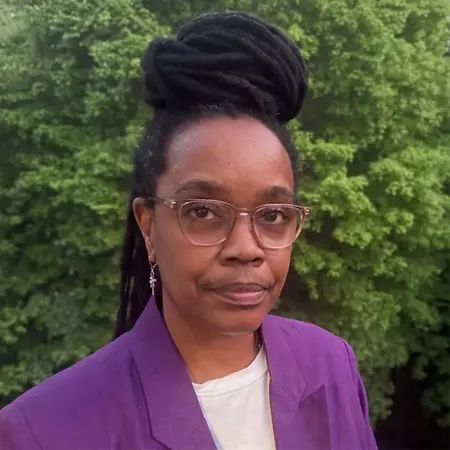
Her Story
About Rebecca
Rebecca Russell is a disability rights advocate, Special Needs Life Skills Coach, and founder of Ability Academy Incorporated, based in Atlanta, Georgia. Her work centers on IEP advocacy, special education navigation, and parent empowerment for families of children with disabilities. She currently works in disability and education advocacy roles, focusing on helping caregivers understand individualized education programs and ensuring students receive legally required services in both educational and healthcare settings. Her professional background spans more than two decades of federal and legal administrative service before transitioning fully into advocacy. She previously worked with the Federal Bureau of Investigation in New York as a staffing assistant and later served in administrative and legal assistant roles with the U.S. Attorney’s Office – in St. Thomas and Christiansted, US Virgin Islands for many years. In 2023, she advanced her advocacy work through the Disability Rights Center of the Virgin Islands, where she supported families navigating special education systems and IEP meetings. Russell’s advocacy is deeply rooted in lived experience. Her journey began after her son was diagnosed with Down syndrome in infancy, which led her to become his primary advocate and later pursue formal training in IEP processes. In 2011, she experienced a major stroke that resulted in long-term physical disability, further shaping her perspective as both a parent and a person with a disability. She later founded Ability Academy Incorporated to teach independent living skills and also developed an IEP guidebook tailored for families in the U.S. Virgin Islands, aimed at helping parents actively participate in education planning and advocacy.
Her Interview
Ten minutes with Rebecca
01What do you attribute your success to?
I hesitate to define my work in terms of “success,” because true success would mean every child already has the support they need, and we are not there yet. My motivation comes from my own experience navigating complex systems without guidance, which is why I created an IEP workbook in the Virgin Islands that simplifies the process, breaks down questions into plain language, and helps parents prepare to participate confidently in meetings. I saw firsthand how intimidating the language and professionals can be for families, often discouraging them from speaking up. My goal is to make the process clearer, more accessible, and rooted in compassion so parents can fully participate in decisions about their child’s education.
02What’s the best career advice you’ve ever received?
The best guidance I’ve received didn’t come in the form of traditional career advice. No one pointed me in a direction or laid out a path for me to follow. Instead, I learned through necessity—I couldn’t wait for someone else to step in, so I had to act and figure things out as they came. My greatest teacher has been my own experience as a parent, and my son, in many ways, guided me to become his strongest advocate. That responsibility shaped how I show up in my work and reinforced the importance of stepping forward even without clear instruction or external direction.
03What advice would you give to young women entering your industry?
My advice to young women entering this field is to develop a strong, grounded voice and a sense of internal balance, because advocacy work is not always easy or pleasant. You will face challenging situations where emotions can run high, so it is important to stay centered, think clearly, and respond in a way that keeps the focus on the child’s needs. As an advocate, you are often the voice for a child’s rights to services, accommodations, and supports under special education law, so you must be prepared to communicate firmly, confidently, and with purpose. That means being assertive without being disrespectful—firm, but never rude. You also need to be knowledgeable, because not every professional will get it right, and part of your responsibility is understanding what should be happening to ensure children receive what they are legally entitled to.
04What are the biggest challenges or opportunities in your field right now?
One of the biggest challenges in my field right now is the lack of consistent funding for disability-focused programs, particularly as nonprofit support has become more limited and, in some cases, routed through already strained government systems. In the Virgin Islands, this often means there are not enough resources to meet families’ needs in the way we would ideally like. As a result, we have to become highly creative and resourceful—helping parents identify alternative supports through community spaces like libraries, churches, and local centers, learning from accessible online resources, and sometimes organizing parent cooperatives to share services and support. At the same time, I see an important opportunity in strengthening training and education for professionals across agencies so they are better equipped to serve families effectively and consistently.
05What values are most important to you in your work and personal life?
Compassion and empathy guide my work, along with the ability to stay firm and grounded when needed. My focus is always on what children are entitled to under IDEA and ensuring they receive the services and supports they need, rather than being influenced by pressure or personalities in the room. I believe the IEP process should be clear, compassionate, and non-intimidating, empowering parents to participate confidently. Having navigated it alone myself, I’m committed to making the process easier and more accessible for other families.
Join Influential Women and start making an impact. Register now.