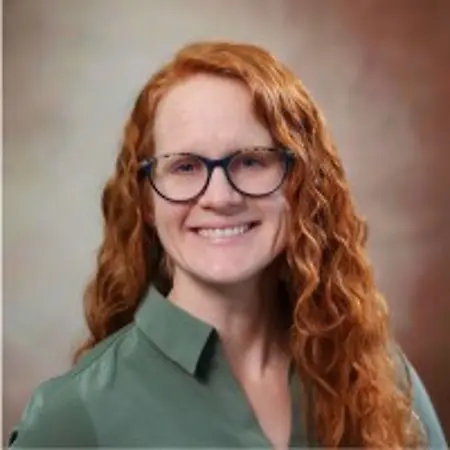
Her Story
About Rebecca
Rebecca Weinand, DrPH(c), MEd, NBC-HWC is an educator, health coach, and researcher dedicated to advancing human-centered care and whole-person approaches to health. She currently serves as the Director of Professional Development & Membership at the Academy for Behavior Change and works closely with the Institute for Behavior Change to elevate the field of health coaching and integrative care. Her journey into this field began with her own health diagnosis experiencing healthcare as a patient and navigating the behavior changes it required inspired her to support others through similar processes. This personal experience led her to health coaching and ultimately to larger public health and systems change initiatives. With eight years in health coaching, Rebecca brings extensive experience in curriculum development, faculty mentorship, and professional education. She has consulted with diverse organizations, including the Veteran’s Health Administration (VA) Whole Health Education initiative, Northwestern Health Sciences University, and the Vanderbilt Osher Center for Integrative Medicine, leading training programs, developing evidence-based curricula, and mentoring students and professionals. Her current work focuses on breaking down silos in healthcare, shifting the paradigm to holistic, human-centered care approaches that improve population health and foster collaboration across disciplines. Rebecca’s research centers on health coaching efficacy, motivational interviewing, and behavior change interventions, emphasizing public health applications, cultural tailoring, and health equity. She is in the final year of her Doctor of Public Health (DrPH) in Health Education at Loma Linda University and continues to bridge research, practice, and systems-level change. Before transitioning into healthcare, Rebecca was a high school math teacher, where she developed skills in adult-level communication and mentorship. Today, she combines that foundation with her expertise in Whole Health to create collaborative, evidence-informed programs with international reach, supporting providers, health coaches, and organizations in integrating health coaching into clinical and community settings.
Her Interview
Ten minutes with Rebecca
01What do you attribute your success to?
Continuing to learn and grow has been essential to my success. There's also a very supportive community working in this field, and we've been able to come together and really work together across fields. I really try to partner with people instead of trying to say here are all the answers. Taking what may be a non-traditional approach of collaborating and partnership has been key to the work we do.
02What’s the best career advice you’ve ever received?
The best career advice I ever received was to find a mentor and be authentic, vulnerable, and open with that person. I think it's so important to not just have a mentor, but to truly be yourself and honest with them. That authenticity in the mentoring relationship makes all the difference.
03What advice would you give to young women entering your industry?
Don't let other people make you feel small and don't try to make yourself smaller. Own what you know and trust your instinct, and recognize that what you have to offer matters. It took me a long time - and I am still learning - to not just defer to other people or seek affirmation that my idea is valid.You don't need to do that. You don't need to make yourself smaller to be heard or to make an impact. Know your worth and stand in it.
04What are the biggest challenges or opportunities in your field right now?
I think the biggest opportunity in my field right now is trying to bring together what is typically a siloed field, where healthcare is very separated. Our work is trying to bring all the different parties together and shift the approach from biometric outcomes to really looking at the patient as a whole person. It's a big opportunity where we could make a lot of change in patient outcomes and overall well-being. Rather than just reacting to health issues, we're moving to more preventive measures to improve population health. This shift from reactive to preventive care, and from isolated treatment to whole-person care, represents a tremendous opportunity to transform healthcare.
Join Influential Women and start making an impact. Register now.