Her Story
About Reena
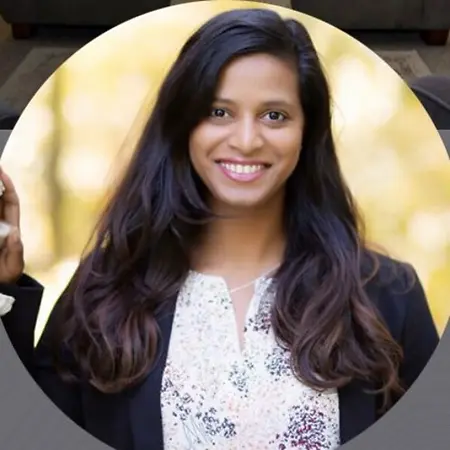
Reena de Lanerolle is a Licensed Clinical Professional Counselor (LCPC), Certified Rehabilitation Counselor (CRC), and Perinatal Mental Health Certified clinician (PMH-C) who serves as the Director of Clinical Programs & Engagement at Counseling Works in Frankfort, Illinois. With more than a decade of experience in behavioral health, Reena began her career as an equine-assisted psychotherapist, where she completed her pre-licensure clinical hours while combining her passion for mental health and equestrian work. As an equestrian herself, she spent nearly 10 years working with children and adults with special needs in an equine therapy setting, helping clients navigate emotional, developmental, and behavioral challenges through therapeutic interventions. In 2019, she transitioned into private practice as a therapist and later advanced into clinical supervision and leadership roles, ultimately becoming the clinical director of the organization’s programs and engagement initiatives.
Reena specializes in fertility and infertility counseling, maternal and perinatal mental health, grief and loss, women’s health concerns, and parenting support. Her dedication to maternal mental health was inspired by personal experience after witnessing the stark contrast between her own positive postpartum journey and the lack of support a close friend received during a difficult postpartum experience. Motivated to address the gaps in care for new mothers, she pursued specialized training in maternal mental health and has since become a strong advocate for compassionate, accessible postpartum support. In addition to her work with maternal mental health, Reena has a deep professional interest in grief, death, and cultural understandings of loss, drawing inspiration from her academic background in anthropology and archaeology. She is particularly passionate about helping clients process grief and death outside of traditional societal frameworks, encouraging a more personal and meaningful understanding of loss and healing.
Reena earned her Master’s Degree in Rehabilitation Counseling from Adler University and her Bachelor of Arts in Anthropology from Kenyon College, where she also served as captain of the equestrian team. Today, she balances a wide range of responsibilities that include seeing between 10 and 15 clients, supervising 11 clinicians, leading meetings for fellow supervisors, participating in organizational leadership initiatives, and actively networking within the maternal mental health community. Alongside her professional work, Reena enjoys archaeology, fiction writing, exploring the works of Tolkien, horseback riding, cooking, and spending time outdoors. Her blend of clinical expertise, leadership, empathy, and intellectual curiosity continues to shape her work as both a therapist and advocate for mental health care.
Her Interview
Ten minutes with Reena
01What’s the best career advice you’ve ever received?
The best career advice I've ever received is you don't know what you don't know. Broadening your experience is important, but also being kind with yourself and looking at problems or challenges from a holistic perspective. If you've made a mistake, knowing how to learn from that is the most important thing. We can't always change the choices that we make, especially when we make them honestly and with integrity, but you don't know what you don't know has served me very well in my career.
02What advice would you give to young women entering your industry?
Be bold, be brave. There's so much in the mental health field, there's something for everybody. Find what you're passionate about, whether that's community mental health, private practice, the hospital setting. Find the work that is meaningful for you, because this can be very hard work. There's a lot of secondary trauma, there's a lot of burnout with the stories we hear and the clients we support. So find the thing that makes you feel fulfilled, even if it's hard, even if it makes you doubt the world sometimes. If you're able to help somebody and that makes you feel fulfilled, lean into that. And if this is not the field for you, there's no shame in that.
03What are the biggest challenges or opportunities in your field right now?
One of the biggest challenges in behavioral health is the shifting landscape for insurance and access to mental health. We see that a lot with our clients, and it's really disappointing that there isn't more access and support. Specifically within maternal mental health, there's still a great deal of stigma around it. A lot of times, moms and women are not getting support until it's dire consequences. The support of the family is challenging because there are a lot of women that are isolated. Moms and birthing individuals tend to be the beating heart of their family, and when mom is not well, the family is usually not well, so centering the village is incredibly important. But the opportunities are that there is more research being done into postpartum health and perinatal health. I think the more that we're able to shine the light on it and be open about these conversations, the more access we will be given and the more access we'll be able to fight for.
04What values are most important to you in your work and personal life?
Integrity is incredibly important to me. In private practice, it can feel very competitive, but I've found that if I'm going to be a therapist, it's my job to make sure my clients are receiving the best care, even if that's not from me. So integrity shows up with my clients in that I'm not going to gatekeep where they're going to go. I'm going to find the providers that this person needs and make those connections, because that's more important than having a client on my couch. As a clinical director, the gatekeeping role we have is supervising clinicians before they're licensed, and I take that very seriously. The integrity of our clinicians is very important, and helping clinicians understand their own burnout matters because just like with a mom, you can't pour from an empty cup, you can't serve your clients if you're not taking care of yourself. Accountability is also incredibly important, knowing when to say that you've made a mistake and owning it, and finding a way to do better or to help somebody do better. That shows up both clinically and personally for me, and professionally. Diversity and inclusion are really important. I'm the only woman of color on our leadership team at the company, which is a really important role for me, to be visible to other women of color, but also to say that we need more. When we're hiring clinicians, I focus on really being open in our recruiting and making sure that we are looking at LGBTQ individuals, looking at diverse individuals, people from different backgrounds, people with different perspectives on therapy, especially the social justice perspective, because we can be very constrained in private practice sometimes.
Join Influential Women and start making an impact. Register now.