Her Story
About Regina
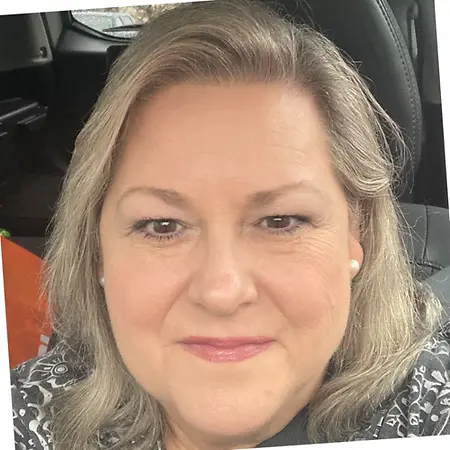
Regina Garrard is an accomplished nuclear medicine professional and educator, currently serving as Assistant Professor, Clinical Coordinator, and Instructor in the Nuclear Medicine Technology program at Augusta University. A graduate of the same program in 1986, Regina has come full circle in her career, transitioning from frontline patient care to shaping the next generation of technologists. Her professional journey has included roles as a staff technologist, lead technologist, department supervisor, and specialist in both routine and cardiac nuclear medicine.
Regina discovered her passion for nuclear medicine while completing her undergraduate coursework at Valdosta State University. Inspired by her father’s medical career and a chance encounter with the Medical College of Georgia’s Allied Health program, she pursued a field that combined patient care with cutting-edge technology. Throughout her career, she has witnessed significant advancements in the discipline and contributed to developing nuclear cardiac stress programs in clinical settings, always maintaining a patient-first philosophy and a commitment to excellence.
Since joining Augusta University in 2010, Regina has dedicated herself to education and mentorship, guiding students through their clinical training and professional development. She actively participates in the Society of Nuclear Medicine’s Educators Committee, staying connected to the broader field while fostering the growth of aspiring technologists. Regina finds deep fulfillment in watching her students succeed, valuing the opportunity to share her expertise and passion for a profession that continues to excite her decades into her career.
Her Interview
Ten minutes with Regina
01What do you attribute your success to?
I attribute my success to resilience and dedication. Personally, raising a child with autism while navigating widowhood has taught me perseverance and advocacy, and seeing him thrive at the university where I work has been deeply rewarding.
Professionally, I take pride in empowering students to become skilled technologists, supporting their growth, and celebrating their achievements—from graduating to advancing in their careers. I’ve held roles from staff technologist to department supervisor, keeping pace with advancements in cardiac nuclear medicine and leading teams through change.
While I haven’t received a single award, consistent strong performance evaluations and the success of my students reflect my ongoing commitment and impact in my field.
02What’s the best career advice you’ve ever received?
The best career advice I’ve received comes from the remarkable women who have guided and inspired me. Mentors like Jeannie Yoder and Mary Anne “Mimi” Owen taught me the importance of wisdom, joy, and making learning engaging. My family has also shaped my perspective—my sister, mother-in-law, and grandmothers showed me how to face challenges with resilience, serve others, and embrace life fully. Their examples taught me that success isn’t just about skill—it’s about integrity, perseverance, and finding joy in the journey.
03What advice would you give to young women entering your industry?
My advice to young women entering this field is to always keep an open mind, stay grounded in your roots, and maintain a sense of humor. Most importantly, put your patients first and treat them with the respect and dignity they deserve—you are their advocate. Even routine procedures, like a bone scan, can be life-changing for a patient, and it’s essential to never lose sight of the human element in your work. Maintaining that connection is what makes a career in healthcare meaningful and impactful.
04What are the biggest challenges or opportunities in your field right now?
The biggest challenges in my field are rapid technological advancements, which require continuous learning and adaptation, and workforce changes such as service consolidation. At the same time, these challenges create opportunities to train adaptable technologists and to actively shape the evolving practice of nuclear medicine.
05What values are most important to you in your work and personal life?
The values most important to me in work and life are perseverance, gratitude, and living with joy. I am inspired by the incredible women in my life—mentors, family, and loved ones—who have shown resilience through challenges and a commitment to giving to others.
In my personal life, I value humor, connection, and finding comfort in everyday moments, whether it’s enjoying a good movie, sharing laughs with friends, or caring for my spirited black Labrador, Rafa, who keeps life lively and full of surprises. These experiences remind me to approach both my career and life with heart, patience, and a sense of adventure.
Join Influential Women and start making an impact. Register now.