
A healthcare professional's journey from medical coding to data science, exploring how domain expertise combined with technical skills can drive AI innovation and why women's perspectives are essential in shaping healthcare's data-driven future.
Her Story
About Renu
Renu Goyal is a healthcare professional with around nine years of experience specializing in medical coding and operations. She works for UCCF, a medical organization at the University of California. Her expertise includes ICD and CPT coding, medical documentation, Medicare guidelines, and claim denial analysis across different specialties. Renu user her skills in EPIC, 3M, Python, and Tableau, and has recently expanded her knowledge into data science and AI for use in the medical field. In a typical day, she works eight to nine hours managing work queues, performing coding and chart analysis for patients, auditing, and documenting findings. A notable professional achievement was her team's rapid adaptation to analyzing infusion patients from cancer cases which increase the company revenue. Renu's goals include deepening her AI expertise to make meaningful contributions, and she emphasizes self-confidence and personal growth for women entering the industry.
Her Interview
Ten minutes with Renu
01What advice would you give to young women entering your industry?
If we work back with self-confidence. It's first of all for yourself and next for your kids. Once you start work, the feeling which is coming from inside will give you the actual life meaning. We should also grow, we also speak up, we should also go in the public, we should just do whatever we can do.
02What are the biggest challenges or opportunities in your field right now?
The industry is growing up very fast. Every day new technology is coming up. Our biggest challenge is to maintain the patient accuracy, to maintain the medical reports, so the privacy stay in one place, and we can also analyze in the reports and find meaningful insights.
Her Content Hub
Articles by Renu
From Medical Coding to Healthcare AI: How Women Can Help Shape the Future of Healthcare Data
How Healthcare Professionals Can Bridge Domain Expertise and Data Science to Shape AI's Future
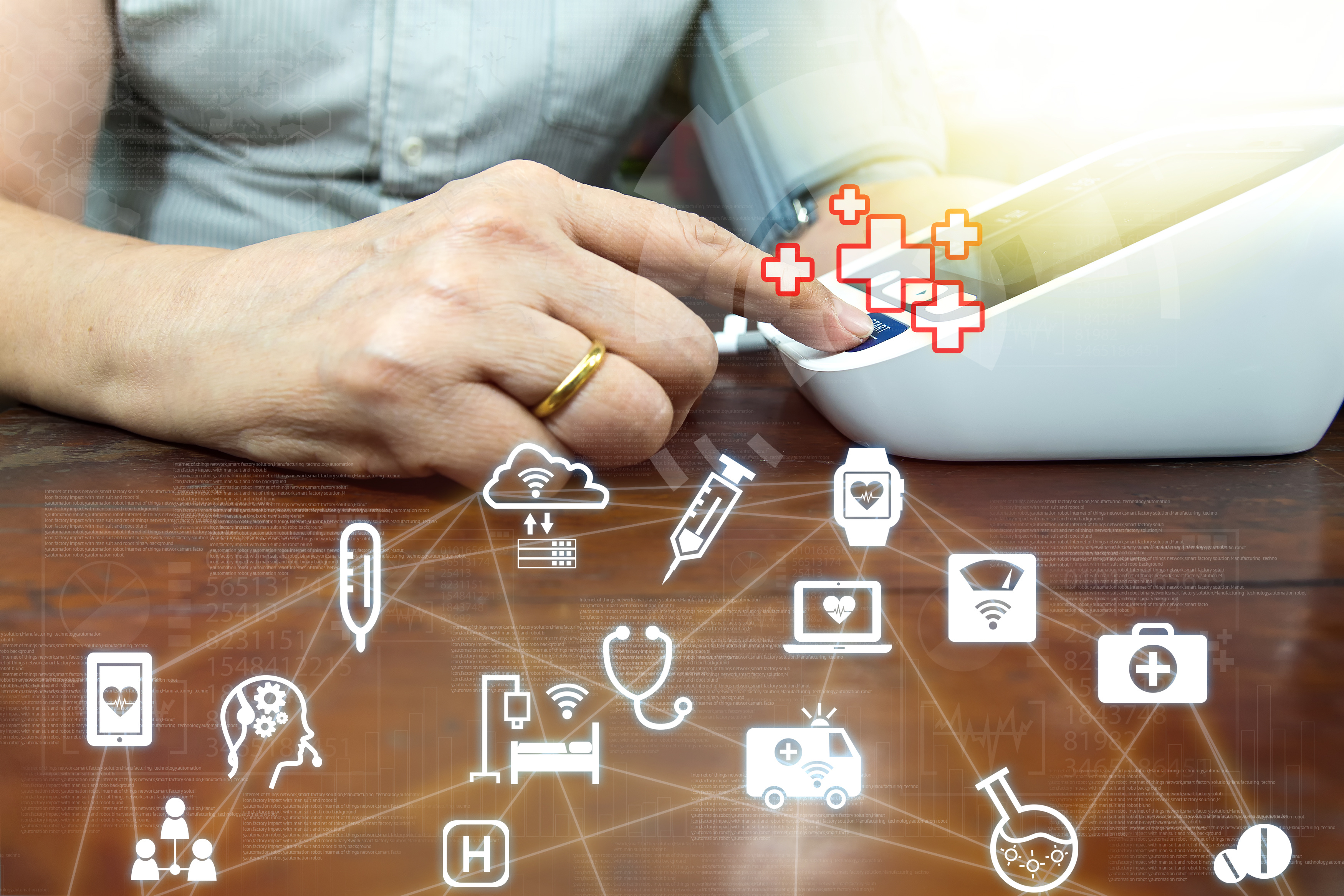
Healthcare is changing rapidly. Artificial intelligence, data science, automation, and advanced analytics are becoming increasingly important in how healthcare organizations operate and how clinical information is understood.
But technology alone cannot transform healthcare.
The people who understand healthcare-the terminology, documentation, workflows, coding systems, clinical context, and challenges faced by providers and patients-have an equally important role to play.
My own career journey has taught me that expertise does not have to remain in one category. A professional can build on years of domain experience while continuously developing new technical skills. For me, that journey has been from medical coding and healthcare operations toward data science and healthcare artificial intelligence.
Where Healthcare Data Begins
Medical coding is sometimes viewed simply as assigning ICD, CPT, and HCPCS codes. In reality, coding is part of a much larger healthcare information ecosystem.
Clinical documentation contains enormous amounts of information. A physician's note may describe symptoms, diagnoses, procedures, medical decision-making, medications, history, and other clinical details. Translating that information into structured data requires both technical knowledge and an understanding of clinical documentation.
That structured information can then support billing, analytics, quality reporting, research, population health, and many other healthcare functions.
This is one reason I believe healthcare professionals have an important role in the development of healthcare AI.
An AI system may be technically sophisticated, but the quality of its output depends heavily on the quality and context of the data it receives.
My Transition From Coding to Data Science
After years of working with medical coding and healthcare operations, I became increasingly interested in what happens beyond the final code.
I wanted to understand the data behind healthcare decisions.
That curiosity led me to develop skills in SQL, Python, data visualization, machine learning, and data science. My academic background in data science further strengthened that transition.
The learning process has not always been easy.
Moving from established expertise in one field into a technical field requires accepting that you will once again be a beginner in certain areas. There are new programming concepts, statistical methods, machine-learning algorithms, frameworks, and constantly evolving AI technologies to understand.
But there is also an advantage: domain knowledge.
Someone who understands healthcare documentation and coding can ask different questions about healthcare data than someone who only understands algorithms.
That combination can be powerful.
Why Women Should Be Part of the Healthcare AI Conversation
Women represent a significant part of the healthcare workforce, yet technology and AI discussions can sometimes feel disconnected from the professionals who work directly with healthcare information every day.
I believe women should not view AI as something happening somewhere outside their existing careers.
Instead, we can learn how to participate in it.
- A medical coder can learn SQL.
- A clinical professional can learn data visualization.
- A healthcare analyst can learn Python.
- A healthcare operations professional can learn machine learning.
- A data scientist can deepen their understanding of clinical workflows.
These combinations create new possibilities.
You do not necessarily have to abandon your previous career to enter technology. Your existing expertise can become the foundation for your next career stage.
AI Needs Domain Expertise
One area that particularly interests me is the application of AI to clinical documentation and medical coding.
Imagine a system that can read a complex clinical note, identify clinically relevant concepts, understand the context, distinguish confirmed diagnoses from historical conditions or ruled-out possibilities, and assist with identifying appropriate ICD or CPT codes.
This is not simply a programming problem.
It involves clinical language, documentation practices, coding guidelines, reimbursement rules, data quality, compliance, and human review.
Healthcare AI therefore benefits from multidisciplinary teams.
- Data scientists bring machine-learning expertise.
- Clinicians provide clinical context.
- Coding and healthcare operations professionals understand documentation, workflows, and coding requirements.
Each perspective contributes something different.
Continuous Learning Is a Career Strategy
One of the biggest lessons I have learned is that professional growth does not end when you become experienced.
In fact, experience can make learning new technology more valuable.
I am continuing to build my technical skills in areas such as Python, SQL, machine learning, natural language processing, and generative AI. My goal is to understand not only how these technologies work but also how they can be applied responsibly to real healthcare problems.
For professionals considering a similar transition, I would encourage starting with small steps.
- Learn the fundamentals.
- Work with real-world datasets.
- Build projects.
- Ask questions.
- Connect technical concepts to problems you already understand.
- And do not underestimate the value of your existing professional experience.
Building the Future Together
The future of healthcare will require more than advanced technology. It will require people who understand how technology fits into real healthcare environments.
For women working in healthcare today, there are opportunities to participate in data, analytics, automation, artificial intelligence, and digital transformation without losing the value of the experience they have already gained.
- Our knowledge of healthcare is valuable.
- Our questions are valuable.
- Our perspectives are valuable.
And as healthcare becomes increasingly data-driven, women with both healthcare expertise and technology skills can play an important role in shaping how that future develops.
The next generation of healthcare innovation will not be created by technology alone. It will be created by people who understand both the technology and the human systems it is designed to serve.
That is the direction I want to continue pursuing-and I hope more women will see themselves as part of that future.
Join Influential Women and start making an impact. Register now.